




From RangeNet
By George Wuerthner , 2-19-10
Introduction:
A short list (below) describing the Obama Administration’s short list of potential new national monuments was leaked to the media this week. I had heard rumors that this was being considered as early as November when I had a private conversation with a top BLM administer, so I was not surprised by the “announcement.”
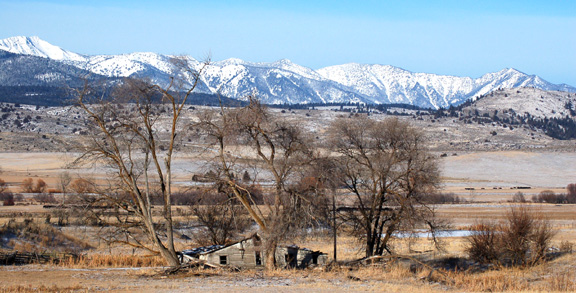
The areas under consideration for new national monument status subject to public support and other considerations include the following lands, Owyhee Canyons, Montana Plains, Otero Mesa, San Rafael Swell, Northern Sonoran Desert, Cascades Siskiyou, Vermillion Basin, Lesser Prairie Chicken, Berrysessa-Snow Mountain, Heart of the Great Basin, Bodie Hills, Modoc Plateau, Cedar Mesa, and San Juan Islands.
At one time or another I have visited nearly all the proposed national monuments and each has its special values that make them worthy of protection. Let’s hope the Obama administration follows through on designation of these areas, and even adds a few of the runner up proposals like Bristol Bay, Alaska and Wyoming’s Red Desert.
The Proposed National Monuments:
Otero Mesa in New Mexico: A 1.2 million acre grasslands inhabited by prairie dogs, pronghorn, and other wildlife.
San Rafael Swell, Utah: A wild 40x75 mile mix of canyons, gorges, arches, and buttes that includes 5 wilderness study areas, this place has long been considered for national park status. I’ve wandered some of the canyons on the fringes of this area including Little Wildhorse Canyon, an area with narrow slot canyons.
Owyhee Canyonlands in Oregon and Nevada: The adjacent Idaho portions of this canyon complex was given some partial protection by legislation last year, but Nevada and Oregon sections of this area remain unprotected. I worked the BLM searching for rare plants in this extremely remote part of the West, and often went days without seeing another soul. The remote canyons are home to redband trout and California bighorn sheep.
Montana Northern Plains: This would protect the Bitter Creek WSA and other BLM lands which lies just south of the Canadian border and immediately adjacent to Grasslands National Park in Canada. Back in the 1980s, I published a proposal for Montana wildlands that included a 3.5 million acre national park that would have included the BLM lands along the Missouri Breaks, Charles M. Refuge Wildlife Refuge, and the Bitter Creek area, among other public holdings. In essence, this proposal would make that dream a reality by creating a natural connected corridor between the Charles M. Russell National Wildlife Refuge, Missouri Breaks National Monument, and private conservation efforts north of the Missouri River.
Northwest Sonoran Desert, Arizona. The Sonoran Desert, dominated by its signature plant, the saguaro cactus, it is the most diverse of all North American deserts. On-going and escalating ORV abuse, livestock grazing, and other threats, including extended drought perhaps due to global climate change, threatens this unique ecosystem. This proposal would encompass desert lands northwest of Phoenix.
Cascade Siskiyou National Monument expansion, California/Oregon. In 2000 the Cascades Siskiyou National Monument was established in Oregon, but a portion of the area lies in California. This expansion south would include fine examples of oak woodlands and the unique plant assemblages in this region which features vegetation representative of the Great Basin, Klamath Mountains and Cascade Range. There is also discussion of including an expanded boundary in Oregon as well to include the proposed Siskiyou Crest to the west of Ashland. The Siskiyou Crest includes portions of the PCT, the Red Buttes Wilderness, and the Kangeroo Roadless areas, one of the largest unprotected roadless areas in northern California. This is an area I’ve explored on numerous occasions over the years, and can attest to its unique beauty and quality.
Vermillion Basin, Colorado. The Vermillion Basin lies along the Colorado-Wyoming border and bisected by Vermillion Creek, a tributary of the Green River. Part of the area was studied by the BLM for wilderness designation. It is another lonely corner of the West with rugged canyons and sage covered slopes containing important sage grouse habitat. I’ve hiked a few parts of the basin, and did not encounter another person. But this solitude is likely to change in the future since the area is considered a high priority for on-going oil and gas exploration.
Lesser Prairie Chicken, New Mexico: A 58,000 acre area that is home to bluestem grasslands that contain some of the best lesser prairie chicken habitat in the United States.
Berrysessa-Snow Mountain, California: This 500,000 acre area would include portions of California’s northern Coast Ranges that are the headwaters of Cache Creek, a BLM wilderness area, home to many wintering bald eagles and a growing herd of Tule Elk as well as one of the most diverse botanical communities in the United States. I’ve had the pleasure of hiking Cache Creek and hiking to the summit of Snow Mountain—both areas have outstanding wildlands value, but I was most impressed with the oak woodlands on lower slopes and fir forests at higher elevations.
Heart of the Great Basin, Nevada: This monument would include the Toiyabe, Monitor, and Toquima Ranges. All three ranges have some protected status granted by wilderness designation. This was one of my favorite parts of Nevada which I explored in preparing my Nevada Mountain Ranges book. It contains substantial archeological sites, huge aspen groves, and 12,000 foot peaks.
Bodie Hills, California. Have you ever visited Bodie Ghostown State Park north of Mono Lake, than you have been in the proposed Bodie Hills National Monument. This land of sweeping sage covered hills, home to Mono Basin Sage Grouse, an endangered species. Connecting the Bodie Hills with Mono Lake Scenic Area, plus adjacent recently designated wilderness in the headwaters of the Owen River would make a large interconnected wildlands of national significance.
Modoc Plateau, California. The 3 million acre proposed Modoc Plateau National Monument is another one of those out of the way places in the West where few venture, and is not likely to be on anyone’s to “must see before I die list”. The proposal includes the Skedaddle Mountains on the Nevada-California border, one of the largest unprotected wilderness study areas in the state. Immediately west of the Black Rock Desert complex in northern Nevada, this area, along with the Owyhee Canyonlands, probably contains some of the least visited areas in the American West. One of the things that I’ve particularly enjoyed when I’ve camped out here, is the vast bowl of shining stars at night since this area is far from any major urban light sources.
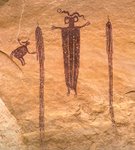
Cedar Mesa, Utah. The Cedar Mesa area extends from the San Juan River to Elk Ridge on the north borders Grand Gulch on the west and Comb Wash on the east. It includes some of the best canyons in Utah like Mule, Arch, Fish and others, as well as thousands of ancient Native American dwellings and other archeological materials. I once watched cows trampling and destroying ancient walls of an Indian dwelling in Arch Canyon, and have seen plenty of damage from ORVs in Comb Wash. Hopefully national monument designation can bring more protection to this unique part of Utah’s Canyon Country.
San Juan Islands, Washington. The 172 islands and islets that make up Washington’s San Juan Islands lie in Puget Sound north and west of Seattle. The islands lie in the rainshadow the Olympic Mountains and receive some of the lowest annual precipitation on the entire West Coast north of Santa Barbara, California. I have only visited a few of the islands, but enjoy the play of land and sea. The islands and the surrounding ocean is a rich land for marine mammals like orca as well as salmon. There are only 13,389 acres are owned by federal, state or local governments in the islands, so I don’t know exactly which lands might be included in the monument. Hopefully national monument status can add to these public holdings to preserve what is a truly outstanding landscape.
Other areas on short list:
Among areas on the short list which probably will not get national monument designation at this time are Wyoming’s Red Desert, Bristol Bay region and Teshekpuk Lake on the North Slope, both in Alaska. It’s a shame that these three areas are not at the top of the list.
Wyoming’s Red Desert, has been proposed as national park for decades. It includes Adobe Town Badlands, a desert elk herd, and portions of historic trails like the Oregon and Mormon trails. It is threatened by expanding oil and gas development. (Perhaps the reason it is not on the list is due to legislation passed when the Tetons were given protected status that prohibited any new national monuments in Wyoming.)
The Bristol Bay is area that is under threat. The Bay is home to the most famous and largest salmon fisheries in North America, and a proposed gold mine near the headwaters of one of the area rivers could pose a threat to many of these runs.
Finally, Teshekpuk Lake is a well known breeding area for waterfowl located along the Arctic Coast to the west of Prudhoe Bay. Oil development is planned for this area as well.
Land Acquisition and Consolidation:
Other parts of the leaked proposal discuss funding for land trades and targeted land acquisition from willing sellers in several important areas to consulate management. For instance, within the Missouri Breaks National Monument there are approximately 80,000 acres of private lands which the administration believes could be purchased for approximately $24 million. Another area targeted for land acquisition is the Upper Green River Valley of Wyoming where almost 400,000 checker boarded state and private acres are located that could be purchased or exchanged. A third area for consolidation is the John Day River in Oregon and the south slope of the Pioneer Mountains in Idaho near Craters of the Moon National Monument.
What are National Monuments?
National Monuments are similar to national parks in many ways, and raise the profile of an area. Unlike National Parks which must be designated by Congressional legislation, and are only managed by the National Park Service, national monuments can be created by Presidential proclamation under the 1906 Antiquities’ Act. Though most national monuments are under National Park Service administration, five other federal agencies currently manage some of our national monuments. For instance, the Missouri Breaks National Monument in Montana is managed by the BLM and Mount St. Helens Volcano National Monument is managed by the Forest Service.
The Act was first used by Theodore Roosevelt to create Devil’s Tower National Monument in Wyoming in 1906. Roosevelt subsequently expanded upon this first conservation act by designating the Grand Canyon NM, Olympic NM, National Bridges NM, and Pinnacles NM in California, among 18 national monuments he established during his presidency. Many subsequent Presidents have designated new national monuments, including George W. Bush who created five national monuments, though four were off in the middle of the Pacific Ocean where there are no voters and no controversy. Many national monuments are “upgraded” to national park status eventually. For instance, Grand Teton National Park, Death Valley National Park, Katmai National Park were all originally national monuments.
Locals Typically Oppose National Monuments
We will, no doubt, hear some the predictable rhetoric about a “government” take over—even though in nearly every instance, the designation is merely changing management emphasis on lands already owned by the public. Historically, however, national monuments were established over the protests of local people.
For example, Teddy Roosevelt tried in vain to get Congress to protect the Grand Canyon but with no success, So Roosevelt used the Antiquities Act to create a Grand Canyon National Monument over the objections of mining, logging and livestock interests as well as most of the residents of Arizona. The Arizona Congressional Delegation even stopped funding for the national monument as a protest.
Similarly, when Roosevelt established protection for old growth forests in the Olympic Mountains, local timber interests and communities were outraged. When Franklin Roosevelt established Jackson Hole National Monument in the Tetons in 1943, locals protested, and the Wyoming delegation introduced legislation to undesignated the monument.
Eventually the Jackson Hole National Monument was merged with other lands to create Grand Teton National Park. When Bill Clinton and Bruce Babbitt established Grand Staircase Escalante National Monument in southern Utah in 1996, the Utah Congressional delegation and Governor were opposed.
There is a pattern to all these protest. Generally short sighted local attitudes change over time, and national monuments generally enjoy wide spread public support even within the states where public opposition was high. There are few people who live in Wyoming today, for instance, who would vote to undesignated Grand Teton National Park. And on the heavily logged Olympic Peninsula, Olympic National Park retains the bulk of remaining old growth forests and intact salmon streams that is now one of the prime attractions of the region.
Will the Obama Administration go forward with this proposal and ensure a legacy in conservation history? I certainly hope so. If history and the passage of time is any indication, future generations of Americans will thank him for these designations just as millions of Americans now enjoy and are grateful for past President’s use of the Antiquities Act to enshrine many of America’s most iconic landscapes from the Grand Tetons in Wyoming to Glacier Bay in Alaska to Joshua Tree National Park.
George Wuerthner has published 35 books covering many areas of the West, including Nevada Mountain Ranges,Oregon Mountain Ranges, Alaska Mountain Ranges, California Wilderness Areas, among other titles.
__
Comment:
I remember Cedar Mesa in Utah's Red Rock Country, the Road Canyon area to be exact, being over-run with starving cows, rib and hip bones almost popping out of their skins, in April of last year. They left the shrub community and cryptogamic/biotic crust in tatters, as the grass, primarily cheat, was at 1 to 1 &1/2 inches. With their calves in tow, they resorted to eating thorny bare salt bush stems.
The heart of the Great Basin is another worthy addition in my mind.
Notably missing is the wind power threatened Steens Mountain Cooperative Management and Protection Area, and adjacent public and state lands, which would seem to be a like a natural addition. --Chris
___________________________
Billy Bragg and Wilco-- "The Unwelcome Guest"
By Woodie Guthrie
Yep, Again!
Saturday, February 20, 2010
Thursday, February 18, 2010
Odds & Ends: Brian Cole Case and Environmental Issues
In this Issue:
- Brian Cole Case
- ODFW Collars Three Wolves in Imnaha Pack
- HCPC--From the Canyons Blog
- George Wuerthner--Cows Versus Condos--Revisited
- Aldous Huxley Quote From Information Clearing House
_________________
Brian Cole Case
The Baker City Herald (Chris Collins) has done an excellent job of reporting on and staying with the Brian Cole Case.
Here is the article that was posted on the Herald web site yesterday afternoon:
Link: State files new charges against Brian Cole
Written by Chris Collins February 17, 2010 03:34 pm
I haven't had time to look at any court documents that may be available, but the article mentions " four [new] counts of third-degree sexual abuse involving a 17-year-old girl against former Baker County Commission Chair Brian Cole."
I do know that Brian Cole has cleared out his Orbis Group office in Basche-Sage Place. Brian Cole employed the 17 year old at that office.
Oregon defines third degree sexual abuse as follows:
"163.415 Sexual abuse in the third degree. (1) A person commits the crime of sexual abuse in the third degree if the person subjects another person to sexual contact and:
(a) The victim does not consent to the sexual contact; or
(b) The victim is incapable of consent by reason of being under 18 years of age.
(2) Sexual abuse in the third degree is a Class A misdemeanor. [1971 c.743 §115; 1979 c.489 §1; 1991 c.830 §1; 1995 c.657 §11; 1995 c.671 §9]"
Sex crime Definitions:
181.594 Definitions.
(5) “Sex crime” means:
(a) Rape in any degree;
(b) Sodomy in any degree;
(c) Unlawful sexual penetration in any degree;
(d) Sexual abuse in any degree;
(e) Incest with a child victim;
(f) Using a child in a display of sexually explicit conduct;
(g) Encouraging child sexual abuse in any degree;
(h) Transporting child pornography into the state;
(i) Paying for viewing a child’s sexually explicit conduct;
(j) Compelling prostitution;
(k) Promoting prostitution;
(L) Kidnapping in the first degree if the victim was under 18 years of age;
(m) Contributing to the sexual delinquency of a minor;
(n) Sexual misconduct if the offender is at least 18 years of age;
(o) Possession of materials depicting sexually explicit conduct of a child in the first degree;
(p) Kidnapping in the second degree if the victim was under 18 years of age, except by a parent or by a person found to be within the jurisdiction of the juvenile court;
(q) Online sexual corruption of a child in any degree if the offender reasonably believed the child to be more than five years younger than the offender;
(r) Any attempt to commit any of the crimes set forth in paragraphs (a) to (q) of this subsection;
(s) Burglary, when committed with intent to commit any of the offenses listed in paragraphs (a) to (q) or (t) of this subsection; or
(t) Public indecency or private indecency, if the person has a prior conviction for a crime listed in this subsection.
(6) “Sex offender” means a person who:
(a) Has been convicted of a sex crime;
(b) Has been found guilty except for insanity of a sex crime;
(c) Has been found to be within the jurisdiction of the juvenile court for having committed an act that if committed by an adult would constitute a sex crime;
(d) Is paroled to this state under ORS 144.610 after being convicted in another United States court of a crime that would constitute a sex crime if committed in this state; or
(e) Is paroled to or otherwise placed in this state after having been found by another United States court to have committed an act while the person was under 18 years of age that would constitute a sex crime if committed in this state by an adult.
(7) “Works” or “carries on a vocation” means full-time or part-time employment for more than 14 days within one calendar year whether financially compensated, volunteered or for the purpose of governmental or educational benefit. [Formerly 181.517; 1997 c.538 §2; 1997 c.709 §4; 1999 c.626 §§2,2a; amendments by 1999 c.626 §§25 and 26 repealed by 2001 c.884 §1; 2005 c.483 §1; 2005 c.567 §5; 2005 c.685 §11; 2007 c.876 §6; 2009 c.713 §1]
Note: 181.594 to 181.596 were enacted into law by the Legislative Assembly but were not added to or made a part of ORS chapter 181 or any series therein by legislative action. See Preface to Oregon Revised Statutes for further explanation.
I am unfamiliar with how Oregon law treats "third degree sexual abuse" if it is also accompanied by charges of "furnishing alcohol to a minor." If you would like to comment, send them to me at refugee2000@gmail.com.
Information concerning Oregon law about offenses against persons can be found here:
Chapter 163 — Offenses Against Persons
__________________
ODFW Collars Three Wolves in Imnaha Pack
 Russ Morgan, ODFW wolf coordinator, with the female pup radio collared on Feb. 13. (ODFW Photo)
Here is the press release from ODFW:
Three Imnaha pack wolves collared
 Russ Morgan, ODFW wolf coordinator, with the 97-pound male wolf collared Feb. 12. (ODFW Photo)
__________________
Hells Canyon Preservation Council: New Blog: "From the Canyons"
Hells Canyon Preservation Council is maintaining a new blog.
You can find it here: From the Canyons.
The most recent blog is on "Columbia River Threatened by Radioactive Waste from Hanford."
"Fifty-three million gallons of high-level radioactive waste have been stored in underground tanks at the Hanford Site and many of these tanks are leaking highly-toxic liquid into the soil."
___________________
Cow or condos a false choice between public lands ranching and sprawl.
From RangeNet, by George Wuerthner
One hears the cows vs condos argument continuously. I wrote this a while ago, but the basic arguments haven't changed. This might be useful to consult the next time you hear the argument that without ranching, we would have unlimited sprawl. Feel free to comment on New West web site.
Cows or Condos: A False Choice Between Public Lands Ranching and Sprawl
By George Wuerthner, 2-16-10
Author of "Welfare Ranching: The Subsidized Destruction of the American West," and also available elsewhere in coffee table book form.
Ag crops, many of them grown for livestock feed, dominates western landscapes.
Author’s Note: I first wrote this about 8 years ago, but the same arguments continue to crop up today with livestock proponents using the fear of sprawl as their club against any serious critiques and full accounting of the ecological impacts of livestock production. These arguments fail to consider the full geographical footprint of livestock production, nor the economic forces that drive sprawl. Availability of private land for sale does not necessarily result in sprawl. Even if ranching did limit sprawl to some degree it is a blunt tool compared to other more effective measures like land use planning and zoning. I am posting this review because the basic information has not changed significantly since I first wrote the piece. Updated references would provide essentially the same numbers--for instance, a 2002 review of Land Uses in the United States found that urbanization and developed land occupies 3% of the US.
Introduction:
Fear of sprawl and urbanization is a major obstacle to effecting change in public lands ranching policy, but the perceived connection between loss of grazing privileges on public land and loss of private ranchland to development has little basis in fact. The impact of livestock production is also minimized by many people who do not appreciate the geographical scale at which it occurs in the West. There are effective ways to protect open space and other values on private lands, but maintaining livestock on public lands is not one of them.
I have been giving talks and slideshows about the negative effects of western livestock production for many years. I go through a litany of ecological, economic, and human health costs until members of the audience are awash in facts and statistics as well as dozens of images of cow-trashed landscapes. Often my audiences are very sympathetic to environmental causes and are troubled by what they hear. But inevitably, when I suggest that at least on the public lands, livestock grazing be eliminated, someone will raise an objection. It always goes something like this: “Well, I agree livestock do damage. But if you eliminate grazing on public lands, the ranchers will be forced to subdivide on the private lands. Then we’ll get more houses, condos, and people. Isn’t that far worse than what the cows do?”
The answer, in a word, is “No.”
First, condos and sprawl, bad as they are, are not worse than ranching. Primarily, this is because “sprawl” and all other urban/suburban and second-home development takes up a relatively tiny area of the West, whereas livestock grazing and crop production to support livestock takes up immense acreages. While I do not dispute the damage done to natural systems by sprawl, livestock production also costs a great deal in terms of both ecological health and taxpayer dollars.
Second, the notion that protecting ranchers will preserve open space is wrongly premised on the belief that without access to public lands forage, permittees will inevitably go out of business and sell their ranches for development. I believe there is compelling evidence to suggest a very different dynamic driving development in the West, rather than rancher hardship.
Finally, “cows versus condos” is not only a falsehood; it is a an impediment to clear thinking and effective action on the problems of habitat conservation and preservation of open space on both public and private lands. So long as land protection advocates focus on a false choice between cows or condos, they ignore proven ways to protect ecological values on private lands as well as continue to allow livestock to degrade ecosystems. Conservationists must move beyond “cows versus condos” if they are serious about long-term protection of western lands.
The Geography of Sprawl and Agriculture
Elsewhere in this book, the ecological costs of growing livestock are enumerated. Here, I focus on the scale of that activity for the simple reason that most people seem to have very little sense of comparison between the physical footprint of cities and subdivisions in the West and that of livestock production.
In order to help you think about the geography of the West, let’s pretend you are going on an airplane flight. Your journey begins in Denver, say, or Phoenix, or Salt Lake. As your plane waits in the queue for take-off, you are surrounded by asphalt. Not far off are city streets, buildings, and bustle. When you land, in Sacramento perhaps, or Portland, or Los Angeles, it’s the same thing. But if you look out the window while you are flying, that is not what you see for hour after hour. If you are fortunate to have a clear day, you see this: mountains, valleys, plains, deserts. Occasional towns, if you happen to be peering out at the moment the jet rushes over them. Now and then, especially if your route is along the Pacific coast, you see the tell-tale gridwork of urban centers. But the dominant impression-if you judge it fairly, if you bother to watch that window between take-off and landing-is open land. I.e., land without human residents, or at least very few. Indeed, once outside of the major urban centers and resort communities, open space is the dominant feature of the West.
But let’s pretend again that you are flying. This time, you are wearing very special eyeglasses. They are designed to recognize and alter the hue of any land that is dedicated to livestock production, much like Landsat photos that shade areas differently, according to dominant plant communities. I’ll call these glasses “Livestock Lenses.” Let’s say the land looks red wherever it is utilized in some fashion for the raising of livestock. In the West, that’s primarily cattle, a few sheep. So, when you fly over rangelands, public or private, you see red. Over the West, there’s a whole lot of land used as livestock range, so you see lots of red-flying over mountains, over forests, over deserts. But there’s also cropland that is dedicated to raising feed for cattle-hay and alfalfa, primarily. And thus you see valley after valley, extensive flatlands, all red, or nearly so. And then, these very special Livestock Lenses have a mechanism for detecting the degree to which water is also used for livestock. Rivers that are partially diverted for irrigation, to grow cattle feed, these are pink. From so high up in a jet, you probably cannot see all the tiny rivulets and streams threading, crimson, vermilion, across the landscape. But they are there-some impounded or diverted for irrigation, many more serving as watering troughs for grazing animals, and also as conduits for manure and soils eroded by pounding hooves.
By the time your plane descends and you pull off the Livestock Lenses, you have seen a landscape dominated by one color-and one use. For that is what the West-especially the arid West-is: a geography dominated by livestock use.
Indeed, livestock production dominates the entire country, not just the West. The land area utilized for livestock production-including rangelands, pasture, and the production of forage crops (corn, soybeans, alfalfa, etc.)-occupies 65-75 percent of the total U.S. acreage, excluding Alaska, according to U.S. Department of Agriculture statistics ( USDA 1997b). Four crops account for approximately eighty percent of all acreage planted per year in this country: hay, corn, soybeans, and wheat. All but wheat are grown primarily to feed livestock (USDA 1997a). In comparison, (and again, not counting Alaska), the amount of land taken up by sprawl and development is slightly more than four percent (USDA 1997a). In the West, urban and suburban landscapes, including fairly low-density subdivisions, occupy an even smaller fraction of land than in the country as a whole. Sprawl, though a serious and usually permanent blight where it occurs, is not the major ecological threat to the natural systems of the West for the very reason that it is-despite the connotation of the term-confined to a limited area. (I readily acknowledge that cities are drawing resources from a huge area, and their ecological footprint is great-but that is a different debate than the matter of sprawl eating up the western landscape. Per capita resource use is an issue of lifestyle for all Americans, urban and rural.)
The latest Geographical Analysis Program (California Dept. of Fish and Game 1995) reported that less than 4.5 percent of California--the most heavily populated western state--is urbanized, and that figure includes all highways, malls, subdivisions, and industrial parks. Most of the human population is concentrated in a few large metropolitan centers like San Diego, Los Angeles, San Francisco, and Sacramento. Agriculture, however, is far more pervasive, affecting about seventy percent of the state, by a conservative estimate. This includes croplands, as well as pasture and rangeland. The majority of this land is dedicated to livestock production. Very little grows crops directly consumed by people. For example, about 1.5 percent of California’s land area is used to grow vegetables (California Dept. of Food and Agriculture 1998; California Dept. of Conservation 2000). And from this relatively small amount of land comes about half of all the vegetables grown in the United States (USDA 1997b).
In Montana, according to recent figures compiled by the Montana Department of Fish, Wildlife and Parks, some 95 percent of the state land area is occupied by fewer than four people per square mile. These are “frontier” lands, according to the old 1890 U.S. census standards. Yet despite the fact that most of the state is essentially uninhabited, numerous native species are imperiled or significantly reduced in numbers, primarily because of agriculture-which in Montana usually means livestock production. These species include bison, wolf, grizzly bear, swift fox, black-footed ferret, Columbia sharptail grouse, sage grouse, and a host of others. What is particularly disturbing about this list is that all these species were once widespread and abundant in Montana. None of the forgoing animals have specialized habitat requirements. It is clear that “open space” is not the same as good quality wildlife habitat (Wuerthner 1997).
Thus, it is the pervasiveness of livestock impacts, and the huge geographical scale at which livestock production occurs, that makes it a far greater threat to the native plant and animal species of the West than sprawl. This is not to minimize the serious consequences of sprawl and development where it is occurring. Still, it should be recognized that this development is relatively concentrated and occupies a small proportion of the western landscape.
Demand Drives Development
Now, even if one is inclined to disagree with my assertion that livestock production is a disaster for the West’s native species and ecosystems, that doesn’t mean ranching can preserve open space. Even if you think livestock are ecologically benign, supporting ranchers does not safeguard ecosystem values. That’s because ranching can’t and doesn’t prevent subdivisions. The problem is complex, but one has only to realize that most western cities sit on land that was once ranched, farmed, or grazed to see that the mere presence of agricultural land did not stop urbanization in the past. And it is not stopping it now.
The growth of subdivisions and sprawl is driven by demand, not the mere availability of land. In fact, sheer population growth accounts to a significant degree for the expanding boundaries of most western cities. A study reviewing census data since 1970 shows that per capita land consumption, or the average area of land physically occupied by people, is actually declining in many western cities (Kolankiewicz and Beck 2001). And at the regional level, sprawl in California, the Southwest and the mountain West is overwhelmingly due to population growth, and very little is due to increases in per capita land consumption (Kolankiewicz and Beck 2001). Net in-migration, the major reason for population growth in the West as a whole, is fueled by a number of factors, including availability of employment and amenities. Most sprawl is occurring near existing large cities where jobs, good schools, transportation centers, and diverse cultural offerings are located (Holechek 2001).
Recreation-related development ("condos") is another type of sprawl occurring in the more rural areas of the West. It is a phenomenon of highly scenic areas with superlative opportunities for activities such as skiing, fishing, boating and other outdoor pursuits (Power 1996). Again, however, the growth of select recreation/ resort/ retirement sites in the West probably cannot be separated from population pressures overall and accompanying declines in urban quality of life. Whether one looks at spreading cities or burgeoning “hot spots,” the fact is that without addressing the demand for land created by increasing numbers of people in general, any effort to prevent sprawl is ultimately doomed to failure.
It is easy to see why the simple availability of land is not the driving force behind sprawl when you look at places that are not experiencing population growth. You do not find much threat of subdivision in the middle of North Dakota or eastern Montana-places where tens of millions of acres are for sale. Why not? Because marginal agricultural economics plus mere availability of private land does not add up to sprawl. A landowner may greatly desire a sale to developers, but he or she will not get it, unless there is already demand for land. Very few people want to live in North Dakota except the people already there. No demand, no sprawl.
Low demand has several effects. First, it keeps land prices low. Low land price means that another rancher or farmer can afford to purchase the land of a neighbor and pay off the mortgage running cows on it. When land prices rise--as they have done in some of the more scenic parts of the West--it becomes impossible to get into ranching, or to expand one’s existing operations. The rising cost of getting into ranching is aggravated by declining profitability of livestock production (Holechek 2001). Only wealthy “hobby” ranchers can afford to purchase ranches (Petersen and Coppock 2001). Indeed, many ranchers think of their ranches as retirement nest eggs and have every intention of eventually selling their property for development. One study in Utah found that 43 percent of public lands ranchers approaching retirement age state a desire to sell their land to developers (Petersen and Coppock 2001).
High land prices (i.e. high demand for real estate) in an area can hurt the ability of ranchers to pass their land on to the next generation, even when that is their wish (Petersen and Coppock 2001). In addition, many children of ranching families are simply not interested in taking over the business (Liffmann et al. 2000). There are many factors driving this trend, including better economic opportunities outside agriculture. The high price of land, where this is the case, not only makes selling to developers more attractive to present owners, it becomes one more reason children can’t or won’t continue to run the ranch. If there are several children in a family, deciding who gets to keep the ranch potentially worth millions of dollars become a thorny issue. For many, the easiest solution is to sell it and split the profits among all heirs.
In the past, low land prices permitted western producers to compete with more productive agricultural regions through an economy of scale. Western lands generally support fewer animals per acre than more equitable climes, but ranchers could easily buy and own thousands of acres or acquire vast tracts of public lands, compensating somewhat for low productivity by maintaining large holdings. Rising land values have undercut the viability of this option. Ranchers can no longer expand their land holdings and pay off the mortgage with a low value product such as beef (Liffman et al. 2000; Petersen and Coppock 2001; Holechek 2001). Yet the minimum herd size, hence land base, needed to be an economically sustainable operations continues to rise, further undercutting the long term stability of the western livestock industry.
An increasing problem for the livestock industry is simply the higher cost of doing business. For generations ranchers have externalized many of their operational expenses-primarily to the environment and also to taxpayers, who subsidize ranching in a myriad of ways. Whether one is talking about below market-value grazing fees on public lands; taxpayer-subsidized irrigation projects; or the numerous environmental costs which the land and society must bear; ranchers have lowered production expenditures because the rest of us have carried the true debt for them. Now, as the American citizenry wakes up to the losses-ecological and economic-ranchers are being asked more and more to pay the full costs. Given the financially marginal nature of most western livestock operations, this can only hasten the demise of ranching in the West.
All of these difficulties are exacerbated by globalization of the market. Increasingly, the price ranchers get for their cows is determined by the world market, not regional or even national economic forces. Yet, production costs are local. Cheaper beef can be grown elsewhere-either because in other, moister, milder regions, the costs are inherently less, or because in other parts of the world, labor and land are less expensive. There is very little the rancher can do to alter these distant situations.
The False Dichotomy of Condos or Cows
The final problem is the false dichotomy of condos or cows. In truth, over much of the West the current economic choice is cows, or…well, there aren’t a lot of other options. Some ranchers sell out to other ranchers-increasingly, the new owners are corporations, or distant millionaires (Petersen and Coppock 2001). Other ranchers turn to game farming, or other pursuits that are dubious from both ecological and public interest perspectives. In some places, the unfolding reality is cows and condos: livestock grazing continues on rangelands, while the limited wildlife habitat that did exist on private lands shrinks ever more.
Critics of eliminating livestock on public lands erroneously assume that the only way of forestalling private land subdivision is by keeping ranchers going, by whatever means possible. Yet, this is wrongheaded for two reasons. First, as I’ve explained above, the economic forces at play are both complex and powerful. For the most part, there is little ranchers or ranching proponents can do to influence beef prices, nor are they going to stop the public cry for cleaner water, restored species, intact ecosystems and the like. And unless laws are passed to forcibly halt newcomers at state or county borders, it will be very difficult to put a lid on demand for real estate in places either picturesque-like Paradise Valley, Montana-or booming with opportunity-like Silicon Valley, California. Where land prices rise high enough-in other words, where the demand is great enough-most ranchers are tempted to cash in, if not this year or next, then a decade hence. Relying on the good will and endurance of ranchers is not a good strategy for ensuring long-term land protection.
Furthermore, despite the either/or dynamic implied by the “condos or cows” mantra, there is not a direct relationship between loss of public lands grazing privileges and subsequent sale of private ranch land. Surveys among livestock producers have shown that lifestyle and independence are the prime motivations for remaining in ranching (Rowe et al. 2001). If access to public lands forage is reduced, many ranchers will seek to stay in the business by modifying their operations: buying more private land, reducing herd size to fit existing private land holdings, and obtaining outside employment to bolster family income (Rowe et al 2001).
Perhaps one of the most unfortunate consequences of the “condos or cows” mentality is the lack of initiative among a variety of conservation groups and open space advocates in taking up truly effective private land conservation strategies. Instead of developing and supporting PROACTIVE mechanisms for land protection, they are lulled into supporting a PASSIVE methods that utilizes a flawed strategy dependent upon rancher beneficence to maintain open space in the face of rising land values. There are many proactive strategies examples from around the country of approaches to open space protection that don’t depend on the acceptance of continued degradation of both public and private lands. Below I briefly describe a few. However, there are probably many more creative solutions that could be imagined and implemented, if only we could get away from the paralyzing fear that without cows, our only option is houses and concrete.
* Zoning and Planning. These are fighting words in much of the West, but if you care about protecting both social and ecological values, zoning and planning really work. Oregon has a state-wide zoning system that limits all new development within designated urban growth boundaries. This automatically protects open space outside of the urban regions. It also has the effect of keeping agricultural land prices low, since these are unavailable for residential development. The Willamette Valley which is home to 70 percent of Oregon’s population including the cities of Salem, Eugene, and Portland, has 95% of the land area in agricultural production (with plenty of ecological impacts as a result) timber or other rural land uses.
* Land Acquisition. Many ranchers don’t like this option too well, either. But the public can decide to make funds available for willing sellers of land that hold important wildlife, scenic, or recreational values. Or private organizations, like land trusts, may purchase significant properties and either donate them to the government, or keep them as private preserves. Of course, if cows remain on the purchased lands, I would argue that much of the ecological benefit of the acquisition is lost.
* Development Rights. These can be purchased or traded. In the Pine Barrens of New Jersey, for instance, landowners can “sell” their development rights to developers in urban areas. The urban developers can then apply to city governments to build higher density housing than normally permitted. The law allows them to mitigate, in essence, for the high density in the city by preserving open space in the barrens. In either the case of land acquisition or acquisition of development rights, protection against sprawl is far more secure than with a policy of hoping ranchers will act against their economic self-interest, even as the market pressures on them increase. And remember, while outright purchase and acquisition of development rights can be expensive, development is not a threat over most of the West. We don’t have to buy all the private ranch land to afford reasonable protection against condos or subdivisions. Many properties will remain open space, no matter what conservationists do or don’t do.
Those who suggest we don’t have the money to buy up critical lands forget that we currently bestow billions of dollars upon the agricultural industry in the form of subsidies and direct payments. In the fall of 1999, for example, Congress granted an emergency $8.7 billion relief package on top of $26 billion it was already doling out that year to agriculture. Of this, tobacco growers alone received $340 million to make up for a decline in tobacco sales-the result of anti-smoking campaigns (for which taxpayers have also paid to a large extent). To give some perspective, $340 million is more than was spent in 1999 on all federal land acquisitions, in all 50 states. There is plenty of money in the federal budget, if the political will can be mustered to prioritize permanent protection of habitat and open space. Political will for such investments is undermined by those advocating ranching as a mechanism to protect and preserve open space and wildlife habitats.
Americans are clearly willing to fund land acquisition if they believe no other alternatives are viable. Florida--not known as a particularly liberal, or “green,” bastion--has spent more than $450 million a year on land acquisition programs since 1991 (Florida Department of Environmental Protection and Greenways Program 2001). In a state that has seen more development pressure than most of the West will see for the next several centuries, Floridians realized that the only effective way to ensure open space was preserved was to buy it. They have reiterated their commitment to this strategy by voting several times in favor of land protection bond measures.
We must get beyond the misleading and destructive belief in “condos or cows.” While thousands of acres go under the bulldozer because of a misplaced faith in ranching as a land protection strategy, hundreds of millions of acres continue to be pounded under the hooves of cattle. While the search goes on for “win/win” solutions between stockgrowers and conservationists, what is more likely to happen is the “lose/lose” reality of unguided, uncontrolled development in the beauty spots and hot markets of the West, and unabated abuse of the lands and waters that belong to all the people-the public lands-and ultimately, to all the wild creatures that inhabit them.
What would a West without cows be like? Endless subdivisions and cities? Hardly. It would be just this: millions of acres, rich with newly invigorated native grasses; robust with sagebrush and other shrubs no longer bulldozed or chained to make way for cattle feed; swept by growing herds of elk, wild sheep, pronghorn antelope and bison; vibrant with the energy of predators large and small-from wolves to black-footed ferrets, from grizzlies to swift fox, kestrel, and burrowing owl. The West, without cows, would be thousands of miles of clear streams running deep, filling up with fat native fishes, welcoming back along their margins flocks of raucous song birds, and a slow, quiet tide of lesser-known beasts: reptiles, amphibians, and invertebrates of all kinds. Relieved of livestock, the West would see the re-appearance of the great cottonwood galleries, the re-greening of lowland meadows, the re-gained curvature and grace of flat valley rivers. This, and much more, would be the West without cows.
Next time you fly over it, imagine a West like that.
References
California Dept. of Conservation. 2000. California Farmland Conversion Report 1996-1998. Pub. #FM 2000-01. CDC, Farmland Mapping and Monitoring Program. Sacramento, CA.
California Dept. of Fish and Game. 1995. GAP analysis of mainland California: an interactive atlas of terrestrial biodiversity and land management (CD-ROM). CDFG, Natural Heritage Division. (http://www.biogeog.ucsb.edu.projects/gap/gap_home.html).
California Dept. of Food and Agriculture. 1998. California Agricultural Resource Directory. CDFA. Sacramento, CA. (http://www.cdfa.ca.gov).
Florida Dept. of Environmental Protection and Greenways Program. 2001. Tallahassee, FL. (http://www.dep.state.fl.us/gwt/).
Holechek, Jerry L. 2001. Western ranching at the crossroads. Rangelands 23(1): 17-21.
Kolankiewicz, Leon and Roy Beck. 2001. Weighing sprawl factors in large U.S. cities. NumbersUSA. Arlington, VA.
Liffmann, Robin H., Lynn Hunsinger, and Larry C. Forego. 2000. To ranch or not to ranch: Home on the urban range? J. Range Management 53(4): 362-379.
Montana GAP Analysis. 1998. (CD-ROM). University of Montana, Montana Cooperative Wildlife Research Unit, Wildlife Spatial Analysis Lab. Missoula, MT.
Petersen, Regina and D. Layne Coppock. 2001. Economies and demographics constrain investment in Utah private grazing lands. J. Range Management 54(2): 106-114.
Power, Thomas M. 1996. Lost landscapes and failed economies: The search for a value of place. Island Press. Covelo, CA.
Rowe, Helen I., Matt Shinderman, and E. T. Bartlett. 2001. Change on the range. Rangelands 23(2): 6-9.
USDA. 1997a. America’s private land, a geography of hope. ISBN 0-16-049127-4. USDA, Natural Resources Conservation Service. Washington, DC.
USDA. 1997b. National Resources Inventory. USDA, Natural Resources Conservation Service. Washington, DC. (revised Dec. 2000) (http://www.nhq.nrcs.usda.gov/NRI/1997).
Wuerthner, George. 1997. Subdivisions and extractive industries. Wild Earth (autumn 1997).
__________________
Aldous Huxley Quote From "Information Clearing House:"
"There will be, in the next generation or so, a pharmacological method of making people love their servitude, and producing dictatorship without tears, so to speak, producing a kind of painless concentration camp for entire societies, so that people will in fact have their liberties taken away from them, but will rather enjoy it, because they will be distracted from any desire to rebel by propaganda or brainwashing, or brainwashing enhanced by pharmacological methods. And this seems to be the final revolution." - Aldous Huxley, Tavistock Group, California Medical School, 1961
- Brian Cole Case
- ODFW Collars Three Wolves in Imnaha Pack
- HCPC--From the Canyons Blog
- George Wuerthner--Cows Versus Condos--Revisited
- Aldous Huxley Quote From Information Clearing House
_________________
Brian Cole Case
The Baker City Herald (Chris Collins) has done an excellent job of reporting on and staying with the Brian Cole Case.
Here is the article that was posted on the Herald web site yesterday afternoon:
Link: State files new charges against Brian Cole
Written by Chris Collins February 17, 2010 03:34 pm
I haven't had time to look at any court documents that may be available, but the article mentions " four [new] counts of third-degree sexual abuse involving a 17-year-old girl against former Baker County Commission Chair Brian Cole."
I do know that Brian Cole has cleared out his Orbis Group office in Basche-Sage Place. Brian Cole employed the 17 year old at that office.
Oregon defines third degree sexual abuse as follows:
"163.415 Sexual abuse in the third degree. (1) A person commits the crime of sexual abuse in the third degree if the person subjects another person to sexual contact and:
(a) The victim does not consent to the sexual contact; or
(b) The victim is incapable of consent by reason of being under 18 years of age.
(2) Sexual abuse in the third degree is a Class A misdemeanor. [1971 c.743 §115; 1979 c.489 §1; 1991 c.830 §1; 1995 c.657 §11; 1995 c.671 §9]"
Sex crime Definitions:
181.594 Definitions.
(5) “Sex crime” means:
(a) Rape in any degree;
(b) Sodomy in any degree;
(c) Unlawful sexual penetration in any degree;
(d) Sexual abuse in any degree;
(e) Incest with a child victim;
(f) Using a child in a display of sexually explicit conduct;
(g) Encouraging child sexual abuse in any degree;
(h) Transporting child pornography into the state;
(i) Paying for viewing a child’s sexually explicit conduct;
(j) Compelling prostitution;
(k) Promoting prostitution;
(L) Kidnapping in the first degree if the victim was under 18 years of age;
(m) Contributing to the sexual delinquency of a minor;
(n) Sexual misconduct if the offender is at least 18 years of age;
(o) Possession of materials depicting sexually explicit conduct of a child in the first degree;
(p) Kidnapping in the second degree if the victim was under 18 years of age, except by a parent or by a person found to be within the jurisdiction of the juvenile court;
(q) Online sexual corruption of a child in any degree if the offender reasonably believed the child to be more than five years younger than the offender;
(r) Any attempt to commit any of the crimes set forth in paragraphs (a) to (q) of this subsection;
(s) Burglary, when committed with intent to commit any of the offenses listed in paragraphs (a) to (q) or (t) of this subsection; or
(t) Public indecency or private indecency, if the person has a prior conviction for a crime listed in this subsection.
(6) “Sex offender” means a person who:
(a) Has been convicted of a sex crime;
(b) Has been found guilty except for insanity of a sex crime;
(c) Has been found to be within the jurisdiction of the juvenile court for having committed an act that if committed by an adult would constitute a sex crime;
(d) Is paroled to this state under ORS 144.610 after being convicted in another United States court of a crime that would constitute a sex crime if committed in this state; or
(e) Is paroled to or otherwise placed in this state after having been found by another United States court to have committed an act while the person was under 18 years of age that would constitute a sex crime if committed in this state by an adult.
(7) “Works” or “carries on a vocation” means full-time or part-time employment for more than 14 days within one calendar year whether financially compensated, volunteered or for the purpose of governmental or educational benefit. [Formerly 181.517; 1997 c.538 §2; 1997 c.709 §4; 1999 c.626 §§2,2a; amendments by 1999 c.626 §§25 and 26 repealed by 2001 c.884 §1; 2005 c.483 §1; 2005 c.567 §5; 2005 c.685 §11; 2007 c.876 §6; 2009 c.713 §1]
Note: 181.594 to 181.596 were enacted into law by the Legislative Assembly but were not added to or made a part of ORS chapter 181 or any series therein by legislative action. See Preface to Oregon Revised Statutes for further explanation.
I am unfamiliar with how Oregon law treats "third degree sexual abuse" if it is also accompanied by charges of "furnishing alcohol to a minor." If you would like to comment, send them to me at refugee2000@gmail.com.
Information concerning Oregon law about offenses against persons can be found here:
Chapter 163 — Offenses Against Persons
__________________
ODFW Collars Three Wolves in Imnaha Pack
 Russ Morgan, ODFW wolf coordinator, with the female pup radio collared on Feb. 13. (ODFW Photo)
Here is the press release from ODFW:
Three Imnaha pack wolves collared
 Russ Morgan, ODFW wolf coordinator, with the 97-pound male wolf collared Feb. 12. (ODFW Photo)
__________________
Hells Canyon Preservation Council: New Blog: "From the Canyons"
Hells Canyon Preservation Council is maintaining a new blog.
You can find it here: From the Canyons.
The most recent blog is on "Columbia River Threatened by Radioactive Waste from Hanford."
"Fifty-three million gallons of high-level radioactive waste have been stored in underground tanks at the Hanford Site and many of these tanks are leaking highly-toxic liquid into the soil."
___________________
Cow or condos a false choice between public lands ranching and sprawl.
From RangeNet, by George Wuerthner
One hears the cows vs condos argument continuously. I wrote this a while ago, but the basic arguments haven't changed. This might be useful to consult the next time you hear the argument that without ranching, we would have unlimited sprawl. Feel free to comment on New West web site.
Cows or Condos: A False Choice Between Public Lands Ranching and Sprawl
By George Wuerthner, 2-16-10
Author of "Welfare Ranching: The Subsidized Destruction of the American West," and also available elsewhere in coffee table book form.
Ag crops, many of them grown for livestock feed, dominates western landscapes.
Author’s Note: I first wrote this about 8 years ago, but the same arguments continue to crop up today with livestock proponents using the fear of sprawl as their club against any serious critiques and full accounting of the ecological impacts of livestock production. These arguments fail to consider the full geographical footprint of livestock production, nor the economic forces that drive sprawl. Availability of private land for sale does not necessarily result in sprawl. Even if ranching did limit sprawl to some degree it is a blunt tool compared to other more effective measures like land use planning and zoning. I am posting this review because the basic information has not changed significantly since I first wrote the piece. Updated references would provide essentially the same numbers--for instance, a 2002 review of Land Uses in the United States found that urbanization and developed land occupies 3% of the US.
Introduction:
Fear of sprawl and urbanization is a major obstacle to effecting change in public lands ranching policy, but the perceived connection between loss of grazing privileges on public land and loss of private ranchland to development has little basis in fact. The impact of livestock production is also minimized by many people who do not appreciate the geographical scale at which it occurs in the West. There are effective ways to protect open space and other values on private lands, but maintaining livestock on public lands is not one of them.
I have been giving talks and slideshows about the negative effects of western livestock production for many years. I go through a litany of ecological, economic, and human health costs until members of the audience are awash in facts and statistics as well as dozens of images of cow-trashed landscapes. Often my audiences are very sympathetic to environmental causes and are troubled by what they hear. But inevitably, when I suggest that at least on the public lands, livestock grazing be eliminated, someone will raise an objection. It always goes something like this: “Well, I agree livestock do damage. But if you eliminate grazing on public lands, the ranchers will be forced to subdivide on the private lands. Then we’ll get more houses, condos, and people. Isn’t that far worse than what the cows do?”
The answer, in a word, is “No.”
First, condos and sprawl, bad as they are, are not worse than ranching. Primarily, this is because “sprawl” and all other urban/suburban and second-home development takes up a relatively tiny area of the West, whereas livestock grazing and crop production to support livestock takes up immense acreages. While I do not dispute the damage done to natural systems by sprawl, livestock production also costs a great deal in terms of both ecological health and taxpayer dollars.
Second, the notion that protecting ranchers will preserve open space is wrongly premised on the belief that without access to public lands forage, permittees will inevitably go out of business and sell their ranches for development. I believe there is compelling evidence to suggest a very different dynamic driving development in the West, rather than rancher hardship.
Finally, “cows versus condos” is not only a falsehood; it is a an impediment to clear thinking and effective action on the problems of habitat conservation and preservation of open space on both public and private lands. So long as land protection advocates focus on a false choice between cows or condos, they ignore proven ways to protect ecological values on private lands as well as continue to allow livestock to degrade ecosystems. Conservationists must move beyond “cows versus condos” if they are serious about long-term protection of western lands.
The Geography of Sprawl and Agriculture
Elsewhere in this book, the ecological costs of growing livestock are enumerated. Here, I focus on the scale of that activity for the simple reason that most people seem to have very little sense of comparison between the physical footprint of cities and subdivisions in the West and that of livestock production.
In order to help you think about the geography of the West, let’s pretend you are going on an airplane flight. Your journey begins in Denver, say, or Phoenix, or Salt Lake. As your plane waits in the queue for take-off, you are surrounded by asphalt. Not far off are city streets, buildings, and bustle. When you land, in Sacramento perhaps, or Portland, or Los Angeles, it’s the same thing. But if you look out the window while you are flying, that is not what you see for hour after hour. If you are fortunate to have a clear day, you see this: mountains, valleys, plains, deserts. Occasional towns, if you happen to be peering out at the moment the jet rushes over them. Now and then, especially if your route is along the Pacific coast, you see the tell-tale gridwork of urban centers. But the dominant impression-if you judge it fairly, if you bother to watch that window between take-off and landing-is open land. I.e., land without human residents, or at least very few. Indeed, once outside of the major urban centers and resort communities, open space is the dominant feature of the West.
But let’s pretend again that you are flying. This time, you are wearing very special eyeglasses. They are designed to recognize and alter the hue of any land that is dedicated to livestock production, much like Landsat photos that shade areas differently, according to dominant plant communities. I’ll call these glasses “Livestock Lenses.” Let’s say the land looks red wherever it is utilized in some fashion for the raising of livestock. In the West, that’s primarily cattle, a few sheep. So, when you fly over rangelands, public or private, you see red. Over the West, there’s a whole lot of land used as livestock range, so you see lots of red-flying over mountains, over forests, over deserts. But there’s also cropland that is dedicated to raising feed for cattle-hay and alfalfa, primarily. And thus you see valley after valley, extensive flatlands, all red, or nearly so. And then, these very special Livestock Lenses have a mechanism for detecting the degree to which water is also used for livestock. Rivers that are partially diverted for irrigation, to grow cattle feed, these are pink. From so high up in a jet, you probably cannot see all the tiny rivulets and streams threading, crimson, vermilion, across the landscape. But they are there-some impounded or diverted for irrigation, many more serving as watering troughs for grazing animals, and also as conduits for manure and soils eroded by pounding hooves.
By the time your plane descends and you pull off the Livestock Lenses, you have seen a landscape dominated by one color-and one use. For that is what the West-especially the arid West-is: a geography dominated by livestock use.
Indeed, livestock production dominates the entire country, not just the West. The land area utilized for livestock production-including rangelands, pasture, and the production of forage crops (corn, soybeans, alfalfa, etc.)-occupies 65-75 percent of the total U.S. acreage, excluding Alaska, according to U.S. Department of Agriculture statistics ( USDA 1997b). Four crops account for approximately eighty percent of all acreage planted per year in this country: hay, corn, soybeans, and wheat. All but wheat are grown primarily to feed livestock (USDA 1997a). In comparison, (and again, not counting Alaska), the amount of land taken up by sprawl and development is slightly more than four percent (USDA 1997a). In the West, urban and suburban landscapes, including fairly low-density subdivisions, occupy an even smaller fraction of land than in the country as a whole. Sprawl, though a serious and usually permanent blight where it occurs, is not the major ecological threat to the natural systems of the West for the very reason that it is-despite the connotation of the term-confined to a limited area. (I readily acknowledge that cities are drawing resources from a huge area, and their ecological footprint is great-but that is a different debate than the matter of sprawl eating up the western landscape. Per capita resource use is an issue of lifestyle for all Americans, urban and rural.)
The latest Geographical Analysis Program (California Dept. of Fish and Game 1995) reported that less than 4.5 percent of California--the most heavily populated western state--is urbanized, and that figure includes all highways, malls, subdivisions, and industrial parks. Most of the human population is concentrated in a few large metropolitan centers like San Diego, Los Angeles, San Francisco, and Sacramento. Agriculture, however, is far more pervasive, affecting about seventy percent of the state, by a conservative estimate. This includes croplands, as well as pasture and rangeland. The majority of this land is dedicated to livestock production. Very little grows crops directly consumed by people. For example, about 1.5 percent of California’s land area is used to grow vegetables (California Dept. of Food and Agriculture 1998; California Dept. of Conservation 2000). And from this relatively small amount of land comes about half of all the vegetables grown in the United States (USDA 1997b).
In Montana, according to recent figures compiled by the Montana Department of Fish, Wildlife and Parks, some 95 percent of the state land area is occupied by fewer than four people per square mile. These are “frontier” lands, according to the old 1890 U.S. census standards. Yet despite the fact that most of the state is essentially uninhabited, numerous native species are imperiled or significantly reduced in numbers, primarily because of agriculture-which in Montana usually means livestock production. These species include bison, wolf, grizzly bear, swift fox, black-footed ferret, Columbia sharptail grouse, sage grouse, and a host of others. What is particularly disturbing about this list is that all these species were once widespread and abundant in Montana. None of the forgoing animals have specialized habitat requirements. It is clear that “open space” is not the same as good quality wildlife habitat (Wuerthner 1997).
Thus, it is the pervasiveness of livestock impacts, and the huge geographical scale at which livestock production occurs, that makes it a far greater threat to the native plant and animal species of the West than sprawl. This is not to minimize the serious consequences of sprawl and development where it is occurring. Still, it should be recognized that this development is relatively concentrated and occupies a small proportion of the western landscape.
Demand Drives Development
Now, even if one is inclined to disagree with my assertion that livestock production is a disaster for the West’s native species and ecosystems, that doesn’t mean ranching can preserve open space. Even if you think livestock are ecologically benign, supporting ranchers does not safeguard ecosystem values. That’s because ranching can’t and doesn’t prevent subdivisions. The problem is complex, but one has only to realize that most western cities sit on land that was once ranched, farmed, or grazed to see that the mere presence of agricultural land did not stop urbanization in the past. And it is not stopping it now.
The growth of subdivisions and sprawl is driven by demand, not the mere availability of land. In fact, sheer population growth accounts to a significant degree for the expanding boundaries of most western cities. A study reviewing census data since 1970 shows that per capita land consumption, or the average area of land physically occupied by people, is actually declining in many western cities (Kolankiewicz and Beck 2001). And at the regional level, sprawl in California, the Southwest and the mountain West is overwhelmingly due to population growth, and very little is due to increases in per capita land consumption (Kolankiewicz and Beck 2001). Net in-migration, the major reason for population growth in the West as a whole, is fueled by a number of factors, including availability of employment and amenities. Most sprawl is occurring near existing large cities where jobs, good schools, transportation centers, and diverse cultural offerings are located (Holechek 2001).
Recreation-related development ("condos") is another type of sprawl occurring in the more rural areas of the West. It is a phenomenon of highly scenic areas with superlative opportunities for activities such as skiing, fishing, boating and other outdoor pursuits (Power 1996). Again, however, the growth of select recreation/ resort/ retirement sites in the West probably cannot be separated from population pressures overall and accompanying declines in urban quality of life. Whether one looks at spreading cities or burgeoning “hot spots,” the fact is that without addressing the demand for land created by increasing numbers of people in general, any effort to prevent sprawl is ultimately doomed to failure.
It is easy to see why the simple availability of land is not the driving force behind sprawl when you look at places that are not experiencing population growth. You do not find much threat of subdivision in the middle of North Dakota or eastern Montana-places where tens of millions of acres are for sale. Why not? Because marginal agricultural economics plus mere availability of private land does not add up to sprawl. A landowner may greatly desire a sale to developers, but he or she will not get it, unless there is already demand for land. Very few people want to live in North Dakota except the people already there. No demand, no sprawl.
Low demand has several effects. First, it keeps land prices low. Low land price means that another rancher or farmer can afford to purchase the land of a neighbor and pay off the mortgage running cows on it. When land prices rise--as they have done in some of the more scenic parts of the West--it becomes impossible to get into ranching, or to expand one’s existing operations. The rising cost of getting into ranching is aggravated by declining profitability of livestock production (Holechek 2001). Only wealthy “hobby” ranchers can afford to purchase ranches (Petersen and Coppock 2001). Indeed, many ranchers think of their ranches as retirement nest eggs and have every intention of eventually selling their property for development. One study in Utah found that 43 percent of public lands ranchers approaching retirement age state a desire to sell their land to developers (Petersen and Coppock 2001).
High land prices (i.e. high demand for real estate) in an area can hurt the ability of ranchers to pass their land on to the next generation, even when that is their wish (Petersen and Coppock 2001). In addition, many children of ranching families are simply not interested in taking over the business (Liffmann et al. 2000). There are many factors driving this trend, including better economic opportunities outside agriculture. The high price of land, where this is the case, not only makes selling to developers more attractive to present owners, it becomes one more reason children can’t or won’t continue to run the ranch. If there are several children in a family, deciding who gets to keep the ranch potentially worth millions of dollars become a thorny issue. For many, the easiest solution is to sell it and split the profits among all heirs.
In the past, low land prices permitted western producers to compete with more productive agricultural regions through an economy of scale. Western lands generally support fewer animals per acre than more equitable climes, but ranchers could easily buy and own thousands of acres or acquire vast tracts of public lands, compensating somewhat for low productivity by maintaining large holdings. Rising land values have undercut the viability of this option. Ranchers can no longer expand their land holdings and pay off the mortgage with a low value product such as beef (Liffman et al. 2000; Petersen and Coppock 2001; Holechek 2001). Yet the minimum herd size, hence land base, needed to be an economically sustainable operations continues to rise, further undercutting the long term stability of the western livestock industry.
An increasing problem for the livestock industry is simply the higher cost of doing business. For generations ranchers have externalized many of their operational expenses-primarily to the environment and also to taxpayers, who subsidize ranching in a myriad of ways. Whether one is talking about below market-value grazing fees on public lands; taxpayer-subsidized irrigation projects; or the numerous environmental costs which the land and society must bear; ranchers have lowered production expenditures because the rest of us have carried the true debt for them. Now, as the American citizenry wakes up to the losses-ecological and economic-ranchers are being asked more and more to pay the full costs. Given the financially marginal nature of most western livestock operations, this can only hasten the demise of ranching in the West.
All of these difficulties are exacerbated by globalization of the market. Increasingly, the price ranchers get for their cows is determined by the world market, not regional or even national economic forces. Yet, production costs are local. Cheaper beef can be grown elsewhere-either because in other, moister, milder regions, the costs are inherently less, or because in other parts of the world, labor and land are less expensive. There is very little the rancher can do to alter these distant situations.
The False Dichotomy of Condos or Cows
The final problem is the false dichotomy of condos or cows. In truth, over much of the West the current economic choice is cows, or…well, there aren’t a lot of other options. Some ranchers sell out to other ranchers-increasingly, the new owners are corporations, or distant millionaires (Petersen and Coppock 2001). Other ranchers turn to game farming, or other pursuits that are dubious from both ecological and public interest perspectives. In some places, the unfolding reality is cows and condos: livestock grazing continues on rangelands, while the limited wildlife habitat that did exist on private lands shrinks ever more.
Critics of eliminating livestock on public lands erroneously assume that the only way of forestalling private land subdivision is by keeping ranchers going, by whatever means possible. Yet, this is wrongheaded for two reasons. First, as I’ve explained above, the economic forces at play are both complex and powerful. For the most part, there is little ranchers or ranching proponents can do to influence beef prices, nor are they going to stop the public cry for cleaner water, restored species, intact ecosystems and the like. And unless laws are passed to forcibly halt newcomers at state or county borders, it will be very difficult to put a lid on demand for real estate in places either picturesque-like Paradise Valley, Montana-or booming with opportunity-like Silicon Valley, California. Where land prices rise high enough-in other words, where the demand is great enough-most ranchers are tempted to cash in, if not this year or next, then a decade hence. Relying on the good will and endurance of ranchers is not a good strategy for ensuring long-term land protection.
Furthermore, despite the either/or dynamic implied by the “condos or cows” mantra, there is not a direct relationship between loss of public lands grazing privileges and subsequent sale of private ranch land. Surveys among livestock producers have shown that lifestyle and independence are the prime motivations for remaining in ranching (Rowe et al. 2001). If access to public lands forage is reduced, many ranchers will seek to stay in the business by modifying their operations: buying more private land, reducing herd size to fit existing private land holdings, and obtaining outside employment to bolster family income (Rowe et al 2001).
Perhaps one of the most unfortunate consequences of the “condos or cows” mentality is the lack of initiative among a variety of conservation groups and open space advocates in taking up truly effective private land conservation strategies. Instead of developing and supporting PROACTIVE mechanisms for land protection, they are lulled into supporting a PASSIVE methods that utilizes a flawed strategy dependent upon rancher beneficence to maintain open space in the face of rising land values. There are many proactive strategies examples from around the country of approaches to open space protection that don’t depend on the acceptance of continued degradation of both public and private lands. Below I briefly describe a few. However, there are probably many more creative solutions that could be imagined and implemented, if only we could get away from the paralyzing fear that without cows, our only option is houses and concrete.
* Zoning and Planning. These are fighting words in much of the West, but if you care about protecting both social and ecological values, zoning and planning really work. Oregon has a state-wide zoning system that limits all new development within designated urban growth boundaries. This automatically protects open space outside of the urban regions. It also has the effect of keeping agricultural land prices low, since these are unavailable for residential development. The Willamette Valley which is home to 70 percent of Oregon’s population including the cities of Salem, Eugene, and Portland, has 95% of the land area in agricultural production (with plenty of ecological impacts as a result) timber or other rural land uses.
* Land Acquisition. Many ranchers don’t like this option too well, either. But the public can decide to make funds available for willing sellers of land that hold important wildlife, scenic, or recreational values. Or private organizations, like land trusts, may purchase significant properties and either donate them to the government, or keep them as private preserves. Of course, if cows remain on the purchased lands, I would argue that much of the ecological benefit of the acquisition is lost.
* Development Rights. These can be purchased or traded. In the Pine Barrens of New Jersey, for instance, landowners can “sell” their development rights to developers in urban areas. The urban developers can then apply to city governments to build higher density housing than normally permitted. The law allows them to mitigate, in essence, for the high density in the city by preserving open space in the barrens. In either the case of land acquisition or acquisition of development rights, protection against sprawl is far more secure than with a policy of hoping ranchers will act against their economic self-interest, even as the market pressures on them increase. And remember, while outright purchase and acquisition of development rights can be expensive, development is not a threat over most of the West. We don’t have to buy all the private ranch land to afford reasonable protection against condos or subdivisions. Many properties will remain open space, no matter what conservationists do or don’t do.
Those who suggest we don’t have the money to buy up critical lands forget that we currently bestow billions of dollars upon the agricultural industry in the form of subsidies and direct payments. In the fall of 1999, for example, Congress granted an emergency $8.7 billion relief package on top of $26 billion it was already doling out that year to agriculture. Of this, tobacco growers alone received $340 million to make up for a decline in tobacco sales-the result of anti-smoking campaigns (for which taxpayers have also paid to a large extent). To give some perspective, $340 million is more than was spent in 1999 on all federal land acquisitions, in all 50 states. There is plenty of money in the federal budget, if the political will can be mustered to prioritize permanent protection of habitat and open space. Political will for such investments is undermined by those advocating ranching as a mechanism to protect and preserve open space and wildlife habitats.
Americans are clearly willing to fund land acquisition if they believe no other alternatives are viable. Florida--not known as a particularly liberal, or “green,” bastion--has spent more than $450 million a year on land acquisition programs since 1991 (Florida Department of Environmental Protection and Greenways Program 2001). In a state that has seen more development pressure than most of the West will see for the next several centuries, Floridians realized that the only effective way to ensure open space was preserved was to buy it. They have reiterated their commitment to this strategy by voting several times in favor of land protection bond measures.
We must get beyond the misleading and destructive belief in “condos or cows.” While thousands of acres go under the bulldozer because of a misplaced faith in ranching as a land protection strategy, hundreds of millions of acres continue to be pounded under the hooves of cattle. While the search goes on for “win/win” solutions between stockgrowers and conservationists, what is more likely to happen is the “lose/lose” reality of unguided, uncontrolled development in the beauty spots and hot markets of the West, and unabated abuse of the lands and waters that belong to all the people-the public lands-and ultimately, to all the wild creatures that inhabit them.
What would a West without cows be like? Endless subdivisions and cities? Hardly. It would be just this: millions of acres, rich with newly invigorated native grasses; robust with sagebrush and other shrubs no longer bulldozed or chained to make way for cattle feed; swept by growing herds of elk, wild sheep, pronghorn antelope and bison; vibrant with the energy of predators large and small-from wolves to black-footed ferrets, from grizzlies to swift fox, kestrel, and burrowing owl. The West, without cows, would be thousands of miles of clear streams running deep, filling up with fat native fishes, welcoming back along their margins flocks of raucous song birds, and a slow, quiet tide of lesser-known beasts: reptiles, amphibians, and invertebrates of all kinds. Relieved of livestock, the West would see the re-appearance of the great cottonwood galleries, the re-greening of lowland meadows, the re-gained curvature and grace of flat valley rivers. This, and much more, would be the West without cows.
Next time you fly over it, imagine a West like that.
References
California Dept. of Conservation. 2000. California Farmland Conversion Report 1996-1998. Pub. #FM 2000-01. CDC, Farmland Mapping and Monitoring Program. Sacramento, CA.
California Dept. of Fish and Game. 1995. GAP analysis of mainland California: an interactive atlas of terrestrial biodiversity and land management (CD-ROM). CDFG, Natural Heritage Division. (http://www.biogeog.ucsb.edu.projects/gap/gap_home.html).
California Dept. of Food and Agriculture. 1998. California Agricultural Resource Directory. CDFA. Sacramento, CA. (http://www.cdfa.ca.gov).
Florida Dept. of Environmental Protection and Greenways Program. 2001. Tallahassee, FL. (http://www.dep.state.fl.us/gwt/).
Holechek, Jerry L. 2001. Western ranching at the crossroads. Rangelands 23(1): 17-21.
Kolankiewicz, Leon and Roy Beck. 2001. Weighing sprawl factors in large U.S. cities. NumbersUSA. Arlington, VA.
Liffmann, Robin H., Lynn Hunsinger, and Larry C. Forego. 2000. To ranch or not to ranch: Home on the urban range? J. Range Management 53(4): 362-379.
Montana GAP Analysis. 1998. (CD-ROM). University of Montana, Montana Cooperative Wildlife Research Unit, Wildlife Spatial Analysis Lab. Missoula, MT.
Petersen, Regina and D. Layne Coppock. 2001. Economies and demographics constrain investment in Utah private grazing lands. J. Range Management 54(2): 106-114.
Power, Thomas M. 1996. Lost landscapes and failed economies: The search for a value of place. Island Press. Covelo, CA.
Rowe, Helen I., Matt Shinderman, and E. T. Bartlett. 2001. Change on the range. Rangelands 23(2): 6-9.
USDA. 1997a. America’s private land, a geography of hope. ISBN 0-16-049127-4. USDA, Natural Resources Conservation Service. Washington, DC.
USDA. 1997b. National Resources Inventory. USDA, Natural Resources Conservation Service. Washington, DC. (revised Dec. 2000) (http://www.nhq.nrcs.usda.gov/NRI/1997).
Wuerthner, George. 1997. Subdivisions and extractive industries. Wild Earth (autumn 1997).
__________________
Aldous Huxley Quote From "Information Clearing House:"
"There will be, in the next generation or so, a pharmacological method of making people love their servitude, and producing dictatorship without tears, so to speak, producing a kind of painless concentration camp for entire societies, so that people will in fact have their liberties taken away from them, but will rather enjoy it, because they will be distracted from any desire to rebel by propaganda or brainwashing, or brainwashing enhanced by pharmacological methods. And this seems to be the final revolution." - Aldous Huxley, Tavistock Group, California Medical School, 1961


Thursday, February 11, 2010
Environmental issues: Sage Grouse; Grazing Fee
IN THIS ISSUE:
- A PERSONAL NOTE
- ENVIRONMENT
- Sage Grouse
- Grazing Fee
- The Great Backyard Bird Count
- The Unwelcome Guest, Woody Guthrie, sung by Wilco( again)
__________________________
A PERSONAL NOTE
My neighbor, Frank, is one of the nicest people I know in Baker City. I think it is fair to describe Frank as a "Country Boy," man in this case, who knows the wilds of Baker County probably as well as any, because he grew up in Keating, hunts game across the county, and has spent enormous amounts of time in the woods doing various things, including maintaining fence yearly for a local rancher. That rancher has a Forest Service grazing allotment on the Wallowa-Whitman National Forest in the Catherine Creek area, which contains both threatened steelhead and bull trout, not to mention spring chinook. Frank has been a good person to talk to about Baker City politics because he knows the people and the history, and sees the place of his roots worth caring about. He looks after my place when he knows I'm not around, and I do the same for him. One of his close relatives is a photographer, as I am, with interests in the natural world.
I am really a city boy who rejected that life early on for the country, where the roots of my Montana born father dug in. My grandfather was a sheepherder in his youth, had his own dairy and egg ranch in later life in Pasadena, CA, and returned to Montana to try a small cattle ranch there at the age of 70. Other relatives had made a living off raising cattle and/or sheep or dairying in Montana too. The big but though, which most of my Montana relatives wouldn't care for, is that I am an "environmentalist," among other things, in a county and region that doesn't much care for environmentalists or some of the other views I hold. More specifically, I have worked on a legal grazing case involving threatened or sensitive fish on the Malheur National Forest for almost a decade, with my involvement on the Malheur going back to 1999. Before that I have attempted to get the BLM and Forest Service to better protect the land from grazing pressures in both Utah and California since the 1980's. Due to my biology background, reading, and my walking the streams, springs, and uplands of the American West, in my own way, I know something about grazing too. Unfortunately, I don't always see the land the same way the people that grew up in the rural West do.
It is an interesting situation. Two humans from two different cultures, living side by side, with their own, and sometimes quite different experinces in, and views of this world. While I haven't talked about it much, for obious reasons, I know the ranchers, some of the local lawyers, and people like my neighbor Frank, know about my past environmental work, and what I value. A culture and values clash that takes a certain toll on the humans involved (especially if you are in the extreme minority), with none really knowing how to bridge the divide, but with at least some, still seeking to be civil and decent--like my neighbor Frank.
One problem for me, and a lot of people who are forced in one way or another to interact with me, is that I place a high value on being to express myself, to present views that run against the current of popular opinion, and to try to stay true to my own light and principles. That is one reason I write this blog and hope to be able to continue doing so for a while, even if what I write may offend the views and interests of a majority of citizens. I like to pretend that America was supposed to be all about individuals expressing opinions even when they might be unpopular and challenge conventional wisdom and power. Sometimes it seems like we need a lot more of it.
In that vein, this particular blog, along with many of the previous, will present some more unpopular opinions. I hope that others will still say "hi" on occasion and remember I am also human, but because of a long history of questioning the "conventional wisdom" and traditional practice with regard to many issues, and having felt many a chill social wind for my views and actions over what is starting to become a long lifetime, I am prepared for any eventuality. That is because the only two answers to the question of "If you can't be your self, who can you be?" is either "Somebody else" or "nobody" at all.
Chris
_____
ENVIRONMENTAL ISSUES
- Sage Grouse
A January 28, 2010 Editorial by the Baker City Herald stated that (my comments are in brackets []):
"The results of a scientific study released a couple weeks ago suggest that on the ornithological intelligence scale, sage grouse are closer to the dodo bird than to the parrot." . . . . "This study would have really tickled us, except that it could inform a decision that would have a dramatic, and detrimental, effect on ranchers in Eastern Oregon and across much of the West."
[Hmmmm.
Up to this point they have not given us any information about the results of the study, but it is clear that they are leading you to a conclusion: Sage Grouse are really stupid, and perhaps deserve the same fate as the extinct dodo bird, a big flightless island bound bird, who knew no native predators, that was mercilessly slaughtered by humans, by the animals they introduced, and whose survival was further imperiled by human alteration of their habitat, on the Island of Mauritius. The last of them were lost to the world forever between 1688 and 1715.
The connection between the decline of the dodo bird and the decline of the sage grouse, isn't about their intelligence, it's about ours. Some of our species thoughtlessly destroyed them for private gain, and we have done the same to the sage grouse.
Here is some information from the Environmental Defense Fund about the study, and a similar 2004 study concerning lesser prairie-chickens fence mortalities:
See also: Report: Barbed wire fences deadly to sage grouse
Before we get to far along, it must be clearly stated that fences or no fences, livestock grazing negatively affects sage grouse populations, and the fact is well documented in the literature. Here is a summary from WildEarth Guardians, "Western Wildlife Under Hoof, p. 10":
And from my Great Basin Grazing Album on Rangenet:
 Just click here to read about the link between sage brush, cows, sage grouse, cheatgrass and fire.
So, the Herald continues]:
"The feds’ decision is significant. If the chicken-size bird is given federal protection, then some ranchers could be forced to stop grazing cattle on public lands that biologists deem critical habitat for sage grouse."
[OK, so in the event they are protected, public land managers have a choice, they can save a local, nationally treasured and milleniums old species, the sage grouse, or save the special economic privilege of a few public lands ranchers, who have been making a living by degrading publicly owned sage grouse habitat. On the national level it is a no-brainer.]
The Herald continues:
"Biologists from the U.S. Fish and Wildlife Service and other agencies have laid most of the blame for the decline in sage grouse populations on the conversion of sagebrush habitat to such things as housing and agriculture."
[No mention by The Herald that agriculture includes a lot of cows and the conversion of sage brush communities to grazing land. The Oregon Division of fish and Wildlife is no particular friend of environmental interests as they serve their agricultural and hunting group masters. None-the-less, they remind us of the following in their GREATER SAGE-GROUSE CONSERVATION ASSESSMENT:
Sagebrush Conversion
Prior to the 1980s, herbicide treatment of large tracts of land (primarily using 2,4-D) was a common method of reducing sagebrush (Braun 1987). In addition to the loss of sagebrush the use of 2,4-D resulted in the decline of forbs (Miller and Eddelman 2001). In many cases, broad herbicide treatment may have contributed to declines in sage-grouse breeding populations (Enyeart 1956, Higby 1969, Peterson 1970, Wallestad 1975). A Utah study suggests this adverse impact on sage-grouse was compounded if the area was subsequently reseeded to crested wheatgrass (Agropyron cristatum) (Enyeart 1956). In Malheur County, for example, the Vale Project resulted in approximately 202,000 ha (500,000 ac) of sagebrush eradication projects for the benefit of livestock grazing (Willis et al. 1993). Approximately 50% of the treated area was reseeded with crested wheatgrass. Most of these treatments occurred on mild slopes in areas of deep soil which, based on current knowledge of sage-grouse, impacted breeding and winter habitats. (pp 28 & 40)
The Federal Register / Vol. 69, No. 77 / Wednesday, April 21, 2004 / Proposed Rules, also states, to quote a case between Western Watersheds Project and the US Forest Service (Case No. CV-06-277-E-BLW):
So while the F&WS lays the blame on their 5 reasons, the first of which is agriculture, the second of which is herbicide use, that in reality involved many thousands of acres converted for grazing use, and the third of which was laid directly at grazing's feet, the word grazing, in reference to "blame for the decline in sage grouse populations," is missing from the Herald editorial. Again, hmmmmmm.
Th Herald tries to tie it all together by reporting on a Wyoming study which documented amazing numbers of sage grouse dying after trying to negotiate one "4.7-mile section of barbed-wire fence."
They end with the following [my comments interspersed - Chris]:
Herald: ""We have no reason to question those statistics.
What worries us, though, is the prospect of federal officials citing the Wyoming study as evidence that sage grouse need the powerful protection of the Endangered Species Act".
[The F&Ws will be weighing many variables, not just grouse collisions with barbed-wire, in making their determination on whether listing is warranted. All they can logically conclude is that barbed-wire fence is one cause of sage grouse mortality and that the hundreds of thousands of miles of these barbed-wire fences are in publicly owned sage grouse habitat in order to control cattle grazing. Overall population size and trend, as well as regional population and trend data, and other factors will be used to make the determination. What worries me, is that in the Bush administration, politics too often trumped science in making these decisions, and that the Obama administration may allow the practice to continue. - Chris]
Herald: "The source of our skepticism is this: Barbed-wire fences have been widespread in the West for close to a century, yet even experts from the Western Association of Fish and Wildlife Agencies wrote in an assessment that sage grouse populations have been relatively stable since dropping substantially from about 1960 through the mid-1980s."
[Here is a quote from the report cited:
What this says is that the overall trend is down, with a mixed and uncertain trend between the years 2000 and 2007, with a slight increase toward the end of the timeframe. It most certainly does not say "sage grouse populations have been relatively stable since" the mid 80's, but there are some reasonable explanations for the change in trend. The larger context, unmentioned, is that "Greater sage-grouse distribution has decreased by 56 percent while rangewide abundance has declined by as much as 93 percent from historic levels." For our region, the prognosis for sage grouse is not good: "The greater sage-grouse population of eastern Oregon is the lowest it has been in nearly 15 years, signaling bad news for the arid sagebrush country of the Northwest, according to new (2009) research from Seattle-based think tank Sightline Institute."]
Herald: "The obvious question, then, is why, if barbed-wire fences are such deadly obstacles for sage grouse, the birds have managed to not only survive, but for periods thrive, in a region where tens of thousands of miles of such fence have been in place for many decades?
Perhaps the federal government’s bird experts can answer that question.
If they cite barbed-wire fences as justification for listing sage grouse, we hope that answer is backed with convincing evidence."
[The Herald, and anyone else who wants to take the time to comment on a proposal to list the sage grouse will have the opportunity to do so at the appropriate time, and either side of the question, may take the opportunity to disagree. The denial or approval to list the sage grouse is not going to be based on a single variable, such as how many birds get strung-up on barbed-wire fencing, even though it is clear that the hundreds of thousands of miles of these fences associated with livestock grazing on our public lands are a significant cause of sage grouse and other wildlife mortality, including deer, pronghorn and other bird species like owls.]
How Many "Dodo" Birds and Mammals Are There?
 Short-eared Owl Mortality Photographed in the Baker Valley Last Month. Its Wing Got Hooked On A Single Barb.
Many flying animal species, including ducks, meadowlarks, and bats find a similar fate, as do ungulates like pronghorn and deer.
But I digress--Back to the question of why has the trend for the decline in sage grouse numbers eased a bit?
It would be logical to suggest the the earlier serious decline between in the years 1965-1985 have been in part due to increases in barbed-wire fencing miles on the public lands. Jon Marvel, of Western Watersheds Project, estimates that over half of the fencing on public grazing lands has been installed since 1960. (Private communication) Larry Walker, a 30+ year BLM employee, and moderator of RangeNet, says in another private communication:
"BLM has "Public Land Statistics" online for about the last decade that includes miles of new fence in table 2-3. A quick check of some of the figures indicate construction of new fences at the rate of 300 to 600 miles per year in the 1990's."
So a logical explanation for at least some of the decreasing trend in sage grouse populations is that barbed-wire fencing has been increasing for decades. But what about the post 2000 change in trend?
In 1994, the BLM and Forest Service began reforming grazing practices on public lands. While it did not go nearly far enough, they did finally institute some reform of rangeland management with the western states instituting new standards for ranchers to aspire to. Significantly, in the 1990's, the BLM began to foster a new ethic of restoration, feeble as it may have been, to restore riparian areas and sage brush habitat in many areas of the west. This effort, along with continuing reductions in livestock AUMs (numbers of cow and calf pairs) allowed to graze the public lands, including our sage grouse habitat, may have altered the downward trend slightly. But barbed-wire is barbed-wire, so the more of it that goes in, and the more grazing that goes on, in sage grouse habitat, the more sage grouse numbers will continue to be depressed.
Where I hope the Herald and I agree is that the threats to sage grouse are more complicated than a barbed-wire fence.
_____
Related News--Idaho Conservation Agreement:
Sent: Friday, February 12, 2010 2:05 PM
Subject: IDFG news release
IDFG News Release today:
Sage-grouse Conservation Agreement Signed
Officials with the Idaho Department of Fish and Game, the U.S. Fish and Wildlife Service, and the Natural Resources Conservation Service on Friday, February 12, signed a landmark conservation agreement to protect sage-grouse in west-central Idaho.
The Candidate Conservation Agreement with Assurances will be the first such agreement for greater sage-grouse anywhere in the bird's range. Under this agreement, private property owners in the area covered by the agreement who adopt voluntary conservation measures would receive assurances that they would not be subject to increased regulations should sage-grouse be listed under the Endangered Species Act.
"We hope agreements like this could be a model for future sage-grouse conservation efforts in Idaho and throughout the West," Idaho Fish and Game Director Cal Groen said. "We're proud to be part of this pioneering effort to work with private land owners to protect sage-grouse."
Sage-grouse have become a symbol of healthy sagebrush ecosystems across the West. Once plentiful, their numbers have declined for a variety of reasons. Invasions of exotic annual grasses have modified fire regimes, conversion of sagebrush stands to agricultural use, energy development, subdivision of rural lands and other human developments have fragmented and reduced the large, secure expanses of habitat necessary to sustain sage-grouse.
The well-documented declines in the number of sage-grouse and the reasons for those declines have led to consideration of greater sage-grouse for listing as "threatened" or "endangered" under the Federal Endangered Species Act.
In response to a potential listing and the associated potential effect to property owners, Idaho, in coordination with the West Central Sage-grouse Local Working Group, has developed this programmatic Candidate Conservation Agreement with Assurances. The local working group consists of local private landowners, agencies and other parties interested in sage-grouse. The U.S. Fish and Wildlife Service and the Natural Resources Conservation Service are helping with funding and implementation on private lands.
"This is species conservation at its best, and the efforts will help conserve greater sage-grouse and their habitat, while ensuring landowners have the flexibility to maintain operation on their lands," said Jeff Foss, U.S. Fish and Wildlife Service's Idaho state supervisor.
This 30-year agreement would facilitate conservation of sage-grouse and their habitat in portions of Adams, Gem, Payette and Washington counties. More than 644,000 acres could be considered for enrollment in the agreement. Landowners who sign up, would not be burdened with additional regulations as long as they meet the terms of the agreement, should sage-grouse be listed.
Landowners may be eligible for federal Farm Bill programs administered by the Natural Resources Conservation Service to help offset costs of conservation work.
"We are excited about the opportunity to offer our various Farm Bill programs to enrolled landowners within the West Central area to help restore and enhance sage grouse habitat on their working farms and ranches," said Jeff Burwell, NRCS state conservationist.
Idaho Fish and Game will have the primary responsibility to work with private landowners who sign up under the agreement to develop individual plans for sage-grouse conservation on their lands.
"This agreement again demonstrates the state of Idaho's commitment to collaborative conservation," said Tom C. Perry, acting administrator of the Governor's Office of Species Conservation. "Only through collective and collaborative efforts, such as the Candidate Conservation Agreement with Assurances, can the state and its partners conserve this important species and its habitat while providing a measure of certainty and predictability for landowners."
Greater sage-grouse are under consideration for protection under the Endangered Species Act, and a decision is expected by the end of February.
"We do not inherit the Earth from our parents; we borrow it from our children"
Antoine de Saint Exupery
David Smith
Idaho Fish & Game
Wildlife Bureau
______________________
- Grazing Fee
Brief History:
As you probably know, if you are from the Eastern U.S. or have travelled there, most of our public lands are in the West. A Federally owned free or low fee campsite is hard to come by east of the Mississippi River, and even in many of the western states nearby. The idea of preserving some lands for the public and the land's sake did not really take hold until the late 19th and early 20th Centuries. While those lands were initially preserved primarily for resource extraction, over the years, the majority of American citizens have come to realize the value of the natural services that the public lands provided for us, beyond what ever value the special economic interests of timber, mining, and grazing might have seen in them. This included amenities like clean water, preservation of species diversity, recreational values, "wilderness," and the unmeasured financial value of functioning ecosystems.
During the early and even more recent years after the establishment of public lands, private interests, including ranchers, were given preferential treatment, a "privilege," to use the public lands as an extension of their own private holdings in a way that allowed them to use "public lands" as if they were "private lands." Their "use" has been to the detriment of the other public stakeholders and the publicly owned ecosystems and "resources" that were present on those lands. That is, while the water, and habitat of riparian areas, and uplands were necessary for the continued reproductive success of publicly owned and appreciated species like salmon and sage grouse, cattle ranchers used the public lands without regard for those and other species, and destroyed much of the habitat necessary to the reproductive success of those species. For the most part, in the face of the continued destruction of our public lands, in particular the biologically rich riparian areas where privately owned cattle like to lounge, people are now defending the interests of those public lands and the public ecosystems that contain so many imperiled species and less "commodified" resources.
One of the reasons the ranchers, often corporations, but sometimes simple rural aristocrats, continue to decimate public ecosystems for their private use, is that their influence in Congress has returned to them the right to put a thousand pound mother cow and often a half grown calf out on those lands, to chew up all of the available protective cover, in the form of vegetation needed by other publicly sponsored native species, at the cost of a buck-35 ($1.35) a month. A grazing fee was first instituted by the Forest Service in 1906, but was not applied by the BLM, formerly the "Grazing Service," until 1936, two years after the passage of the "Taylor Grazing Act" of 1934 (43 U.S.C. 315), which was intended to regulate grazing on public lands.
According to "Cattle Grazing on Public Lands," "For the first ten years after the grazing fee was instated on BLM land, the fee was the [alleged] cost of administration of the grazing lands, five cents per Animal Unit Month (AUM)." According to this same web site, the grazing fee hit its high in 1980, when it was $2.41 for the Forest Service and $2.36 for the BLM. Obviously, it has been declining ever since. If the 1980 BLM fee had kept pace with inflation, it would be about $6.14 last year. If the Forest Service fee had kept up with inflation, it would be around $6.27 last year.
The comparison that sticks in my mind says that it costs the rancher about the same to feed the two cows your public lands vegetation and species habitat for a month as it would cost you to feed a hamster for a month. Close anyway.
So, this all brings me to a recent press release by the Center For Biological Diversity:
I.E.:
For Immediate Release, February 1, 2010
Contact: Taylor McKinnon, (928) 310-6713, tmckinnon@biologicaldiversity.org
Federal Grazing Fee Announced for 258 Million Acres: Public to Subsidize Public Land Destruction, Species Endangerment
FLAGSTAFF, Ariz.— On Friday the U.S. Forest Service and Bureau of Land Management announced that in 2010 it would not increase the paltry $1.35 monthly fee charged for each cow and calf that the livestock industry grazes on western public land. The fee remains far below what the agencies spend to administer grazing permits, it remains far below market rates, and it remains far short of providing revenue needed to correct the severe ecological damage caused by livestock grazing.
Habitat destruction caused by livestock is a primary factor contributing to the decline of threatened and endangered species including the desert tortoise, Mexican spotted owl, southwestern willow flycatcher, least Bell’s vireo, Mexican gray wolf, Oregon spotted frog, Chiricahua leopard frog, in addition to dozens of other species of imperiled mammals, fish, amphibians, and spring snails that occur on western public land. Livestock grazing is also a primary factor contributing to unnaturally severe western wildfires, watershed degradation, soil loss, and the spread of invasive plants.
“Livestock grazing destroys western public land and the habitat that species need to survive,” said Taylor McKinnon, public lands campaigns director at the Center for Biological Diversity. “The federal grazing program makes the public subsidize public-land destruction and species endangerment.”
The fees will apply to livestock grazing across 258 million acres of western public land administered by the Forest Service and Bureau of Land Management — 81 percent of the land administered by the two agencies in the 11 western states. There are approximately 23,600 public-lands ranchers, representing about 6 percent of all livestock producers west of the Mississippi River.
A 1986 executive order and 1978’s Public Rangelands Improvement Act prohibit the fee from falling below $1.35 per animal unit month, which is only $.12 more than monthly rates charged in 1966 and $.08 less than one 13-ounce can of dog food. Market rates for grazing unirrigated western private land exceed $10 per animal unit month.
“That the Obama administration continues such an antiquated, destructive, and costly use of Americans’ public lands is the exact opposite of change,” said McKinnon. “It shows that both public lands and endangered species remain near the lonely bottom of the administration’s agenda.”
A report released by the Center for Biological Diversity has detailed how the federal grazing program fails to cover its own administrative costs or those attending the environmental problems it creates. The Center for Biological Diversity and other groups have since petitioned the federal government to increase the grazing fee to account for the costs of its administration and ecological damage. The groups await a response from the government.
Remembering that "only 22% of ranchers in 11 western states use federal land," the next time I hear a public lands rancher complain about welfare or Oregon's measures 66 & 67, I'll try to remember this and the other subsidies they receive.
Rotting Cow Carcass on Public Land Grazing Allotment, Malheur National Forest, 2008.

___________________
- The Great Backyard Bird Count
Better late than never?
If you want to participate in The Great Backyard Bird Count, the instructions are included in the link.
_________________
The Unwelcome Guest, Woody Guthrie (again)
The Unwelcome Guest - Billy Bragg and Wilco
- A PERSONAL NOTE
- ENVIRONMENT
- Sage Grouse
- Grazing Fee
- The Great Backyard Bird Count
- The Unwelcome Guest, Woody Guthrie, sung by Wilco( again)
__________________________
A PERSONAL NOTE
My neighbor, Frank, is one of the nicest people I know in Baker City. I think it is fair to describe Frank as a "Country Boy," man in this case, who knows the wilds of Baker County probably as well as any, because he grew up in Keating, hunts game across the county, and has spent enormous amounts of time in the woods doing various things, including maintaining fence yearly for a local rancher. That rancher has a Forest Service grazing allotment on the Wallowa-Whitman National Forest in the Catherine Creek area, which contains both threatened steelhead and bull trout, not to mention spring chinook. Frank has been a good person to talk to about Baker City politics because he knows the people and the history, and sees the place of his roots worth caring about. He looks after my place when he knows I'm not around, and I do the same for him. One of his close relatives is a photographer, as I am, with interests in the natural world.
I am really a city boy who rejected that life early on for the country, where the roots of my Montana born father dug in. My grandfather was a sheepherder in his youth, had his own dairy and egg ranch in later life in Pasadena, CA, and returned to Montana to try a small cattle ranch there at the age of 70. Other relatives had made a living off raising cattle and/or sheep or dairying in Montana too. The big but though, which most of my Montana relatives wouldn't care for, is that I am an "environmentalist," among other things, in a county and region that doesn't much care for environmentalists or some of the other views I hold. More specifically, I have worked on a legal grazing case involving threatened or sensitive fish on the Malheur National Forest for almost a decade, with my involvement on the Malheur going back to 1999. Before that I have attempted to get the BLM and Forest Service to better protect the land from grazing pressures in both Utah and California since the 1980's. Due to my biology background, reading, and my walking the streams, springs, and uplands of the American West, in my own way, I know something about grazing too. Unfortunately, I don't always see the land the same way the people that grew up in the rural West do.
It is an interesting situation. Two humans from two different cultures, living side by side, with their own, and sometimes quite different experinces in, and views of this world. While I haven't talked about it much, for obious reasons, I know the ranchers, some of the local lawyers, and people like my neighbor Frank, know about my past environmental work, and what I value. A culture and values clash that takes a certain toll on the humans involved (especially if you are in the extreme minority), with none really knowing how to bridge the divide, but with at least some, still seeking to be civil and decent--like my neighbor Frank.
One problem for me, and a lot of people who are forced in one way or another to interact with me, is that I place a high value on being to express myself, to present views that run against the current of popular opinion, and to try to stay true to my own light and principles. That is one reason I write this blog and hope to be able to continue doing so for a while, even if what I write may offend the views and interests of a majority of citizens. I like to pretend that America was supposed to be all about individuals expressing opinions even when they might be unpopular and challenge conventional wisdom and power. Sometimes it seems like we need a lot more of it.
In that vein, this particular blog, along with many of the previous, will present some more unpopular opinions. I hope that others will still say "hi" on occasion and remember I am also human, but because of a long history of questioning the "conventional wisdom" and traditional practice with regard to many issues, and having felt many a chill social wind for my views and actions over what is starting to become a long lifetime, I am prepared for any eventuality. That is because the only two answers to the question of "If you can't be your self, who can you be?" is either "Somebody else" or "nobody" at all.
Chris
_____
ENVIRONMENTAL ISSUES
- Sage Grouse
A January 28, 2010 Editorial by the Baker City Herald stated that (my comments are in brackets []):
"The results of a scientific study released a couple weeks ago suggest that on the ornithological intelligence scale, sage grouse are closer to the dodo bird than to the parrot." . . . . "This study would have really tickled us, except that it could inform a decision that would have a dramatic, and detrimental, effect on ranchers in Eastern Oregon and across much of the West."
[Hmmmm.
Up to this point they have not given us any information about the results of the study, but it is clear that they are leading you to a conclusion: Sage Grouse are really stupid, and perhaps deserve the same fate as the extinct dodo bird, a big flightless island bound bird, who knew no native predators, that was mercilessly slaughtered by humans, by the animals they introduced, and whose survival was further imperiled by human alteration of their habitat, on the Island of Mauritius. The last of them were lost to the world forever between 1688 and 1715.
The connection between the decline of the dodo bird and the decline of the sage grouse, isn't about their intelligence, it's about ours. Some of our species thoughtlessly destroyed them for private gain, and we have done the same to the sage grouse.
Here is some information from the Environmental Defense Fund about the study, and a similar 2004 study concerning lesser prairie-chickens fence mortalities:
"Several studies have shown wire fencing to be a main cause of mortality for sage-grouse and lesser prairie chickens because they can’t see the thin wires and fly into them. In the results of an ongoing study released late in October 2009, during a 31-month period, the Wyoming Game and Fish Department documented 146 instances of finding sage-grouse feathers or carcasses on or near a 4.7-mile section of barbed-wire fence near Farson in western Wyoming. Subsequent research concluded that colored tags helped sage-grouse avoid flying into the fence. Fence collisions were attributed to more than 33 percent of lesser prairie-chicken mortalities in a 2004 Oklahoma/New Mexico study.
The BLM’s directive to its western field offices are similar to recommendations Environmental Defense Fund made in a January report."
See also: Report: Barbed wire fences deadly to sage grouse
Before we get to far along, it must be clearly stated that fences or no fences, livestock grazing negatively affects sage grouse populations, and the fact is well documented in the literature. Here is a summary from WildEarth Guardians, "Western Wildlife Under Hoof, p. 10":
Sage-grouse and sagebrush habitat are negatively affected by domestic livestock grazing. In spring, the breeding season, livestock eat and trample the grasses and forbs around sagebrush, which can degrade or eliminate nesting and brooding habitat. Nests that are exposed to the wind, sun and predators are less productive than nests in healthy sagebrush-steppe. Without the forbs and grasses, insects are also less abundant, reducing an important food source for sage-grouse chicks.
In the hot summer, thirsty livestock often severely overgraze riparian areas and mesic sites (wet meadows) that are important to sage-grouse young and adults. Livestock also eat and trample sagebrush, the only food source available to sage-grouse in winter. Wandering livestock can stress sage-grouse and other wildlife, and their grazing opens the vegetative cover, exposing sage-grouse to predators and the weather. In one case researchers observed a cow eating a sage-grouse egg from a
nest!
And from my Great Basin Grazing Album on Rangenet:
 Just click here to read about the link between sage brush, cows, sage grouse, cheatgrass and fire.
So, the Herald continues]:
"The feds’ decision is significant. If the chicken-size bird is given federal protection, then some ranchers could be forced to stop grazing cattle on public lands that biologists deem critical habitat for sage grouse."
[OK, so in the event they are protected, public land managers have a choice, they can save a local, nationally treasured and milleniums old species, the sage grouse, or save the special economic privilege of a few public lands ranchers, who have been making a living by degrading publicly owned sage grouse habitat. On the national level it is a no-brainer.]
The Herald continues:
"Biologists from the U.S. Fish and Wildlife Service and other agencies have laid most of the blame for the decline in sage grouse populations on the conversion of sagebrush habitat to such things as housing and agriculture."
[No mention by The Herald that agriculture includes a lot of cows and the conversion of sage brush communities to grazing land. The Oregon Division of fish and Wildlife is no particular friend of environmental interests as they serve their agricultural and hunting group masters. None-the-less, they remind us of the following in their GREATER SAGE-GROUSE CONSERVATION ASSESSMENT:
Sagebrush Conversion
Prior to the 1980s, herbicide treatment of large tracts of land (primarily using 2,4-D) was a common method of reducing sagebrush (Braun 1987). In addition to the loss of sagebrush the use of 2,4-D resulted in the decline of forbs (Miller and Eddelman 2001). In many cases, broad herbicide treatment may have contributed to declines in sage-grouse breeding populations (Enyeart 1956, Higby 1969, Peterson 1970, Wallestad 1975). A Utah study suggests this adverse impact on sage-grouse was compounded if the area was subsequently reseeded to crested wheatgrass (Agropyron cristatum) (Enyeart 1956). In Malheur County, for example, the Vale Project resulted in approximately 202,000 ha (500,000 ac) of sagebrush eradication projects for the benefit of livestock grazing (Willis et al. 1993). Approximately 50% of the treated area was reseeded with crested wheatgrass. Most of these treatments occurred on mild slopes in areas of deep soil which, based on current knowledge of sage-grouse, impacted breeding and winter habitats. (pp 28 & 40)
The Federal Register / Vol. 69, No. 77 / Wednesday, April 21, 2004 / Proposed Rules, also states, to quote a case between Western Watersheds Project and the US Forest Service (Case No. CV-06-277-E-BLW):
The FWS identified a number of causes for this habitat loss, including (1) agriculture (“millions of hectares of native sagebrush habitat have been cultivated for [agricultural] production”), (2) herbicides (“[c]hemical control of sagebrush has resulted in major declines of sage-grouse breeding populations through the loss of sagebrush cover”), (3) grazing (“grazing by livestock could reduce breeding habitat”), (4) fire (“[w]ildfires have destroyed extensive areas of sagebrush habitat in recent years,” and these fires allowed invasion of cheatgrass, “an exotic species that is unsuitable as sage-grouse habitat”), and (5) development (“sage-grouse habitats also are fragmented by fences, powerlines, roads and other facilities associated with grazing, energy development, urban/suburban development [etc.] . . . .”). IFederal Register / Vol. 69, No. 77 / Wednesday, April 21, 2004 / Proposed Rules at 21488-90.
So while the F&WS lays the blame on their 5 reasons, the first of which is agriculture, the second of which is herbicide use, that in reality involved many thousands of acres converted for grazing use, and the third of which was laid directly at grazing's feet, the word grazing, in reference to "blame for the decline in sage grouse populations," is missing from the Herald editorial. Again, hmmmmmm.
Th Herald tries to tie it all together by reporting on a Wyoming study which documented amazing numbers of sage grouse dying after trying to negotiate one "4.7-mile section of barbed-wire fence."
They end with the following [my comments interspersed - Chris]:
Herald: ""We have no reason to question those statistics.
What worries us, though, is the prospect of federal officials citing the Wyoming study as evidence that sage grouse need the powerful protection of the Endangered Species Act".
[The F&Ws will be weighing many variables, not just grouse collisions with barbed-wire, in making their determination on whether listing is warranted. All they can logically conclude is that barbed-wire fence is one cause of sage grouse mortality and that the hundreds of thousands of miles of these barbed-wire fences are in publicly owned sage grouse habitat in order to control cattle grazing. Overall population size and trend, as well as regional population and trend data, and other factors will be used to make the determination. What worries me, is that in the Bush administration, politics too often trumped science in making these decisions, and that the Obama administration may allow the practice to continue. - Chris]
Herald: "The source of our skepticism is this: Barbed-wire fences have been widespread in the West for close to a century, yet even experts from the Western Association of Fish and Wildlife Agencies wrote in an assessment that sage grouse populations have been relatively stable since dropping substantially from about 1960 through the mid-1980s."
[Here is a quote from the report cited:
"Our results generally suggest a long-term decline in greater sage-grouse maximum male counts with the greatest declines from the mid-1960s to the mid-1980s. The range-wide analysis showed quadratic, declining trends for the 1965-2007 and 1965-1985 timeframes. The quadratic trend was less certain for the 1986-2007 time period when male counts seemed to decline early in the time period and then slightly increase in the later period after 2000 (Emphasis Added) ."
What this says is that the overall trend is down, with a mixed and uncertain trend between the years 2000 and 2007, with a slight increase toward the end of the timeframe. It most certainly does not say "sage grouse populations have been relatively stable since" the mid 80's, but there are some reasonable explanations for the change in trend. The larger context, unmentioned, is that "Greater sage-grouse distribution has decreased by 56 percent while rangewide abundance has declined by as much as 93 percent from historic levels." For our region, the prognosis for sage grouse is not good: "The greater sage-grouse population of eastern Oregon is the lowest it has been in nearly 15 years, signaling bad news for the arid sagebrush country of the Northwest, according to new (2009) research from Seattle-based think tank Sightline Institute."]
Herald: "The obvious question, then, is why, if barbed-wire fences are such deadly obstacles for sage grouse, the birds have managed to not only survive, but for periods thrive, in a region where tens of thousands of miles of such fence have been in place for many decades?
Perhaps the federal government’s bird experts can answer that question.
If they cite barbed-wire fences as justification for listing sage grouse, we hope that answer is backed with convincing evidence."
[The Herald, and anyone else who wants to take the time to comment on a proposal to list the sage grouse will have the opportunity to do so at the appropriate time, and either side of the question, may take the opportunity to disagree. The denial or approval to list the sage grouse is not going to be based on a single variable, such as how many birds get strung-up on barbed-wire fencing, even though it is clear that the hundreds of thousands of miles of these fences associated with livestock grazing on our public lands are a significant cause of sage grouse and other wildlife mortality, including deer, pronghorn and other bird species like owls.]
How Many "Dodo" Birds and Mammals Are There?
 Short-eared Owl Mortality Photographed in the Baker Valley Last Month. Its Wing Got Hooked On A Single Barb.
Many flying animal species, including ducks, meadowlarks, and bats find a similar fate, as do ungulates like pronghorn and deer.
But I digress--Back to the question of why has the trend for the decline in sage grouse numbers eased a bit?
It would be logical to suggest the the earlier serious decline between in the years 1965-1985 have been in part due to increases in barbed-wire fencing miles on the public lands. Jon Marvel, of Western Watersheds Project, estimates that over half of the fencing on public grazing lands has been installed since 1960. (Private communication) Larry Walker, a 30+ year BLM employee, and moderator of RangeNet, says in another private communication:
"BLM has "Public Land Statistics" online for about the last decade that includes miles of new fence in table 2-3. A quick check of some of the figures indicate construction of new fences at the rate of 300 to 600 miles per year in the 1990's."
So a logical explanation for at least some of the decreasing trend in sage grouse populations is that barbed-wire fencing has been increasing for decades. But what about the post 2000 change in trend?
In 1994, the BLM and Forest Service began reforming grazing practices on public lands. While it did not go nearly far enough, they did finally institute some reform of rangeland management with the western states instituting new standards for ranchers to aspire to. Significantly, in the 1990's, the BLM began to foster a new ethic of restoration, feeble as it may have been, to restore riparian areas and sage brush habitat in many areas of the west. This effort, along with continuing reductions in livestock AUMs (numbers of cow and calf pairs) allowed to graze the public lands, including our sage grouse habitat, may have altered the downward trend slightly. But barbed-wire is barbed-wire, so the more of it that goes in, and the more grazing that goes on, in sage grouse habitat, the more sage grouse numbers will continue to be depressed.
Where I hope the Herald and I agree is that the threats to sage grouse are more complicated than a barbed-wire fence.
_____
Related News--Idaho Conservation Agreement:
Sent: Friday, February 12, 2010 2:05 PM
Subject: IDFG news release
IDFG News Release today:
Sage-grouse Conservation Agreement Signed
Officials with the Idaho Department of Fish and Game, the U.S. Fish and Wildlife Service, and the Natural Resources Conservation Service on Friday, February 12, signed a landmark conservation agreement to protect sage-grouse in west-central Idaho.
The Candidate Conservation Agreement with Assurances will be the first such agreement for greater sage-grouse anywhere in the bird's range. Under this agreement, private property owners in the area covered by the agreement who adopt voluntary conservation measures would receive assurances that they would not be subject to increased regulations should sage-grouse be listed under the Endangered Species Act.
"We hope agreements like this could be a model for future sage-grouse conservation efforts in Idaho and throughout the West," Idaho Fish and Game Director Cal Groen said. "We're proud to be part of this pioneering effort to work with private land owners to protect sage-grouse."
Sage-grouse have become a symbol of healthy sagebrush ecosystems across the West. Once plentiful, their numbers have declined for a variety of reasons. Invasions of exotic annual grasses have modified fire regimes, conversion of sagebrush stands to agricultural use, energy development, subdivision of rural lands and other human developments have fragmented and reduced the large, secure expanses of habitat necessary to sustain sage-grouse.
The well-documented declines in the number of sage-grouse and the reasons for those declines have led to consideration of greater sage-grouse for listing as "threatened" or "endangered" under the Federal Endangered Species Act.
In response to a potential listing and the associated potential effect to property owners, Idaho, in coordination with the West Central Sage-grouse Local Working Group, has developed this programmatic Candidate Conservation Agreement with Assurances. The local working group consists of local private landowners, agencies and other parties interested in sage-grouse. The U.S. Fish and Wildlife Service and the Natural Resources Conservation Service are helping with funding and implementation on private lands.
"This is species conservation at its best, and the efforts will help conserve greater sage-grouse and their habitat, while ensuring landowners have the flexibility to maintain operation on their lands," said Jeff Foss, U.S. Fish and Wildlife Service's Idaho state supervisor.
This 30-year agreement would facilitate conservation of sage-grouse and their habitat in portions of Adams, Gem, Payette and Washington counties. More than 644,000 acres could be considered for enrollment in the agreement. Landowners who sign up, would not be burdened with additional regulations as long as they meet the terms of the agreement, should sage-grouse be listed.
Landowners may be eligible for federal Farm Bill programs administered by the Natural Resources Conservation Service to help offset costs of conservation work.
"We are excited about the opportunity to offer our various Farm Bill programs to enrolled landowners within the West Central area to help restore and enhance sage grouse habitat on their working farms and ranches," said Jeff Burwell, NRCS state conservationist.
Idaho Fish and Game will have the primary responsibility to work with private landowners who sign up under the agreement to develop individual plans for sage-grouse conservation on their lands.
"This agreement again demonstrates the state of Idaho's commitment to collaborative conservation," said Tom C. Perry, acting administrator of the Governor's Office of Species Conservation. "Only through collective and collaborative efforts, such as the Candidate Conservation Agreement with Assurances, can the state and its partners conserve this important species and its habitat while providing a measure of certainty and predictability for landowners."
Greater sage-grouse are under consideration for protection under the Endangered Species Act, and a decision is expected by the end of February.
"We do not inherit the Earth from our parents; we borrow it from our children"
Antoine de Saint Exupery
David Smith
Idaho Fish & Game
Wildlife Bureau
______________________
- Grazing Fee
Brief History:
As you probably know, if you are from the Eastern U.S. or have travelled there, most of our public lands are in the West. A Federally owned free or low fee campsite is hard to come by east of the Mississippi River, and even in many of the western states nearby. The idea of preserving some lands for the public and the land's sake did not really take hold until the late 19th and early 20th Centuries. While those lands were initially preserved primarily for resource extraction, over the years, the majority of American citizens have come to realize the value of the natural services that the public lands provided for us, beyond what ever value the special economic interests of timber, mining, and grazing might have seen in them. This included amenities like clean water, preservation of species diversity, recreational values, "wilderness," and the unmeasured financial value of functioning ecosystems.
During the early and even more recent years after the establishment of public lands, private interests, including ranchers, were given preferential treatment, a "privilege," to use the public lands as an extension of their own private holdings in a way that allowed them to use "public lands" as if they were "private lands." Their "use" has been to the detriment of the other public stakeholders and the publicly owned ecosystems and "resources" that were present on those lands. That is, while the water, and habitat of riparian areas, and uplands were necessary for the continued reproductive success of publicly owned and appreciated species like salmon and sage grouse, cattle ranchers used the public lands without regard for those and other species, and destroyed much of the habitat necessary to the reproductive success of those species. For the most part, in the face of the continued destruction of our public lands, in particular the biologically rich riparian areas where privately owned cattle like to lounge, people are now defending the interests of those public lands and the public ecosystems that contain so many imperiled species and less "commodified" resources.
One of the reasons the ranchers, often corporations, but sometimes simple rural aristocrats, continue to decimate public ecosystems for their private use, is that their influence in Congress has returned to them the right to put a thousand pound mother cow and often a half grown calf out on those lands, to chew up all of the available protective cover, in the form of vegetation needed by other publicly sponsored native species, at the cost of a buck-35 ($1.35) a month. A grazing fee was first instituted by the Forest Service in 1906, but was not applied by the BLM, formerly the "Grazing Service," until 1936, two years after the passage of the "Taylor Grazing Act" of 1934 (43 U.S.C. 315), which was intended to regulate grazing on public lands.
According to "Cattle Grazing on Public Lands," "For the first ten years after the grazing fee was instated on BLM land, the fee was the [alleged] cost of administration of the grazing lands, five cents per Animal Unit Month (AUM)." According to this same web site, the grazing fee hit its high in 1980, when it was $2.41 for the Forest Service and $2.36 for the BLM. Obviously, it has been declining ever since. If the 1980 BLM fee had kept pace with inflation, it would be about $6.14 last year. If the Forest Service fee had kept up with inflation, it would be around $6.27 last year.
The comparison that sticks in my mind says that it costs the rancher about the same to feed the two cows your public lands vegetation and species habitat for a month as it would cost you to feed a hamster for a month. Close anyway.
So, this all brings me to a recent press release by the Center For Biological Diversity:
I.E.:
For Immediate Release, February 1, 2010
Contact: Taylor McKinnon, (928) 310-6713, tmckinnon@biologicaldiversity.org
Federal Grazing Fee Announced for 258 Million Acres: Public to Subsidize Public Land Destruction, Species Endangerment
FLAGSTAFF, Ariz.— On Friday the U.S. Forest Service and Bureau of Land Management announced that in 2010 it would not increase the paltry $1.35 monthly fee charged for each cow and calf that the livestock industry grazes on western public land. The fee remains far below what the agencies spend to administer grazing permits, it remains far below market rates, and it remains far short of providing revenue needed to correct the severe ecological damage caused by livestock grazing.
Habitat destruction caused by livestock is a primary factor contributing to the decline of threatened and endangered species including the desert tortoise, Mexican spotted owl, southwestern willow flycatcher, least Bell’s vireo, Mexican gray wolf, Oregon spotted frog, Chiricahua leopard frog, in addition to dozens of other species of imperiled mammals, fish, amphibians, and spring snails that occur on western public land. Livestock grazing is also a primary factor contributing to unnaturally severe western wildfires, watershed degradation, soil loss, and the spread of invasive plants.
“Livestock grazing destroys western public land and the habitat that species need to survive,” said Taylor McKinnon, public lands campaigns director at the Center for Biological Diversity. “The federal grazing program makes the public subsidize public-land destruction and species endangerment.”
The fees will apply to livestock grazing across 258 million acres of western public land administered by the Forest Service and Bureau of Land Management — 81 percent of the land administered by the two agencies in the 11 western states. There are approximately 23,600 public-lands ranchers, representing about 6 percent of all livestock producers west of the Mississippi River.
A 1986 executive order and 1978’s Public Rangelands Improvement Act prohibit the fee from falling below $1.35 per animal unit month, which is only $.12 more than monthly rates charged in 1966 and $.08 less than one 13-ounce can of dog food. Market rates for grazing unirrigated western private land exceed $10 per animal unit month.
“That the Obama administration continues such an antiquated, destructive, and costly use of Americans’ public lands is the exact opposite of change,” said McKinnon. “It shows that both public lands and endangered species remain near the lonely bottom of the administration’s agenda.”
A report released by the Center for Biological Diversity has detailed how the federal grazing program fails to cover its own administrative costs or those attending the environmental problems it creates. The Center for Biological Diversity and other groups have since petitioned the federal government to increase the grazing fee to account for the costs of its administration and ecological damage. The groups await a response from the government.
Remembering that "only 22% of ranchers in 11 western states use federal land," the next time I hear a public lands rancher complain about welfare or Oregon's measures 66 & 67, I'll try to remember this and the other subsidies they receive.
Rotting Cow Carcass on Public Land Grazing Allotment, Malheur National Forest, 2008.

___________________
- The Great Backyard Bird Count
Better late than never?
If you want to participate in The Great Backyard Bird Count, the instructions are included in the link.
_________________
The Unwelcome Guest, Woody Guthrie (again)
The Unwelcome Guest - Billy Bragg and Wilco
Wednesday, February 10, 2010
Hey, That Horse is Still Alive!: More on Citizens United
In This Issue:
- Ralph Nader on Citizens United & What Can Be Done About It
- Polls on Citizens United and Limiting Corporate Speech
- Paul Krugman and Simon Johnson on Obama Sucking Up to Wall Street
___________________
The Case Against Corporate Speech
By Ralph Nader and Robert Weissman
February 10, 2010 " Wall Street Journal" -- Last month, by a vote of 5 to 4, the U.S. Supreme Court gave carte blanche to the world's largest corporations to spend unlimited sums of money to support or oppose candidates for elected office. Big Business domination of Washington and state capitals will now intensify.
The case of Citizens United portends dire consequences for the nation's constitutional premise of "we the people," not we the corporations. Our constitution, at its origins and through all of its amendments, makes no mention of corporate entities, only human beings and their government.
For 120 years, it was not Congress but the Supreme Court that expanded the definition of "persons" to include for-profit corporations for the purposes of applying constitutional protections. For 30 years, the court has granted First Amendment speech protections to corporations as "artificial persons."
But not until last month has the court declared that the First Amendment gives corporations the right to spend unlimited money to influence elections. The court majority, self-styled believers in precedent and judicial restraint, overturned two major Supreme Court decisions and reversed decades of campaign-finance laws aimed at preventing corporations from having undue influence over local, state and national elections.
Granted, existing campaign-finance rules have been inadequate. Regular news reports document how corporate spending debases elections and elected officials. But that doesn't mean things can't get worse. The court has challenged whatever social mores are left that view no-holds-barred corporate cash register politics as unseemly.
The disparities between individual contributions and available corporate dollars mock any pretense of equal justice under the law. A total of $5.2 billion from all sources was spent in the 2008 federal election cycle (which includes 2007 and 2008), according to the Center for Responsive Politics. For the same two-year period, ExxonMobil's profits were $85 billion. The top-selling drug, Pfizer's Lipitor, grossed $27 billion in sales during that time.
Such disparities invite corporations to spend whatever they believe necessary to further entrench the corporate state. The money they now spend will be used to reward friends and punish opponents.
Corporations know that money makes a big difference when it comes to blocking protections for workers, consumers and the environment. Wall Street, health insurance and drug companies, fossil fuel and nuclear power companies, and defense corporations have been hard at work defeating common-sense reforms that would make them more accountable.
Do we want more elected officials to believe that to challenge corporate agendas is to risk their career?
There is every reason to expect that there will be much more direct corporate electoral funding in the wake of Citizens United. Funneled without limit through trade associations and shadowy front groups able to run vicious attack ads without identifying their corporate patrons, such lucre will deter good candidates from running for office because they won't want to have anything to do with such dirty politics.
What can be done about this accelerating drift into the muck?
In the absence of a future court overturning Citizens United, the fundamental response should be a constitutional amendment. We must exclude all commercial corporations and other artificial commercial entities from participating in political activities. Such constitutional rights should be reserved for real people, including, of course, company employees, to enhance a government of, by and for the people.
Corporations are not humans. They do not vote. They should not be accorded a constitutional right to influence elections or public policies, especially given their enormous embedded privileges and immunities compared to real people.
While the arduous amendment process is underway, the progressive response to Citizens United rests with several legislative and administrative initiatives.
First, the Fair Elections Now Act in the House and Senate would provide candidates a base of funding to run viable campaigns without being indentured to corporate money. But these bills would not prevent corporations from overwhelming the public funding.
Second, a strong shareholder-protection policy should limit corporate political spending. This would require executives to get support from an absolute majority of their shareholders before spending any money on politics.
Third, as the nation's largest customer, the government could refuse, by statute or executive order, to contract with or provide subsidies, handouts and bailouts to any company that spends money directly in the electoral arena. This would help avoid corruption. No longer would Citigroup or General Motors, which were saved by taxpayers and are wards of Washington, be able to lobby as if they were stalwarts of sink-or-swim free enterprise.
As Justice John Paul Stevens, writing for the minority in Citizens United, demonstrated, the Framers did not intend for the First Amendment to confer protections on businesses beyond freedom of the press. The robust guarantees of the First Amendment are vital for real, live human beings, to ensure their expressive and democratic participative rights are protected. There can be no level playing field between the giant multinational corporations and individual citizens without such differential rights.
It is worth recalling that representative democracy is rule by the people. Corporations, first chartered into existence over 200 years ago by the states, were meant to be our servants, not our masters. Especially in the aftermath of Citizens United, it is time to right this relationship.
Copyright ©2010 Dow Jones & Company, Inc.
_____________________
Polls on Citizens United and Limiting Corporate Speech
About a week and a half ago I heard a news report stating that the majority of Americans agree with the Supreme Court ruling in Citizens United. When I looked at the actual Gallup Poll numbers, a different picture emerged.
A careful reading though, reveals that while 57% agreed that "campaign money given to political candidates" is a form of protected free speech, a whopping 76% think the government "should be able to limit the amount corporations and unions can give."
The Roper Center also reports that a FOX News poll found "that voters disapproving of the decision 53-27."
_____________________
The Baseline Scenario
What happened to the global economy and what we can do about it
President Obama On CEO Compensation At Too Big To Fail Banks
with 80 comments
Bloomberg today reports President Obama as commenting on the $17 million bonus for Jamie Dimon of JP Morgan Chase and the $9 million bonus for Lloyd Blankfein of Goldman Sachs,
“I know both those guys; they are very savvy businessmen,”
and
““I, like most of the American people, don’t begrudge people success or wealth. That is part of the free- market system.” [Emphasis Added]
Taken separately, these statements are undeniably true. But put them together in the context of the Bloomberg story – we have to wait until Friday for the full text of the interview – and the White House has a major public relations disaster on its hands.
Does the president truly not understand that Dimon and Blankfein run banks that are regarded by policymakers and hence by credit markets as “too big to fail”?
This is the antithesis of a free-market system.[Emphasis Added] Not only were their banks saved by government action in 2008-09 but the overly generous nature of this bailout (details here) means that the playing field is now massively tilted in favor of these banks. (I put this to Gerry Corrigan of Goldman and Barry Zubrow of JP Morgan when we appeared before the Senate Banking Committee last week; there was no effective rejoinder.)
Not only that, but the incentives for the people running these megabanks is now to take on reckless amounts of risk. They get the upside (for example, in these compensation packages) and – when the downside materializes – this belongs to taxpayers and everyone who loses a job. (See my testimony to the Senate Budget Committee yesterday; there was no disagreement among the witnesses or even across the aisle between Senators on this point.)
Being nice to the biggest banks will not save the midterm elections for the Democrats. The banks’ campaign contributions will flow increasingly to the Republicans and against any Democrats (and there are precious few) who have fought for real reform.
The president’s only political chance is to take on the too big to fail banks directly and clearly. He needs to explain where they came from (answer: the Reagan Revolution, gone wrong), how the problem became much worse during the last administration, and how – in credible detail – he will end their reign.
What we have now is not a free market. It is rather one of the most complete (and awful) instances ever of savvy businessmen capturing a state and the minds of the people who run it. Is this really what the president seeks to endorse?
By Simon Johnson
__
FEBRUARY 10, 2010, 10:59 AM
Obama Clueless
Paul Krugman
I’m with Simon Johnson here: how is it possible, at this late date, for Obama to be this clueless?
The lead story on Bloomberg right now contains excerpts from an interview with Business Week which tells us:
President Barack Obama said he doesn’t “begrudge” the $17 million bonus awarded to JPMorgan Chase & Co. Chief Executive Officer Jamie Dimon or the $9 million issued to Goldman Sachs Group Inc. CEO Lloyd Blankfein, noting that some athletes take home more pay.
The president, speaking in an interview, said in response to a question that while $17 million is “an extraordinary amount of money” for Main Street, “there are some baseball players who are making more than that and don’t get to the World Series either, so I’m shocked by that as well.”
“I know both those guys; they are very savvy businessmen,” Obama said in the interview yesterday in the Oval Office with Bloomberg BusinessWeek, which will appear on newsstands Friday. “I, like most of the American people, don’t begrudge people success or wealth. That is part of the free- market system.”
Obama sought to combat perceptions that his administration is anti-business and trumpeted the influence corporate leaders have had on his economic policies. He plans to reiterate that message when he speaks to the Business Roundtable, which represents the heads of many of the biggest U.S. companies, on Feb. 24 in Washington.
Oh. My. God.
First of all, to my knowledge, irresponsible behavior by baseball players hasn’t brought the world economy to the brink of collapse and cost millions of innocent Americans their jobs and/or houses.
And more specifically, not only has the financial industry has been bailed out with taxpayer commitments; it continues to rely on a taxpayer backstop for its stability. Don’t take it from me, take it from the rating agencies:
Copyright 2010 The New York Times Company
- Ralph Nader on Citizens United & What Can Be Done About It
- Polls on Citizens United and Limiting Corporate Speech
- Paul Krugman and Simon Johnson on Obama Sucking Up to Wall Street
___________________
The Case Against Corporate Speech
By Ralph Nader and Robert Weissman
February 10, 2010 " Wall Street Journal" -- Last month, by a vote of 5 to 4, the U.S. Supreme Court gave carte blanche to the world's largest corporations to spend unlimited sums of money to support or oppose candidates for elected office. Big Business domination of Washington and state capitals will now intensify.
The case of Citizens United portends dire consequences for the nation's constitutional premise of "we the people," not we the corporations. Our constitution, at its origins and through all of its amendments, makes no mention of corporate entities, only human beings and their government.
For 120 years, it was not Congress but the Supreme Court that expanded the definition of "persons" to include for-profit corporations for the purposes of applying constitutional protections. For 30 years, the court has granted First Amendment speech protections to corporations as "artificial persons."
But not until last month has the court declared that the First Amendment gives corporations the right to spend unlimited money to influence elections. The court majority, self-styled believers in precedent and judicial restraint, overturned two major Supreme Court decisions and reversed decades of campaign-finance laws aimed at preventing corporations from having undue influence over local, state and national elections.
Granted, existing campaign-finance rules have been inadequate. Regular news reports document how corporate spending debases elections and elected officials. But that doesn't mean things can't get worse. The court has challenged whatever social mores are left that view no-holds-barred corporate cash register politics as unseemly.
The disparities between individual contributions and available corporate dollars mock any pretense of equal justice under the law. A total of $5.2 billion from all sources was spent in the 2008 federal election cycle (which includes 2007 and 2008), according to the Center for Responsive Politics. For the same two-year period, ExxonMobil's profits were $85 billion. The top-selling drug, Pfizer's Lipitor, grossed $27 billion in sales during that time.
Such disparities invite corporations to spend whatever they believe necessary to further entrench the corporate state. The money they now spend will be used to reward friends and punish opponents.
Corporations know that money makes a big difference when it comes to blocking protections for workers, consumers and the environment. Wall Street, health insurance and drug companies, fossil fuel and nuclear power companies, and defense corporations have been hard at work defeating common-sense reforms that would make them more accountable.
Do we want more elected officials to believe that to challenge corporate agendas is to risk their career?
There is every reason to expect that there will be much more direct corporate electoral funding in the wake of Citizens United. Funneled without limit through trade associations and shadowy front groups able to run vicious attack ads without identifying their corporate patrons, such lucre will deter good candidates from running for office because they won't want to have anything to do with such dirty politics.
What can be done about this accelerating drift into the muck?
In the absence of a future court overturning Citizens United, the fundamental response should be a constitutional amendment. We must exclude all commercial corporations and other artificial commercial entities from participating in political activities. Such constitutional rights should be reserved for real people, including, of course, company employees, to enhance a government of, by and for the people.
Corporations are not humans. They do not vote. They should not be accorded a constitutional right to influence elections or public policies, especially given their enormous embedded privileges and immunities compared to real people.
While the arduous amendment process is underway, the progressive response to Citizens United rests with several legislative and administrative initiatives.
First, the Fair Elections Now Act in the House and Senate would provide candidates a base of funding to run viable campaigns without being indentured to corporate money. But these bills would not prevent corporations from overwhelming the public funding.
Second, a strong shareholder-protection policy should limit corporate political spending. This would require executives to get support from an absolute majority of their shareholders before spending any money on politics.
Third, as the nation's largest customer, the government could refuse, by statute or executive order, to contract with or provide subsidies, handouts and bailouts to any company that spends money directly in the electoral arena. This would help avoid corruption. No longer would Citigroup or General Motors, which were saved by taxpayers and are wards of Washington, be able to lobby as if they were stalwarts of sink-or-swim free enterprise.
As Justice John Paul Stevens, writing for the minority in Citizens United, demonstrated, the Framers did not intend for the First Amendment to confer protections on businesses beyond freedom of the press. The robust guarantees of the First Amendment are vital for real, live human beings, to ensure their expressive and democratic participative rights are protected. There can be no level playing field between the giant multinational corporations and individual citizens without such differential rights.
It is worth recalling that representative democracy is rule by the people. Corporations, first chartered into existence over 200 years ago by the states, were meant to be our servants, not our masters. Especially in the aftermath of Citizens United, it is time to right this relationship.
Copyright ©2010 Dow Jones & Company, Inc.
_____________________
Polls on Citizens United and Limiting Corporate Speech
About a week and a half ago I heard a news report stating that the majority of Americans agree with the Supreme Court ruling in Citizens United. When I looked at the actual Gallup Poll numbers, a different picture emerged.
A careful reading though, reveals that while 57% agreed that "campaign money given to political candidates" is a form of protected free speech, a whopping 76% think the government "should be able to limit the amount corporations and unions can give."
The Roper Center also reports that a FOX News poll found "that voters disapproving of the decision 53-27."
_____________________
The Baseline Scenario
What happened to the global economy and what we can do about it
President Obama On CEO Compensation At Too Big To Fail Banks
with 80 comments
Bloomberg today reports President Obama as commenting on the $17 million bonus for Jamie Dimon of JP Morgan Chase and the $9 million bonus for Lloyd Blankfein of Goldman Sachs,
“I know both those guys; they are very savvy businessmen,”
and
““I, like most of the American people, don’t begrudge people success or wealth. That is part of the free- market system.” [Emphasis Added]
Taken separately, these statements are undeniably true. But put them together in the context of the Bloomberg story – we have to wait until Friday for the full text of the interview – and the White House has a major public relations disaster on its hands.
Does the president truly not understand that Dimon and Blankfein run banks that are regarded by policymakers and hence by credit markets as “too big to fail”?
This is the antithesis of a free-market system.[Emphasis Added] Not only were their banks saved by government action in 2008-09 but the overly generous nature of this bailout (details here) means that the playing field is now massively tilted in favor of these banks. (I put this to Gerry Corrigan of Goldman and Barry Zubrow of JP Morgan when we appeared before the Senate Banking Committee last week; there was no effective rejoinder.)
Not only that, but the incentives for the people running these megabanks is now to take on reckless amounts of risk. They get the upside (for example, in these compensation packages) and – when the downside materializes – this belongs to taxpayers and everyone who loses a job. (See my testimony to the Senate Budget Committee yesterday; there was no disagreement among the witnesses or even across the aisle between Senators on this point.)
Being nice to the biggest banks will not save the midterm elections for the Democrats. The banks’ campaign contributions will flow increasingly to the Republicans and against any Democrats (and there are precious few) who have fought for real reform.
The president’s only political chance is to take on the too big to fail banks directly and clearly. He needs to explain where they came from (answer: the Reagan Revolution, gone wrong), how the problem became much worse during the last administration, and how – in credible detail – he will end their reign.
What we have now is not a free market. It is rather one of the most complete (and awful) instances ever of savvy businessmen capturing a state and the minds of the people who run it. Is this really what the president seeks to endorse?
By Simon Johnson
__
FEBRUARY 10, 2010, 10:59 AM
Obama Clueless
Paul Krugman
I’m with Simon Johnson here: how is it possible, at this late date, for Obama to be this clueless?
The lead story on Bloomberg right now contains excerpts from an interview with Business Week which tells us:
President Barack Obama said he doesn’t “begrudge” the $17 million bonus awarded to JPMorgan Chase & Co. Chief Executive Officer Jamie Dimon or the $9 million issued to Goldman Sachs Group Inc. CEO Lloyd Blankfein, noting that some athletes take home more pay.
The president, speaking in an interview, said in response to a question that while $17 million is “an extraordinary amount of money” for Main Street, “there are some baseball players who are making more than that and don’t get to the World Series either, so I’m shocked by that as well.”
“I know both those guys; they are very savvy businessmen,” Obama said in the interview yesterday in the Oval Office with Bloomberg BusinessWeek, which will appear on newsstands Friday. “I, like most of the American people, don’t begrudge people success or wealth. That is part of the free- market system.”
Obama sought to combat perceptions that his administration is anti-business and trumpeted the influence corporate leaders have had on his economic policies. He plans to reiterate that message when he speaks to the Business Roundtable, which represents the heads of many of the biggest U.S. companies, on Feb. 24 in Washington.
Oh. My. God.
First of all, to my knowledge, irresponsible behavior by baseball players hasn’t brought the world economy to the brink of collapse and cost millions of innocent Americans their jobs and/or houses.
And more specifically, not only has the financial industry has been bailed out with taxpayer commitments; it continues to rely on a taxpayer backstop for its stability. Don’t take it from me, take it from the rating agencies:
Copyright 2010 The New York Times Company
Subscribe to:
Posts (Atom)