




From RangeNet
By George Wuerthner , 2-19-10
Introduction:
A short list (below) describing the Obama Administration’s short list of potential new national monuments was leaked to the media this week. I had heard rumors that this was being considered as early as November when I had a private conversation with a top BLM administer, so I was not surprised by the “announcement.”
The areas under consideration for new national monument status subject to public support and other considerations include the following lands, Owyhee Canyons, Montana Plains, Otero Mesa, San Rafael Swell, Northern Sonoran Desert, Cascades Siskiyou, Vermillion Basin, Lesser Prairie Chicken, Berrysessa-Snow Mountain, Heart of the Great Basin, Bodie Hills, Modoc Plateau, Cedar Mesa, and San Juan Islands.
At one time or another I have visited nearly all the proposed national monuments and each has its special values that make them worthy of protection. Let’s hope the Obama administration follows through on designation of these areas, and even adds a few of the runner up proposals like Bristol Bay, Alaska and Wyoming’s Red Desert.
The Proposed National Monuments:
Otero Mesa in New Mexico: A 1.2 million acre grasslands inhabited by prairie dogs, pronghorn, and other wildlife.
San Rafael Swell, Utah: A wild 40x75 mile mix of canyons, gorges, arches, and buttes that includes 5 wilderness study areas, this place has long been considered for national park status. I’ve wandered some of the canyons on the fringes of this area including Little Wildhorse Canyon, an area with narrow slot canyons.
Owyhee Canyonlands in Oregon and Nevada: The adjacent Idaho portions of this canyon complex was given some partial protection by legislation last year, but Nevada and Oregon sections of this area remain unprotected. I worked the BLM searching for rare plants in this extremely remote part of the West, and often went days without seeing another soul. The remote canyons are home to redband trout and California bighorn sheep.
Montana Northern Plains: This would protect the Bitter Creek WSA and other BLM lands which lies just south of the Canadian border and immediately adjacent to Grasslands National Park in Canada. Back in the 1980s, I published a proposal for Montana wildlands that included a 3.5 million acre national park that would have included the BLM lands along the Missouri Breaks, Charles M. Refuge Wildlife Refuge, and the Bitter Creek area, among other public holdings. In essence, this proposal would make that dream a reality by creating a natural connected corridor between the Charles M. Russell National Wildlife Refuge, Missouri Breaks National Monument, and private conservation efforts north of the Missouri River.
Northwest Sonoran Desert, Arizona. The Sonoran Desert, dominated by its signature plant, the saguaro cactus, it is the most diverse of all North American deserts. On-going and escalating ORV abuse, livestock grazing, and other threats, including extended drought perhaps due to global climate change, threatens this unique ecosystem. This proposal would encompass desert lands northwest of Phoenix.
Cascade Siskiyou National Monument expansion, California/Oregon. In 2000 the Cascades Siskiyou National Monument was established in Oregon, but a portion of the area lies in California. This expansion south would include fine examples of oak woodlands and the unique plant assemblages in this region which features vegetation representative of the Great Basin, Klamath Mountains and Cascade Range. There is also discussion of including an expanded boundary in Oregon as well to include the proposed Siskiyou Crest to the west of Ashland. The Siskiyou Crest includes portions of the PCT, the Red Buttes Wilderness, and the Kangeroo Roadless areas, one of the largest unprotected roadless areas in northern California. This is an area I’ve explored on numerous occasions over the years, and can attest to its unique beauty and quality.
Vermillion Basin, Colorado. The Vermillion Basin lies along the Colorado-Wyoming border and bisected by Vermillion Creek, a tributary of the Green River. Part of the area was studied by the BLM for wilderness designation. It is another lonely corner of the West with rugged canyons and sage covered slopes containing important sage grouse habitat. I’ve hiked a few parts of the basin, and did not encounter another person. But this solitude is likely to change in the future since the area is considered a high priority for on-going oil and gas exploration.
Lesser Prairie Chicken, New Mexico: A 58,000 acre area that is home to bluestem grasslands that contain some of the best lesser prairie chicken habitat in the United States.
Berrysessa-Snow Mountain, California: This 500,000 acre area would include portions of California’s northern Coast Ranges that are the headwaters of Cache Creek, a BLM wilderness area, home to many wintering bald eagles and a growing herd of Tule Elk as well as one of the most diverse botanical communities in the United States. I’ve had the pleasure of hiking Cache Creek and hiking to the summit of Snow Mountain—both areas have outstanding wildlands value, but I was most impressed with the oak woodlands on lower slopes and fir forests at higher elevations.
Heart of the Great Basin, Nevada: This monument would include the Toiyabe, Monitor, and Toquima Ranges. All three ranges have some protected status granted by wilderness designation. This was one of my favorite parts of Nevada which I explored in preparing my Nevada Mountain Ranges book. It contains substantial archeological sites, huge aspen groves, and 12,000 foot peaks.
Bodie Hills, California. Have you ever visited Bodie Ghostown State Park north of Mono Lake, than you have been in the proposed Bodie Hills National Monument. This land of sweeping sage covered hills, home to Mono Basin Sage Grouse, an endangered species. Connecting the Bodie Hills with Mono Lake Scenic Area, plus adjacent recently designated wilderness in the headwaters of the Owen River would make a large interconnected wildlands of national significance.
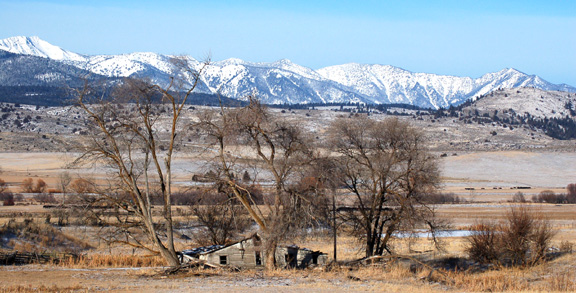
Modoc Plateau, California. The 3 million acre proposed Modoc Plateau National Monument is another one of those out of the way places in the West where few venture, and is not likely to be on anyone’s to “must see before I die list”. The proposal includes the Skedaddle Mountains on the Nevada-California border, one of the largest unprotected wilderness study areas in the state. Immediately west of the Black Rock Desert complex in northern Nevada, this area, along with the Owyhee Canyonlands, probably contains some of the least visited areas in the American West. One of the things that I’ve particularly enjoyed when I’ve camped out here, is the vast bowl of shining stars at night since this area is far from any major urban light sources.
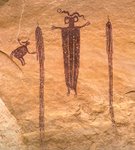
Cedar Mesa, Utah. The Cedar Mesa area extends from the San Juan River to Elk Ridge on the north borders Grand Gulch on the west and Comb Wash on the east. It includes some of the best canyons in Utah like Mule, Arch, Fish and others, as well as thousands of ancient Native American dwellings and other archeological materials. I once watched cows trampling and destroying ancient walls of an Indian dwelling in Arch Canyon, and have seen plenty of damage from ORVs in Comb Wash. Hopefully national monument designation can bring more protection to this unique part of Utah’s Canyon Country.
San Juan Islands, Washington. The 172 islands and islets that make up Washington’s San Juan Islands lie in Puget Sound north and west of Seattle. The islands lie in the rainshadow the Olympic Mountains and receive some of the lowest annual precipitation on the entire West Coast north of Santa Barbara, California. I have only visited a few of the islands, but enjoy the play of land and sea. The islands and the surrounding ocean is a rich land for marine mammals like orca as well as salmon. There are only 13,389 acres are owned by federal, state or local governments in the islands, so I don’t know exactly which lands might be included in the monument. Hopefully national monument status can add to these public holdings to preserve what is a truly outstanding landscape.
Other areas on short list:
Among areas on the short list which probably will not get national monument designation at this time are Wyoming’s Red Desert, Bristol Bay region and Teshekpuk Lake on the North Slope, both in Alaska. It’s a shame that these three areas are not at the top of the list.
Wyoming’s Red Desert, has been proposed as national park for decades. It includes Adobe Town Badlands, a desert elk herd, and portions of historic trails like the Oregon and Mormon trails. It is threatened by expanding oil and gas development. (Perhaps the reason it is not on the list is due to legislation passed when the Tetons were given protected status that prohibited any new national monuments in Wyoming.)
The Bristol Bay is area that is under threat. The Bay is home to the most famous and largest salmon fisheries in North America, and a proposed gold mine near the headwaters of one of the area rivers could pose a threat to many of these runs.
Finally, Teshekpuk Lake is a well known breeding area for waterfowl located along the Arctic Coast to the west of Prudhoe Bay. Oil development is planned for this area as well.
Land Acquisition and Consolidation:
Other parts of the leaked proposal discuss funding for land trades and targeted land acquisition from willing sellers in several important areas to consulate management. For instance, within the Missouri Breaks National Monument there are approximately 80,000 acres of private lands which the administration believes could be purchased for approximately $24 million. Another area targeted for land acquisition is the Upper Green River Valley of Wyoming where almost 400,000 checker boarded state and private acres are located that could be purchased or exchanged. A third area for consolidation is the John Day River in Oregon and the south slope of the Pioneer Mountains in Idaho near Craters of the Moon National Monument.
What are National Monuments?
National Monuments are similar to national parks in many ways, and raise the profile of an area. Unlike National Parks which must be designated by Congressional legislation, and are only managed by the National Park Service, national monuments can be created by Presidential proclamation under the 1906 Antiquities’ Act. Though most national monuments are under National Park Service administration, five other federal agencies currently manage some of our national monuments. For instance, the Missouri Breaks National Monument in Montana is managed by the BLM and Mount St. Helens Volcano National Monument is managed by the Forest Service.
The Act was first used by Theodore Roosevelt to create Devil’s Tower National Monument in Wyoming in 1906. Roosevelt subsequently expanded upon this first conservation act by designating the Grand Canyon NM, Olympic NM, National Bridges NM, and Pinnacles NM in California, among 18 national monuments he established during his presidency. Many subsequent Presidents have designated new national monuments, including George W. Bush who created five national monuments, though four were off in the middle of the Pacific Ocean where there are no voters and no controversy. Many national monuments are “upgraded” to national park status eventually. For instance, Grand Teton National Park, Death Valley National Park, Katmai National Park were all originally national monuments.
Locals Typically Oppose National Monuments
We will, no doubt, hear some the predictable rhetoric about a “government” take over—even though in nearly every instance, the designation is merely changing management emphasis on lands already owned by the public. Historically, however, national monuments were established over the protests of local people.
For example, Teddy Roosevelt tried in vain to get Congress to protect the Grand Canyon but with no success, So Roosevelt used the Antiquities Act to create a Grand Canyon National Monument over the objections of mining, logging and livestock interests as well as most of the residents of Arizona. The Arizona Congressional Delegation even stopped funding for the national monument as a protest.
Similarly, when Roosevelt established protection for old growth forests in the Olympic Mountains, local timber interests and communities were outraged. When Franklin Roosevelt established Jackson Hole National Monument in the Tetons in 1943, locals protested, and the Wyoming delegation introduced legislation to undesignated the monument.
Eventually the Jackson Hole National Monument was merged with other lands to create Grand Teton National Park. When Bill Clinton and Bruce Babbitt established Grand Staircase Escalante National Monument in southern Utah in 1996, the Utah Congressional delegation and Governor were opposed.
There is a pattern to all these protest. Generally short sighted local attitudes change over time, and national monuments generally enjoy wide spread public support even within the states where public opposition was high. There are few people who live in Wyoming today, for instance, who would vote to undesignated Grand Teton National Park. And on the heavily logged Olympic Peninsula, Olympic National Park retains the bulk of remaining old growth forests and intact salmon streams that is now one of the prime attractions of the region.
Will the Obama Administration go forward with this proposal and ensure a legacy in conservation history? I certainly hope so. If history and the passage of time is any indication, future generations of Americans will thank him for these designations just as millions of Americans now enjoy and are grateful for past President’s use of the Antiquities Act to enshrine many of America’s most iconic landscapes from the Grand Tetons in Wyoming to Glacier Bay in Alaska to Joshua Tree National Park.
George Wuerthner has published 35 books covering many areas of the West, including Nevada Mountain Ranges,Oregon Mountain Ranges, Alaska Mountain Ranges, California Wilderness Areas, among other titles.
__
Comment:
I remember Cedar Mesa in Utah's Red Rock Country, the Road Canyon area to be exact, being over-run with starving cows, rib and hip bones almost popping out of their skins, in April of last year. They left the shrub community and cryptogamic/biotic crust in tatters, as the grass, primarily cheat, was at 1 to 1 &1/2 inches. With their calves in tow, they resorted to eating thorny bare salt bush stems.
The heart of the Great Basin is another worthy addition in my mind.
Notably missing is the wind power threatened Steens Mountain Cooperative Management and Protection Area, and adjacent public and state lands, which would seem to be a like a natural addition. --Chris
___________________________
Billy Bragg and Wilco-- "The Unwelcome Guest"
By Woodie Guthrie
Yep, Again!
Showing posts with label Wilco. Show all posts
Showing posts with label Wilco. Show all posts
Saturday, February 20, 2010


Monday, January 25, 2010
More on the Corporate Takeover of America: Inverted totalitarianism
Democracy in America Is a Useful Fiction
By Chris Hedges
http://www.truthdig.com/report/item/democracy_in_america_is_a_useful_fiction_20100124/
http://www.informationclearinghouse.info/article24491.htm
January 25, 2010 "Truthdig" -- Corporate forces, long before the Supreme Court's decision in Citizens United v. Federal Election Commission, carried out a coup d'état in slow motion. The coup is over. We lost. The ruling is one more judicial effort to streamline mechanisms for corporate control. It exposes the myth of a functioning democracy and the triumph of corporate power. But it does not significantly alter the political landscape. The corporate state is firmly cemented in place.

The fiction of democracy remains useful, not only for corporations, but for our bankrupt liberal class. If the fiction is seriously challenged, liberals will be forced to consider actual resistance, which will be neither pleasant nor easy. As long as a democratic facade exists, liberals can engage in an empty moral posturing that requires little sacrifice or commitment. They can be the self-appointed scolds of the Democratic Party, acting as if they are part of the debate and feel vindicated by their cries of protest.
Much of the outrage expressed about the court's ruling is the outrage of those who prefer this choreographed charade. As long as the charade is played, they do not have to consider how to combat what the political philosopher Sheldon Wolin calls our system of "inverted totalitarianism."
Inverted totalitarianism represents "the political coming of age of corporate power and the political demobilization of the citizenry," Wolin writes in "Democracy Incorporated." Inverted totalitarianism differs from classical forms of totalitarianism, which revolve around a demagogue or charismatic leader, and finds its expression in the anonymity of the corporate state. The corporate forces behind inverted totalitarianism do not, as classical totalitarian movements do, boast of replacing decaying structures with a new, revolutionary structure. They purport to honor electoral politics, freedom and the Constitution. But they so corrupt and manipulate the levers of power as to make democracy impossible.
Inverted totalitarianism is not conceptualized as an ideology or objectified in public policy. It is furthered by "power-holders and citizens who often seem unaware of the deeper consequences of their actions or inactions," Wolin writes. But it is as dangerous as classical forms of totalitarianism. In a system of inverted totalitarianism, as this court ruling illustrates, it is not necessary to rewrite the Constitution, as fascist and communist regimes do. It is enough to exploit legitimate power by means of judicial and legislative interpretation. This exploitation ensures that huge corporate campaign contributions are protected speech under the First Amendment. It ensures that heavily financed and organized lobbying by large corporations is interpreted as an application of the people's right to petition the government. The court again ratified the concept that corporations are persons, except in those cases where the "persons" agree to a "settlement." Those within corporations who commit crimes can avoid going to prison by paying large sums of money to the government while, according to this twisted judicial reasoning, not "admitting any wrongdoing." There is a word for this. It is called corruption.
Corporations have 35,000 lobbyists in Washington and thousands more in state capitals that dole out corporate money to shape and write legislation. They use their political action committees to solicit employees and shareholders for donations to fund pliable candidates. The financial sector, for example, spent more than $5 billion on political campaigns, influence peddling and lobbying during the past decade, which resulted in sweeping deregulation, the gouging of consumers, our global financial meltdown and the subsequent looting of the U.S. Treasury. The Pharmaceutical Research and Manufacturers of America spent $26 million last year and drug companies such as Pfizer, Amgen and Eli Lilly kicked in tens of millions more to buy off the two parties. These corporations have made sure our so-called health reform bill will force us to buy their predatory and defective products. The oil and gas industry, the coal industry, defense contractors and telecommunications companies have thwarted the drive for sustainable energy and orchestrated the steady erosion of civil liberties. Politicians do corporate bidding and stage hollow acts of political theater to keep the fiction of the democratic state alive.
There is no national institution left that can accurately be described as democratic. Citizens, rather than participate in power, are allowed to have virtual opinions to preordained questions, a kind of participatory fascism as meaningless as voting on "American Idol." Mass emotions are directed toward the raging culture wars. This allows us to take emotional stands on issues that are inconsequential to the power elite.
Our transformation into an empire, as happened in ancient Athens and Rome, has seen the tyranny we practice abroad become the tyranny we practice at home. We, like all empires, have been eviscerated by our own expansionism. We utilize weapons of horrific destructive power, subsidize their development with billions in taxpayer dollars, and are the world's largest arms dealer. And the Constitution, as Wolin notes, is "conscripted to serve as power's apprentice rather than its conscience."
"Inverted totalitarianism reverses things," Wolin writes. "It is politics all of the time but a politics largely untempered by the political. Party squabbles are occasionally on public display, and there is a frantic and continuous politics among factions of the party, interest groups, competing corporate powers, and rival media concerns. And there is, of course, the culminating moment of national elections when the attention of the nation is required to make a choice of personalities rather than a choice between alternatives. What is absent is the political, the commitment to finding where the common good lies amidst the welter of well-financed, highly organized, single-minded interests rabidly seeking governmental favors and overwhelming the practices of representative government and public administration by a sea of cash."
Hollywood, the news industry and television, all corporate controlled, have become instruments of inverted totalitarianism. They censor or ridicule those who critique or challenge corporate structures and assumptions. They saturate the airwaves with manufactured controversy, whether it is Tiger Woods or the dispute between Jay Leno and Conan O'Brien. They manipulate images to make us confuse how we are made to feel with knowledge, which is how Barack Obama became president. And the draconian internal control employed by the Department of Homeland Security, the military and the police over any form of popular dissent, coupled with the corporate media's censorship, does for inverted totalitarianism what thugs and bonfires of books do in classical totalitarian regimes.
"It seems a replay of historical experience that the bias displayed by today's media should be aimed consistently at the shredded remains of liberalism," Wolin writes. "Recall that an element common to most 20th century totalitarianism, whether Fascist or Stalinist, was hostility towards the left. In the United States, the left is assumed to consist solely of liberals, occasionally of ‘the left wing of the Democratic Party,' never of democrats."
Liberals, socialists, trade unionists, independent journalists and intellectuals, many of whom were once important voices in our society, have been silenced or targeted for elimination within corporate-controlled academia, the media and government. Wolin, who taught at Berkeley and later at Princeton, is arguably the country's foremost political philosopher. And yet his book was virtually ignored. This is also why Ralph Nader, Dennis Kucinich and Cynthia McKinney, along with intellectuals like Noam Chomsky, are not given a part in our national discourse.
The uniformity of opinion is reinforced by the skillfully orchestrated mass emotions of nationalism and patriotism, which paints all dissidents as "soft" or "unpatriotic." The "patriotic" citizen, plagued by fear of job losses and possible terrorist attacks, unfailingly supports widespread surveillance and the militarized state. This means no questioning of the $1 trillion in defense-related spending. It means that the military and intelligence agencies are held above government, as if somehow they are not part of government. The most powerful instruments of state power and control are effectively removed from public discussion. We, as imperial citizens, are taught to be contemptuous of government bureaucracy, yet we stand like sheep before Homeland Security agents in airports and are mute when Congress permits our private correspondence and conversations to be monitored and archived. We endure more state control than at any time in American history.
The civic, patriotic and political language we use to describe ourselves remains unchanged. We pay fealty to the same national symbols and iconography. We find our collective identity in the same national myths. We continue to deify the Founding Fathers. But the America we celebrate is an illusion. It does not exist. Our government and judiciary have no real sovereignty. Our press provides diversion, not information. Our organs of security and power keep us as domesticated and as fearful as most Iraqis. Capitalism, as Karl Marx understood, when it emasculates government, becomes a revolutionary force. And this revolutionary force, best described as inverted totalitarianism, is plunging us into a state of neo-feudalism, perpetual war and severe repression. The Supreme Court decision is part of our transformation by the corporate state from citizens to prisoners.
Chris Hedges, whose column is published on Truthdig every Monday, spent two decades as a foreign reporter covering wars in Latin America, Africa, Europe and the Middle East. He served for eight years as the Middle East bureau chief of The New York Times, where he shared the 2002 Pulitzer Prize for Explanatory Journalism, for coverage of terrorism. Hedges also received the 2002 Amnesty International Global Award for Human Rights Journalism.
© 2010 TruthDig.com
_______
Billy Bragg and Wilco - The Unwelcome Guest (Written by Woodie Guthrie)
By Chris Hedges
http://www.truthdig.com/report/item/democracy_in_america_is_a_useful_fiction_20100124/
http://www.informationclearinghouse.info/article24491.htm
January 25, 2010 "Truthdig" -- Corporate forces, long before the Supreme Court's decision in Citizens United v. Federal Election Commission, carried out a coup d'état in slow motion. The coup is over. We lost. The ruling is one more judicial effort to streamline mechanisms for corporate control. It exposes the myth of a functioning democracy and the triumph of corporate power. But it does not significantly alter the political landscape. The corporate state is firmly cemented in place.

The fiction of democracy remains useful, not only for corporations, but for our bankrupt liberal class. If the fiction is seriously challenged, liberals will be forced to consider actual resistance, which will be neither pleasant nor easy. As long as a democratic facade exists, liberals can engage in an empty moral posturing that requires little sacrifice or commitment. They can be the self-appointed scolds of the Democratic Party, acting as if they are part of the debate and feel vindicated by their cries of protest.
Much of the outrage expressed about the court's ruling is the outrage of those who prefer this choreographed charade. As long as the charade is played, they do not have to consider how to combat what the political philosopher Sheldon Wolin calls our system of "inverted totalitarianism."
Inverted totalitarianism represents "the political coming of age of corporate power and the political demobilization of the citizenry," Wolin writes in "Democracy Incorporated." Inverted totalitarianism differs from classical forms of totalitarianism, which revolve around a demagogue or charismatic leader, and finds its expression in the anonymity of the corporate state. The corporate forces behind inverted totalitarianism do not, as classical totalitarian movements do, boast of replacing decaying structures with a new, revolutionary structure. They purport to honor electoral politics, freedom and the Constitution. But they so corrupt and manipulate the levers of power as to make democracy impossible.
Inverted totalitarianism is not conceptualized as an ideology or objectified in public policy. It is furthered by "power-holders and citizens who often seem unaware of the deeper consequences of their actions or inactions," Wolin writes. But it is as dangerous as classical forms of totalitarianism. In a system of inverted totalitarianism, as this court ruling illustrates, it is not necessary to rewrite the Constitution, as fascist and communist regimes do. It is enough to exploit legitimate power by means of judicial and legislative interpretation. This exploitation ensures that huge corporate campaign contributions are protected speech under the First Amendment. It ensures that heavily financed and organized lobbying by large corporations is interpreted as an application of the people's right to petition the government. The court again ratified the concept that corporations are persons, except in those cases where the "persons" agree to a "settlement." Those within corporations who commit crimes can avoid going to prison by paying large sums of money to the government while, according to this twisted judicial reasoning, not "admitting any wrongdoing." There is a word for this. It is called corruption.
Corporations have 35,000 lobbyists in Washington and thousands more in state capitals that dole out corporate money to shape and write legislation. They use their political action committees to solicit employees and shareholders for donations to fund pliable candidates. The financial sector, for example, spent more than $5 billion on political campaigns, influence peddling and lobbying during the past decade, which resulted in sweeping deregulation, the gouging of consumers, our global financial meltdown and the subsequent looting of the U.S. Treasury. The Pharmaceutical Research and Manufacturers of America spent $26 million last year and drug companies such as Pfizer, Amgen and Eli Lilly kicked in tens of millions more to buy off the two parties. These corporations have made sure our so-called health reform bill will force us to buy their predatory and defective products. The oil and gas industry, the coal industry, defense contractors and telecommunications companies have thwarted the drive for sustainable energy and orchestrated the steady erosion of civil liberties. Politicians do corporate bidding and stage hollow acts of political theater to keep the fiction of the democratic state alive.
There is no national institution left that can accurately be described as democratic. Citizens, rather than participate in power, are allowed to have virtual opinions to preordained questions, a kind of participatory fascism as meaningless as voting on "American Idol." Mass emotions are directed toward the raging culture wars. This allows us to take emotional stands on issues that are inconsequential to the power elite.
Our transformation into an empire, as happened in ancient Athens and Rome, has seen the tyranny we practice abroad become the tyranny we practice at home. We, like all empires, have been eviscerated by our own expansionism. We utilize weapons of horrific destructive power, subsidize their development with billions in taxpayer dollars, and are the world's largest arms dealer. And the Constitution, as Wolin notes, is "conscripted to serve as power's apprentice rather than its conscience."
"Inverted totalitarianism reverses things," Wolin writes. "It is politics all of the time but a politics largely untempered by the political. Party squabbles are occasionally on public display, and there is a frantic and continuous politics among factions of the party, interest groups, competing corporate powers, and rival media concerns. And there is, of course, the culminating moment of national elections when the attention of the nation is required to make a choice of personalities rather than a choice between alternatives. What is absent is the political, the commitment to finding where the common good lies amidst the welter of well-financed, highly organized, single-minded interests rabidly seeking governmental favors and overwhelming the practices of representative government and public administration by a sea of cash."
Hollywood, the news industry and television, all corporate controlled, have become instruments of inverted totalitarianism. They censor or ridicule those who critique or challenge corporate structures and assumptions. They saturate the airwaves with manufactured controversy, whether it is Tiger Woods or the dispute between Jay Leno and Conan O'Brien. They manipulate images to make us confuse how we are made to feel with knowledge, which is how Barack Obama became president. And the draconian internal control employed by the Department of Homeland Security, the military and the police over any form of popular dissent, coupled with the corporate media's censorship, does for inverted totalitarianism what thugs and bonfires of books do in classical totalitarian regimes.
"It seems a replay of historical experience that the bias displayed by today's media should be aimed consistently at the shredded remains of liberalism," Wolin writes. "Recall that an element common to most 20th century totalitarianism, whether Fascist or Stalinist, was hostility towards the left. In the United States, the left is assumed to consist solely of liberals, occasionally of ‘the left wing of the Democratic Party,' never of democrats."
Liberals, socialists, trade unionists, independent journalists and intellectuals, many of whom were once important voices in our society, have been silenced or targeted for elimination within corporate-controlled academia, the media and government. Wolin, who taught at Berkeley and later at Princeton, is arguably the country's foremost political philosopher. And yet his book was virtually ignored. This is also why Ralph Nader, Dennis Kucinich and Cynthia McKinney, along with intellectuals like Noam Chomsky, are not given a part in our national discourse.
The uniformity of opinion is reinforced by the skillfully orchestrated mass emotions of nationalism and patriotism, which paints all dissidents as "soft" or "unpatriotic." The "patriotic" citizen, plagued by fear of job losses and possible terrorist attacks, unfailingly supports widespread surveillance and the militarized state. This means no questioning of the $1 trillion in defense-related spending. It means that the military and intelligence agencies are held above government, as if somehow they are not part of government. The most powerful instruments of state power and control are effectively removed from public discussion. We, as imperial citizens, are taught to be contemptuous of government bureaucracy, yet we stand like sheep before Homeland Security agents in airports and are mute when Congress permits our private correspondence and conversations to be monitored and archived. We endure more state control than at any time in American history.
The civic, patriotic and political language we use to describe ourselves remains unchanged. We pay fealty to the same national symbols and iconography. We find our collective identity in the same national myths. We continue to deify the Founding Fathers. But the America we celebrate is an illusion. It does not exist. Our government and judiciary have no real sovereignty. Our press provides diversion, not information. Our organs of security and power keep us as domesticated and as fearful as most Iraqis. Capitalism, as Karl Marx understood, when it emasculates government, becomes a revolutionary force. And this revolutionary force, best described as inverted totalitarianism, is plunging us into a state of neo-feudalism, perpetual war and severe repression. The Supreme Court decision is part of our transformation by the corporate state from citizens to prisoners.
Chris Hedges, whose column is published on Truthdig every Monday, spent two decades as a foreign reporter covering wars in Latin America, Africa, Europe and the Middle East. He served for eight years as the Middle East bureau chief of The New York Times, where he shared the 2002 Pulitzer Prize for Explanatory Journalism, for coverage of terrorism. Hedges also received the 2002 Amnesty International Global Award for Human Rights Journalism.
© 2010 TruthDig.com
_______
Billy Bragg and Wilco - The Unwelcome Guest (Written by Woodie Guthrie)
Subscribe to:
Posts (Atom)