







___
This is a case that I am intimately familiar with.
From ONDA
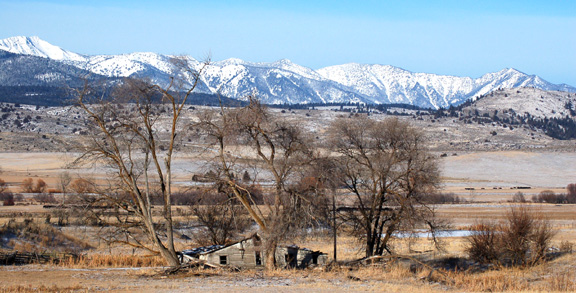
A federal judge ruled today that livestock grazing has degraded important native steelhead streams on nearly a half-million acres of public land on the Malheur National Forest. Judge Ancer Haggerty found that the Forest Service’s grazing plan allowed livestock to damage critical habitat for steelhead along more than 300 miles of streams in the John Day River Basin. This ruling marks the latest in a string of successes against the agency by the Oregon Natural Desert Association (ONDA), Center for Biological Diversity and Western Watersheds Project, who have been challenging Malheur forest grazing since 2003.
According to evidence gathered by the conservation groups, as well as the agency’s own surveys, stream side grazing permitted by the Forest Service has caused failures to meet ecological standards meant to conserve steelhead. The standards, established by the Forest Service and the National Marine Fisheries Service (NMFS), are meant to protect the key elements of healthy fish streams: stable stream banks and overhanging vegetation that keep streams clear and cold. Evidence showed the Forest Service’s grazing program resulted in damaged stream banks many times worse than the amount allowed under the federal standards.
“Recognizing that endangered fish like steelhead trout can’t survive if the places where they live are destroyed, the Endangered Species Act includes strong provisions to protect habitat,” said Brent Fenty, ONDA’s Executive Director. “The court’s decision upholding the protections of the Act is good both for steelhead and for the streams they live in.”
The judge specifically criticized the Forest Service’s failure to prevent “inordinate” damage in several areas the agency admitted were particularly important to the steelhead’s ability to avoid extinction, as well as the agency’s “empty promises” and reliance on a plan that lacked mandatory monitoring and enforcement measures. The judge also ruled that the Forest Service failed to properly consult with the fisheries agency about the grazing plan, as is required by federal law. The Forest Service failed to measure and evaluate stream conditions before authorizing grazing during the last three years.
This is the first ruling on the merits in the decade-long litigation targeting pervasive damage from Forest Service authorized grazing. The steelhead, an iconic Pacific Northwest native trout, is listed under the Endangered Species Act as a “threatened” species in danger of extinction.
“We want to see steelhead recover in the John Day so they can once again be a central social, cultural and economic asset to people in the Basin and to all Oregonians,” said Fenty. “Today’s decision guarantees long-term improvements in the Forest Service’s management of these sensitive streams.”
Earlier this week, the conservation groups agreed with the Forest Service and grazing permittees to allow reduced grazing during 2010 coupled with strict protections to insure that cattle do not damage steelhead critical habitat. In conjunction with today’s court decision, the agreement puts the onus on the Forest Service and permittees to insure that livestock do not damage steelhead streams.
Over the past two years, Judge Haggerty has issued two preliminary rulings in this case which have resulted in significant protections for threatened steelhead. In 2008, the court issued an injunction barring grazing on two allotments. That ruling protected over 90 miles of steelhead streams. In the places where the court’s orders have prevented grazing during the past two years, even a single year of rest already has allowed for significant initial recovery of riparian plant communities, stream channels, and fish habitat to begin.
The Malheur National Forest is located in eastern Oregon’s Blue Mountains. It includes portions of the Upper John Day, Middle Fork John Day, North Fork John Day, and Malheur Rivers. The 281-mile long John Day River is the second longest undammed river in the continental United States. The river and its hundreds of miles of tributary streams on the Malheur National Forest provide spawning, rearing and migratory habitat for the largest naturally spawning, native stock of wild steelhead remaining in the Columbia River Basin.
Showing posts with label Western Watersheds Project. Show all posts
Showing posts with label Western Watersheds Project. Show all posts
Friday, June 4, 2010
Monday, March 8, 2010
Western Watersheds Challenges the Legal & Political Purgatory for Sage Grouse.
Yesterday's post on the sage grouse (AKA greater sage-grouse or greater sage grouse), Centrocercus urophasianus, noted “ 'warranted but precluded' is sort of the endangered species Newspeak equivalent of an old folks nursing home or hospice, where endangered species lie around without care in a sort of political "purgatory." As the grouse and the many other species receiving that designation are accepted to be "endangered" or "threatened" by the "warranted" portion of the phrase, it is the "precluded" portion that creates the "catch-22" which actually places a species in legal and political purgatory. Today, Western Watersheds Project and Advocates For The West filed a court complaint in Idaho challenging the the US Fish & Wildlife Service's rational and legal basis for precluding the sage grouse, whose endangerment is now legally acknowledged, from being listed as such, and from being legally safeguarded under the protections offered by the Endangered Species Act. In their complaint they describe the legal and political purgatory: "This “precluded” determination relegates the sage-grouse to the long list of ESA “candidate” species – a black hole from which few species ever emerge, and under which they receive no ESA protection – and represents yet another non-scientific, politicized, and arbitrary determination that prevents the sage-grouse from obtaining the ESA protection that it urgently needs." (See larger portion of Complaint below)
WWP press Release:
Box 1770
Hailey, ID 83333
tel: (208) 788-2290
fax: (208) 788-2298
email: wwp@westernwatersheds.org
web site: www.westernwatersheds.org
Working to protect and restore Western Watersheds and Wildlife
Western Watersheds Project Files Legal Challenge To Denial of Endangered Species Act Protections for Greater Sage-Grouse
For immediate release - March 8, 2010
Contacts:
Jon Marvel, Executive Director Western Watersheds Project: 208-788-2290 ext. 11,
Laird Lucas, Executive Director, Advocates For The West: 208-342-7024 ext. 201
In response to the announcement on Friday March 5 by Secretary of the Interior Ken Salazar that the listing of greater sage-grouse and two of its distinct population segments (Mono Basin and Eastern Washington) under the protections of the Endangered Species Act is “warranted but precluded”, Western Watersheds Project has filed litigation in federal District Court in Boise, Idaho challenging the “precluded” portion of the finding.
The litigation charges that the U.S. Fish and Wildlife Service and the Department of the Interior violated the Administrative Procedure Act and the Endangered Species Act by finding that the listing of greater sage-grouse is “precluded”.
“The Obama administration rightfully concluded that the greater sage-grouse fully qualify for the protections of the Endangered Species Act,” said Jon Marvel, executive director of Western Watersheds Project. “Unfortunately, the administration has violated the law in not listing sage-grouse at the same time.”
The greater sage-grouse is a charismatic bird that lives in sagebrush steppe in eleven western states. First described by Lewis and Clark in 1805, nineteenth century travelers and settlers reported seeing huge flocks of sage-grouse that darkened the sky as they lifted from valley floors. However, westward expansion and development over the next 200 years has eliminated almost half of sagebrush habitat. The total sage-grouse population, estimated between 140,000-500,000 birds, has declined between 69-99 percent from historic levels.
Myriad human activities in the Sagebrush Sea have decimated sage-grouse habitat, including livestock grazing, oil and gas development, agricultural conversion, application of herbicides and pesticides, unnatural fire, urban sprawl, mining, off-road vehicle use, and the placement and construction of utility corridors, roads and fences.
The Fish and Wildlife Service’s finding indicates that current conservation efforts are failing to conserve sage-grouse.
“The ever growing effects of development of the sagebrush sea will doom sage-grouse without the mandatory protection provided by listing the species under the protections of the Endangered Species Act.” said Laird Lucas, executive director of Advocates For The West, the Boise-based legal advocacy firm representing Western Watersheds Project in the sage-grouse
litigation.
__
Here is the introduction to the Complaint:
Todd C. Tucci (ISB # 6526)
ADVOCATES FOR THE WEST
P.O. Box 1612
Boise, ID 83701
(208) 342-7024
(208) 342-8286 (fax)
ttucci@advocateswest.org
Laurence (“Laird”) J. Lucas (ISB # 4733)
P.O. Box 1342
Boise, Idaho 83701
(208) 424-1466 (phone and fax)
llucas@lairdlucas.org
Attorneys for Plaintiff Western Watersheds Project
UNITED STATES DISTRICT COURT
FOR THE DISTRICT OF IDAHO
WESTERN WATERSHEDS PROJECT,
Plaintiff,
vs.
U.S. FISH AND WILDLIFE SERVICE,
Defendant.
No. 06-cv-277-BLW
FIRST SUPPLEMENTAL
COMPLAINT
INTRODUCTION
1. In December 2007, the Court ruled in this case that Defendant U.S. Fish and Wildlife Service acted unlawfully in determining that Endangered Species Act listing of the greater sage-grouse was “not warranted,” due to improper political interference in the listing process and the Service’s arbitrary treatment of the best available science showing that sage grouse populations and habitats are deeply imperiled. See Docket No. 118. The Court remanded for the Service to make a new Endangered Species Act listing determination; and approved remand stipulations in which Plaintiff Western Watersheds Project agreed that the Service could delay the listing decision to take into account the latest sage-grouse science, as reported in a Studies for Avian Biology “Monograph” being prepared by leading sage-grouse researchers. See Docket Nos. 130, 137 & 183.
2. Based on that Monograph and other best available science, the Service announced on March 5, 2010 its new finding that ESA listing of greater sage-grouse is “warranted” under the ESA, because of the many threats facing sage-grouse populations and their sagebrush habitats – particularly habitat fragmentation from energy development, livestock grazing, infrastructure, fires, weed invasions, and climate change impacts. See U.S. Fish and Wildlife Service, “Endangered and Threatened Wildlife and Plants: 12-Month Findings for Petitions to List the Greater Sage-Grouse (Centrocercus urophasianus) As Threatened or Endangered,” available at http://www.fws.gov/mountain-prairie/species/birds/sagegrouse/FR03052010.pdf (hereafter, “March 2010 Finding”).
3. Yet despite these scientific findings acknowledging that the sage-grouse qualifies for listing as an endangered or threatened species, the Service is perpetuating its unlawful refusal to protect sage-grouse under the ESA. In the March 2010 Finding, the Service determined not to proceed with a proposed listing rule for the greater sage-grouse, asserting that its own
bureaucratic backlog and lack of resources supposedly preclude it from moving forward with an ESA listing rule for the sage-grouse this year.
4. This “precluded” determination relegates the sage-grouse to the long list of ESA “candidate” species – a black hole from which few species ever emerge, and under which they receive no ESA protection – and represents yet another non-scientific, politicized, and arbitrary determination that prevents the sage-grouse from obtaining the ESA protection that it urgently
needs.
4. [sic] As alleged below, the Court must reject the Service’s “precluded” finding as being arbitrary, capricious, and contrary to law. The Service cannot justify its refusal to proceed with a sage-grouse listing based on its own bureaucratic listing backlog and other grounds cited in the March 2010 Finding – particularly when the Service has already invested the bulk of the resources needed for a sage-grouse listing in rendering the March 2010 Finding; and when the Service has already been found by this Court (and many others) to have repeatedly violated the ESA in not proceeding to list sage-grouse and other species as directed by Congress. Moreover, the Service has abjectly failed to make expeditious progress in addressing the large backlog of species that warrant ESA protection; and it is relying on improper budgetary and other excuses to avoid proceeding with the greater sage-grouse listing, contrary to the ESA’s statutory requirements and without rational justification.
5. Plaintiff Western Watersheds Project thus brings this First Supplemental Complaint to challenge the “precluded” part of the Service’s March 1010 Finding that ESA listing of greater sage-grouse is “warranted, but precluded,” as being arbitrary, capricious, and contrary to law. WWP asks the Court to quickly review and reverse that “precluded” determination, and remand with instructions for the Service to promptly publish a proposed listing rule within a set deadline, so that greater sage-grouse can finally receive the ESA protections that science – and the Service’s own “warranted” determination – show are necessary
to prevent this icon of the sagebrush sea from declining further toward extinction.
____________________
Good AP Article:
Group challenges sage grouse finding
By MEAD GRUVER Associated Press Writer
Posted: 03/08/2010 03:07:51 PM PST
Updated: 03/08/2010 05:43:58 PM PST
CHEYENNE, Wyo.—An environmental group is challenging plans by the Interior Department to classify sage grouse as merely a candidate for protection under the Endangered Species Act and not list the bird as threatened or endangered.
The department announced Friday that federal protection as an endangered or threatened species is warranted but precluded by higher priorities—species deemed in more dire need of protection right now.
Western Watersheds questioned that finding in a supplemental complaint filed Monday in U.S. District Court in Boise, Idaho.
"The sage grouse is, in our judgment, as qualified as any species on the candidate list for the protections of the act," Jon Marvel, director of Western Watersheds, said Monday. "Of course they should be acting on all of these species, and why
aren't they?"
The new complaint calls the candidate species list "a black hole from which few species ever emerge, and under which they receive no ESA protection." The decision to put the sage grouse on the list was "arbitrary, capricious and contrary to law," the
group claims.
An Interior spokeswoman declined to comment because the matter is being litigated.
Western Watersheds sued in 2006 over a previous decision not to list sage grouse. U.S. District Judge B. Lynn Winmill found that the earlier decision was politically motivated and told the department to reevaluate, leading to Friday's announcement.
A supplemental complaint is filed to bring forth facts and claims that happen after an initial complaint in a case, said Laird Lucas, a Western Watersheds attorney.
The notion that sage grouse aren't a high priority for protection is implausible after the government spent considerable time and money studying whether they deserved protection, Lucas said
"They can't now claim they don't have the money to
move forward. It does not make sense," Lucas said.
"And that, to me, says really it is a political determination at the end." . . . .
To read entire article, See:
http://www.mercurynews.com/breaking-news/ci_14635602?nclick_check=1
___________________
SEE ALSO:
F&WS Notice of 12–month petition findings
SUNDAY, MARCH 7, 2010
Hells Canyon Springing & Purgatory for Sage Grouse
and,
THURSDAY, FEBRUARY 11, 2010
Environmental issues: Sage Grouse; Grazing Fee
WWP press Release:
Box 1770
Hailey, ID 83333
tel: (208) 788-2290
fax: (208) 788-2298
email: wwp@westernwatersheds.org
web site: www.westernwatersheds.org
Working to protect and restore Western Watersheds and Wildlife
Western Watersheds Project Files Legal Challenge To Denial of Endangered Species Act Protections for Greater Sage-Grouse
For immediate release - March 8, 2010
Contacts:
Jon Marvel, Executive Director Western Watersheds Project: 208-788-2290 ext. 11,
Laird Lucas, Executive Director, Advocates For The West: 208-342-7024 ext. 201
In response to the announcement on Friday March 5 by Secretary of the Interior Ken Salazar that the listing of greater sage-grouse and two of its distinct population segments (Mono Basin and Eastern Washington) under the protections of the Endangered Species Act is “warranted but precluded”, Western Watersheds Project has filed litigation in federal District Court in Boise, Idaho challenging the “precluded” portion of the finding.
The litigation charges that the U.S. Fish and Wildlife Service and the Department of the Interior violated the Administrative Procedure Act and the Endangered Species Act by finding that the listing of greater sage-grouse is “precluded”.
“The Obama administration rightfully concluded that the greater sage-grouse fully qualify for the protections of the Endangered Species Act,” said Jon Marvel, executive director of Western Watersheds Project. “Unfortunately, the administration has violated the law in not listing sage-grouse at the same time.”
The greater sage-grouse is a charismatic bird that lives in sagebrush steppe in eleven western states. First described by Lewis and Clark in 1805, nineteenth century travelers and settlers reported seeing huge flocks of sage-grouse that darkened the sky as they lifted from valley floors. However, westward expansion and development over the next 200 years has eliminated almost half of sagebrush habitat. The total sage-grouse population, estimated between 140,000-500,000 birds, has declined between 69-99 percent from historic levels.
Myriad human activities in the Sagebrush Sea have decimated sage-grouse habitat, including livestock grazing, oil and gas development, agricultural conversion, application of herbicides and pesticides, unnatural fire, urban sprawl, mining, off-road vehicle use, and the placement and construction of utility corridors, roads and fences.
The Fish and Wildlife Service’s finding indicates that current conservation efforts are failing to conserve sage-grouse.
“The ever growing effects of development of the sagebrush sea will doom sage-grouse without the mandatory protection provided by listing the species under the protections of the Endangered Species Act.” said Laird Lucas, executive director of Advocates For The West, the Boise-based legal advocacy firm representing Western Watersheds Project in the sage-grouse
litigation.
__
Here is the introduction to the Complaint:
Todd C. Tucci (ISB # 6526)
ADVOCATES FOR THE WEST
P.O. Box 1612
Boise, ID 83701
(208) 342-7024
(208) 342-8286 (fax)
ttucci@advocateswest.org
Laurence (“Laird”) J. Lucas (ISB # 4733)
P.O. Box 1342
Boise, Idaho 83701
(208) 424-1466 (phone and fax)
llucas@lairdlucas.org
Attorneys for Plaintiff Western Watersheds Project
UNITED STATES DISTRICT COURT
FOR THE DISTRICT OF IDAHO
WESTERN WATERSHEDS PROJECT,
Plaintiff,
vs.
U.S. FISH AND WILDLIFE SERVICE,
Defendant.
No. 06-cv-277-BLW
FIRST SUPPLEMENTAL
COMPLAINT
INTRODUCTION
1. In December 2007, the Court ruled in this case that Defendant U.S. Fish and Wildlife Service acted unlawfully in determining that Endangered Species Act listing of the greater sage-grouse was “not warranted,” due to improper political interference in the listing process and the Service’s arbitrary treatment of the best available science showing that sage grouse populations and habitats are deeply imperiled. See Docket No. 118. The Court remanded for the Service to make a new Endangered Species Act listing determination; and approved remand stipulations in which Plaintiff Western Watersheds Project agreed that the Service could delay the listing decision to take into account the latest sage-grouse science, as reported in a Studies for Avian Biology “Monograph” being prepared by leading sage-grouse researchers. See Docket Nos. 130, 137 & 183.
2. Based on that Monograph and other best available science, the Service announced on March 5, 2010 its new finding that ESA listing of greater sage-grouse is “warranted” under the ESA, because of the many threats facing sage-grouse populations and their sagebrush habitats – particularly habitat fragmentation from energy development, livestock grazing, infrastructure, fires, weed invasions, and climate change impacts. See U.S. Fish and Wildlife Service, “Endangered and Threatened Wildlife and Plants: 12-Month Findings for Petitions to List the Greater Sage-Grouse (Centrocercus urophasianus) As Threatened or Endangered,” available at http://www.fws.gov/mountain-prairie/species/birds/sagegrouse/FR03052010.pdf (hereafter, “March 2010 Finding”).
3. Yet despite these scientific findings acknowledging that the sage-grouse qualifies for listing as an endangered or threatened species, the Service is perpetuating its unlawful refusal to protect sage-grouse under the ESA. In the March 2010 Finding, the Service determined not to proceed with a proposed listing rule for the greater sage-grouse, asserting that its own
bureaucratic backlog and lack of resources supposedly preclude it from moving forward with an ESA listing rule for the sage-grouse this year.
4. This “precluded” determination relegates the sage-grouse to the long list of ESA “candidate” species – a black hole from which few species ever emerge, and under which they receive no ESA protection – and represents yet another non-scientific, politicized, and arbitrary determination that prevents the sage-grouse from obtaining the ESA protection that it urgently
needs.
4. [sic] As alleged below, the Court must reject the Service’s “precluded” finding as being arbitrary, capricious, and contrary to law. The Service cannot justify its refusal to proceed with a sage-grouse listing based on its own bureaucratic listing backlog and other grounds cited in the March 2010 Finding – particularly when the Service has already invested the bulk of the resources needed for a sage-grouse listing in rendering the March 2010 Finding; and when the Service has already been found by this Court (and many others) to have repeatedly violated the ESA in not proceeding to list sage-grouse and other species as directed by Congress. Moreover, the Service has abjectly failed to make expeditious progress in addressing the large backlog of species that warrant ESA protection; and it is relying on improper budgetary and other excuses to avoid proceeding with the greater sage-grouse listing, contrary to the ESA’s statutory requirements and without rational justification.
5. Plaintiff Western Watersheds Project thus brings this First Supplemental Complaint to challenge the “precluded” part of the Service’s March 1010 Finding that ESA listing of greater sage-grouse is “warranted, but precluded,” as being arbitrary, capricious, and contrary to law. WWP asks the Court to quickly review and reverse that “precluded” determination, and remand with instructions for the Service to promptly publish a proposed listing rule within a set deadline, so that greater sage-grouse can finally receive the ESA protections that science – and the Service’s own “warranted” determination – show are necessary
to prevent this icon of the sagebrush sea from declining further toward extinction.
____________________
Good AP Article:
Group challenges sage grouse finding
By MEAD GRUVER Associated Press Writer
Posted: 03/08/2010 03:07:51 PM PST
Updated: 03/08/2010 05:43:58 PM PST
CHEYENNE, Wyo.—An environmental group is challenging plans by the Interior Department to classify sage grouse as merely a candidate for protection under the Endangered Species Act and not list the bird as threatened or endangered.
The department announced Friday that federal protection as an endangered or threatened species is warranted but precluded by higher priorities—species deemed in more dire need of protection right now.
Western Watersheds questioned that finding in a supplemental complaint filed Monday in U.S. District Court in Boise, Idaho.
"The sage grouse is, in our judgment, as qualified as any species on the candidate list for the protections of the act," Jon Marvel, director of Western Watersheds, said Monday. "Of course they should be acting on all of these species, and why
aren't they?"
The new complaint calls the candidate species list "a black hole from which few species ever emerge, and under which they receive no ESA protection." The decision to put the sage grouse on the list was "arbitrary, capricious and contrary to law," the
group claims.
An Interior spokeswoman declined to comment because the matter is being litigated.
Western Watersheds sued in 2006 over a previous decision not to list sage grouse. U.S. District Judge B. Lynn Winmill found that the earlier decision was politically motivated and told the department to reevaluate, leading to Friday's announcement.
A supplemental complaint is filed to bring forth facts and claims that happen after an initial complaint in a case, said Laird Lucas, a Western Watersheds attorney.
The notion that sage grouse aren't a high priority for protection is implausible after the government spent considerable time and money studying whether they deserved protection, Lucas said
"They can't now claim they don't have the money to
move forward. It does not make sense," Lucas said.
"And that, to me, says really it is a political determination at the end." . . . .
To read entire article, See:
http://www.mercurynews.com/breaking-news/ci_14635602?nclick_check=1
___________________
SEE ALSO:
F&WS Notice of 12–month petition findings
SUNDAY, MARCH 7, 2010
Hells Canyon Springing & Purgatory for Sage Grouse
and,
THURSDAY, FEBRUARY 11, 2010
Environmental issues: Sage Grouse; Grazing Fee


Thursday, November 19, 2009
Wolves Expanding in N.E. Oregon
In this Issue:
- ODFW Documents 10 Wolves East of Joseph, OR (Video)
- Grazing concerns fueling debate over Ore. land transfer
- More Environmental News
______________________
ODFW Documents Oregon Wolf Population Expansion
Back in early September I had called Russ Morgan, ODFW Wolf Coordinator to inquire about why the fladry and other non-lethal protective measures had been removed from the Jacobs Ranch just a few months prior to the final predation by, and killing of, our only documented Baker County wolves. He indicated that wolves might become accustomed to the fladry and sound devices if they were to remain there permanently and that wolves seemed to be staying away from the ranch area for a long time.
At the time he assured me that there were at least two wolf packs in Oregon, in the Wenaha Wilderness area and the Imnaha area. He also felt they would likely spread into the upper Grande Ronde watershed north and west of Anthony lakes at some time in the future. Today, ODFW released the following information which indicates the Imnaha pack is doing quite well.
.jpg) Alpha Male of Imnaha Pack-ODFW Photo
Alpha Male of Imnaha Pack-ODFW Photo
From ODFW:
MEDIA ADVISORY
Oregon Department of Fish and Wildlife
Contact: Michelle Dennehy (503) 947-6022
Fax: (503) 947-6009
Internet: www.dfw.state.or.us
Nov. 19, 2009
Video shows10 wolves in the Imnaha pack
A video taken by ODFW on Nov. 12, 2009 in the Imnaha Wildlife Management Unit (east of Joseph, Ore. in Wallowa County) shows at least 10 wolves make up a pack that ODFW has been monitoring since June 2008. The video was taken from an adjacent ridge across a canyon and shows a mixture of gray and black individual wolves moving upslope.
VIDEO HERE:
http://www.dfw.state.or.us/news/video_gallery/imnaha_wolf_pack.asp
Also found here:
http://www.youtube.com/user/IEODFW
http://www.youtube.com/watch?v=kqtMLxzSMok
“ODFW has been regularly monitoring this pack but until this video was taken, we only had evidence of a minimum of three adults and three pups making up the pack, says Russ Morgan, ODFW wolf coordinator. “Pups can be difficult to distinguish at this distance, but it appears there may be as many as six pups in the video.
Wolf litters generally average around five pups, but more is not uncommon,” he added.
The alpha female of the pack is B-300, a wolf first observed in Oregon in January 2008. Her radio collar stopped working in Fall 2008 but ODFW re-collared her in July 2009 and wildlife managers continue to track her and other members of the pack.
ODFW will continue to monitor this pack and another pack in the Wenaha Unit (Wallowa County) to count their pups during the month of December. For a pack to be defined as a “breeding pair” (an important step in wolf conservation) it must produce at least two pups that survive to December 31 of the year of their birth.
Under Oregon’s Wolf Conservation and Management Plan, the Fish and Wildlife Commission will consider delisting wolves from the Oregon Endangered Species List when four breeding pairs for three consecutive years have been documented in eastern Oregon.
The video is more evidence that wolves are establishing themselves in northeast Oregon.
Wolves throughout Oregon are protected by the State Endangered Species Act., They are also protected by the Federal Endangered Species Act west of Highways 398/78/95.
Photos of B-300 and alpha male in Imnaha wolf pack:
http://www.dfw.state.or.us/news/images/photo_gallery/wolves_in_the_news/content/confirmedwolf_large.html
http://www.dfw.state.or.us/news/images/photo_gallery/wolves_in_the_news/content/B300July2009_large.html
http://www.dfw.state.or.us/news/images/photo_gallery/wolves_in_the_news/content/Imnaha_Alpha_Male_Aug2009a_large.html
http://www.dfw.state.or.us/news/images/photo_gallery/wolves_in_the_news/content/Imnaha_Alpha_Male_Aug2009b_large.html
ODFW Wolves Slide Show:
http://www.dfw.state.or.us/news/images/photo_gallery/wolves_in_the_news/content/BakerdepredationApril2009_large.html

Gray Wolf (Canis lupis) [USF&WS Photo]
More BakerCountyBlogs on Wolves:
http://bakercountyblog.blogspot.com/2009/05/poppycock-proclamation.html
http://bakercountyblog.blogspot.com/2009/05/this-is-re-post-of-blog-from-december-6.html
Oregon Wolves
http://www.rangebiome.org/editorials/oregonwolves.html
___________________________________
This story came to me from RangeNet.org at Yahoo Groups (http://www.rangenet.org/).
----- Original Message -----
From:
Sent: Thursday, November 19, 2009 2:38 PM
Subject: Land Letter: Grazing concerns fueling debate over Ore. land transfer
Grazing concerns fueling debate over Ore. land transfer (11/19/2009)
Scott Streater, E&E reporter
A proposal to transfer thousands of acres of national forest in southern Oregon to the National Park Service has renewed debate over whether the Forest Service should control some of the nation's most environmentally sensitive lands.
The controversy stems from a bill sponsored by two of Oregon's senior Democratic lawmakers, Sen. Ron Wyden and Rep. Peter DeFazio, that would transfer 4,070 acres from the Rogue River-Siskiyou National Forest to the adjacent Oregon Caves National Monument, managed by the Park Service.
The lawmakers argue the Park Service is better equipped to maintain forest trails and campgrounds, and that the Forest Service has failed to protect the land from the effects of grazing, including the polluting of the monument's drinking water source with livestock manure.
But the "Oregon Caves National Monument Boundary Act" highlights much bigger problems for the Forest Service, including years of steep budget cuts and the redistribution of tens of millions of dollars from national forest upkeep and maintenance programs to firefighting accounts.
The bill also points to ongoing concerns about the Forest Service's multiuse mission, which holds that the agency must manage its holdings for timber harvesting, energy development, grazing and recreational activities while also implementing sound conservation practices across 191 million acres of public land.
"I think it's both a budget issue and a question of whether a multiuse agency can effectively manage these fragile natural sources," said Ron Tipton, senior vice president for policy at the National Parks Conservation Association, or NPCA. "The Forest Service does it well in a few places, but not in many."
Joseph Walsh, a spokesman at the Forest Service's headquarters in Washington, D.C., declined to comment on the legislation or the issues behind it. Rogue River-Siskiyou National Forest supervisor, Scott Conroy, also declined comment, saying it was inappropriate to discuss "pending legislation."
Following Washington's lead
But the Oregon Caves National Monument proposal is not the first time Congress has sought to transfer national forest land to the Park Service.
Lawmakers from neighboring Washington have sought to transfer management of the Mount St. Helens National Volcanic Monument, deep within the 1.3-million-acre Gifford Pinchot National Forest, from the Forest Service to the Park Service, in part to provide the monument with direct appropriations from Congress and end the Forest Service's practice of raiding its budget to meet other priorities (Land Letter, March 26).
But the Forest Service, an agency of the Agriculture Department, has shown no willingness to cede its land holdings in either state to another agency and department.
In testimony this week before a House subcommittee, Forest Service officials resisted ceding control of the Rogue River-Siskiyou acreage, arguing instead for more time to develop a cooperative monument management plan with the Park Service.
"We believe inter-agency cooperation would carry out the purpose of the bill to enhance the protection of the resources associated with the monument and increase public recreation opportunities through a joint public involvement and review process, to ensure that public concerns and desires are addressed," said Lenise Lago, deputy regional forester for the Forest Service's Pacific Northwest region.
Steve Whitesell, NPS associate director for park planning, facilities and lands, testified at the same hearing that it could cost the agency as much as $750,000 a year to manage and maintain the additional 4,070 acres.
But issues of sufficient funding and preserving sensitive lands, while central to the Forest Service's land management mandates, cannot be solved by any inter-agency agreement, said Sean Smith, policy director for the NPCA's northwest regional office in Seattle.
"We're supporting this transfer proposal because we believe it's better for the resources, recreational opportunities and the regional economy," Smith said. "The benefits would outweigh any of the costs."
Saving a cave stream
From near the peak of Mount Elijah in the Siskiyou mountain range, Cave Creek flows downhill through the Rogue River-Siskiyou National Forest and into the Oregon Caves National Monument before eventually emptying into the Pacific Ocean.
Along the way, Cave Creek provides drinking water for monument visitors, but officials say that is not at the core of the debate over which agency should manage the river and its broader watershed.
Rather, the 4,000-acre section of national forest is supposed to act as a kind of buffer zone for the creek as it emerges from the mountains and winds its way toward the cave. But Park Service officials say pollution from cattle grazing on the national forest property threatens to erode water quality in the monument.
To the chagrin of Park Service officials, the Forest Service granted permission to a local rancher to graze hundreds of head of cattle in the Cave Creek watershed. In exchange for the grazing allotment, the rancher is supposed to erect fences and other physical barriers to keep the cattle out of the monument property and far away from from where the creek enters the caves.
"But the Forest Service has never gotten the rancher to implement that part of the agreement," said Vicki Snitzler, the monument superintendent in Cave Junction, Ore.
That raises the possibility of cow manure, dirt and other polluted runoff being deposited into the creek. By transferring the 4,000 acres to the Park Service, the government could buy back the grazing allotment, estimated to be worth about $200,000.
"The main purpose of the expansion [legislation] is to draw a boundary around the watershed, to protect water in the cave as well as the drinking water for monument visitors," said Snitzler. In fact, the general management plan for the Oregon Caves National Monument, finalized in 2000, includes a stipulation that the Cave Creek land be transferred from the Forest Service to the Park Service.
"We don't see that rancher as a bad guy at all. But in order to protect the stream, they need to put an end of grazing," said Smith, the NPCA's regional director.
Extending NPS's reach
Shifting control of the Rogue River-Siskiyou National Forest property to the National Park Service also would support the findings of a recent sweeping study that recommended expanding the national park system.
The report, entitled "Advancing the National Park Idea," was commissioned by the NPCA and written by a panel of distinguished luminaries, including former U.S. Sen. Howard Baker Jr., and retired Supreme Court Justice Sandra Day O'Connor.
Among other things, the report notes that the Interior Department's failure to expand the 84-million-acre park system has fostered conditions whereby "familiar open landscapes are disappearing before the relentless advance of suburban sprawl and big-box commerce" (Land Letter, Sept. 24).
"There's a growing sense that the NPS is not complete and that some of the areas that belong in the national park system are currently managed by either the Forest Service or the BLM," said Tipton, the NPCA policy director.
Scott Streater writes from Colorado Springs, Colo.
__________________________
MORE EVVIRONMENTAL NEWS
--------------------
Should private cattle graze on public lands?
A lawsuit has been filed to protect John Day River fish, but ranchers say they are dependent on that federal land
By Lauren Dake / The Bulletin
http://www.bendbulletin.com/apps/pbcs.dll/article?AID=/20091119/NEWS0107/911190424/-1/rss
Published: November 19. 2009 4:00AM PST
MADRAS — It's a battle that has ranchers pitted against environmentalists. An ongoing legal dispute over grazing practices in the Malheur National Forest has many Eastern Oregon ranchers worried about their livelihoods and the future of their ranches. Environmentalists are concerned grazing on certain parts of the public forest is degrading habitat for threatened fish.
On Wednesday, ranchers from Central Oregon showed their support for their eastern counterparts at the Central Oregon Livestock Auction yard in Madras.
One-by-one, as cattle entered the auction floor, their weight was registered and the announcer started the bidding.
But once the animal was sold, the buyer immediately signaled he was returning the animal.
And so, the bidding started again on the same animal. It was an effort to raise money for the nearly $450,000 in legal fees the group known as Five Rivers Grazing Defense has incurred while trying to hold on to grazing permits on forestland.
Approximately 80 animals were donated for the fundraiser, which collected about $46,000 for the group.
The auction, which included the sale of other cattle, not just those in the fundraiser, started at 9 a.m. and was scheduled to last until about 10 p.m.
Land use lawsuit
The dispute was sparked by a lawsuit filed by the Bend-based Oregon Natural Desert Association against the U.S. Forest Service. ONDA would like to see the Forest Service remove grazing in certain areas along Forest Service land along the John Day River, an area important for steelhead habitat.
The ranchers found out the only way to have a voice in the debate was to file a lawsuit. So, they are also suing the Forest Service, whose representatives did not return calls for comment.
Steelhead are listed as threatened under the federal Endangered Species Act.
Brent Fenty, the executive director of ONDA, said grazing ruins riparian areas, kills cover that shades streams and keeps the water temperatures low, which fish need to survive.
“For us, it's straightforward,” Fenty said. “Our expectation in the short term is we want the U.S. Forest Service, charged with managing grazing, to comply with their own laws and regulations to protect stream health and native fish. In the long term, we hope to protect the most important areas of fish habitat.”
Fenty was quick to point out that he doesn't believe this is a precedent-setting lawsuit.
“I've heard other folks say this is a huge precedent for throughout the West,” he said. “This lawsuit hinges on specific data collected on the ground about conditions on specific allotments. And the Forest Service wasn't enforcing their own rules and regulations. It's less a question of public lands grazing across the West and more specific conditions on these allotments and whether the Forest Service is enforcing (management) to allow threatened steelhead and bulltrout populations to recover.”
Ranchers worry
But Trent Stewart, co-owner of the Central Oregon Livestock Auction in Madras, disagreed with Fenty.
That's why he agreed to host the fundraiser and donate all proceeds to the Five Rivers Grazing Defense fund. He said Central Oregon ranchers are also dependent on public lands, such as in the Ochoco National Forest, for survival.
“If they get started, it's not just going to happen there. Here in the West, we're dependent on public ground for grazing,” he said.
Jack and Katie Johns' Fox Valley ranch has been in their family for more than 100 years. They depend on the grass in the Malheur National Forest every year to feed their cattle. Without it, they would have to cut their cattle operation in half, and they worry about what would happen in the future to their family ranch.
Ken Holliday is another Five Rivers Grazing Defense rancher in Grant County.
“This isn't just going after grazing permits,” he said. “This is going after our ranches. ... It's not just public grazing but our livelihood. It's going after the next generations, our kids, our son. If (we lose), it's a done deal.”
Holliday said he believes ranchers are good stewards of the land and it's in their benefit to do so.
Historically, grazing has been used as a tool to manage forestland, he said. It helps prevent forest fires and helps create habitat for wildlife.
Federal study
Fenty doesn't disagree the lawsuit could make management tougher for ranchers.
“It goes back to this underlying question of what is the primary and best use of our public lands,” he said. “And I think for well over a century, grazing has been the priority use for public lands in the West. And I think changing social values recognizing preserving and restoring healthy fish populations is something we value our public lands for. ... I would hate to ... presume that just because it's historically been a priority, we assume it's a priority use in the future.”
Fenty said the National Marine Fisheries Service found steelhead populations in the middle, south and upper forks of the John Day were not viable and identified grazing as degrading the water quality.
The ranchers pointed to the large horse and elk populations and say they are responsible for trampling the area more than domestic cattle.
Elizabeth Howard, the Portland-based lawyer representing the ranchers, said the methodology used by the National Marine Fisheries Service to measure bank damage is erroneous.
“They go out and look for hoof prints along a certain area of stream,” she said.
“The problem is there is no correlation of hoof prints along the stream and impact to steelhead. ... They have never connected the dots,” she said.
Lauren Dake can be reached at 541-419-8074 or at ldake@bendbulletin.com.
---------------------
Western Watersheds Project
Online Messenger #163
Idaho Land Board Finally Throws in the Towel
~ Jon Marvel
http://hosted.verticalresponse.com/435877/95adb30417/1454001502/2094f66e48/
Western Watersheds Project was created in 1993 to bid for expiring grazing leases on Idaho State School Endowment Lands. The legal fight for this seemingly simple desire for open competition as required by the Idaho State Constitution has taken over 15 years, but finally, it now appears to be over.
With the legal settlement described in the Associated Press story included below, the State of Idaho has thrown in the towel and accepted conservation leasing as well as fair and open competition for expiring grazing leases.
The final blow to the Land Board was their legal liability under the Ku Klux Klan Act of 1871 Section 1983 that prohibits government agents from denying citizens their civil rights and equal protection under the law.
WWP is grateful to Lazy Y Ranch and their attorney Laird Lucas for bringing this successful civil rights litigation that ensures fairness for citizens and a fair return for the school children of Idaho !>
Here’s the AP story:
Idaho to pay $50K to settle grazing lease lawsuit
By John Miller, Associated Press
11/17/09
BOISE, Idaho — Idaho agreed Tuesday to pay $50,000 and pledged to follow anti-discrimination rules to settle a federal lawsuit against state officials who awarded grazing leases to ranchers, not the environmentalist who had offered more money.
The Idaho Board of Land has also committed to revising its rules to allow conservation groups to lease state endowment trust lands, a big change after years of fierce litigation. The board's five members are the governor, state controller, secretary of state, attorney general and superintendent of public instruction.
In 2006, Washington state businessman and environmentalist Gordon Younger was the high bidder on seven Idaho grazing leases, but lost when the Board of Land with then-Gov. Jim Risch gave the leases to livestock owners. Younger, who planned to manage the lands to restore what he called "their degraded streams and wildlife habitats," sued in U.S. District Court on grounds he was the victim of discrimination.
Laird Lucas, attorney for Younger's Lazy Y Ranch Ltd., said Tuesday he's optimistic this settlement and the Board of Land's revised leasing rules represent a departure from the past, when conservation groups were bullied out of winning state grazing leases and left no other option than to sue.
"If someone is willing to put up money for conservation on state lands, we want them to be treated fairly," Lucas said. "This is the first time we've achieved reform in how state lands are managed."
The state's new leasing rules, whose changes address more issues than just this lease dispute, await final approval in the 2010 Legislature.
There, they could still face opposition from livestock-industry advocates.
If the rules are rejected, Tuesday's settlement allows Younger to refile his claims against Idaho.
But "if legislative ratification does occur, Lazy Y waives, forfeits and otherwise relinquishes any and all right to refile such claims," according to the pact, which also requires Board of Land members to "recognize their obligation to apply applicable statutes and rules consistent with federal or state equal protection requirements."
The Idaho Constitution demands Board of Land members carefully preserve state endowment trust lands, to secure the maximum long-term financial return to benefit public schools.
Ranchers have contended their industry's impact on local economies should also be taken into account, but that argument has failed to persuade judges: Western Watersheds Project, an environmental group to which Younger is a contributor, in 1999 won unanimous Idaho Supreme Court decisions rejecting grazing-lease preferences for ranchers.
Clive Strong, a deputy attorney general and natural resource law specialist, said Idaho's new leasing rules will help create a level playing field for all parties interested in securing a lease - and help the state avoid costly lawsuits.
"The Land Board recognized the current process was not working and was leading the way to litigation," Strong said. "It was determined to find a better process."
According to Tuesday's settlement, state officials didn't acknowledge wrongdoing, but will pay $50,000 to cover the Lazy Y's litigation fees. Lazy Y, meanwhile, held open the possibility of bidding for the 10-year leases again when they become available.
Jon Hanian, a spokesman for Gov. C.L. "Butch" Otter, and David Hensley, Otter's staff lawyer, didn't immediately return phone calls seeking comment.
~~~~~~~
Of the many sections of the Ku Klux Klan Act, the most influential today is the little debated section 1983. The section provides in part:
Every person who, under color of any statute, ordinance, regulation, custom, or usage, of any State or Territory or the District of Columbia, subjects, or causes to be subjected, any citizen of the United States or other person within the jurisdiction thereof to the deprivation of any rights, privileges, or immunities secured by the Constitution and laws, shall be liable to the party injured in an action at law, suit in equity, or other proper proceeding for redress....
The language of the statute is much the same as it was in 1871. Interestingly, the 1874 revisions resulted in the apparently inadvertent insertion of the words "and laws," which has resulted in a large expansion of the statute's coverage. Reference to the District of Columbia and to territories was added in 1979.
Section 1983 allows people to sue for state and local violations of the Constitution and federal law. It enables private citizens to affirmatively enforce these rights. Lawsuits may be brought in federal or state court, and the remedies available for violations include damages and injunctive relief. A key to Section 1983's revitalization was when the Supreme Court breathed new life into the Fourteenth Amendment. The Court developed an extensive theoretical framework for the due process and equal protection clauses, under which it recognized a wide variety of federally protected rights. Also, in Monroe v. Pape (1961), the Supreme Court interpreted Section 1983's "under color of law" requirement to cover cases in which state and local officials were not acting in accordance with state law but in violation of it. This was the beginning of a series of interpretations that loosened the judicial stranglehold on civil rights legislation that had been passed during the Reconstruction era.
----------------
Center For Biological Diversity
Endangered Earth Online
No. 487, November 19, 2009
http://salsa.democracyinaction.org/o/2167/t/9524/blastContent.jsp?email_blast_KEY=1161205
Suit Kills Wolf-killing Policy
Three California Species Win Habitat Protection
Suit Challenges Grand Canyon Uranium Mining
Rare Green Sturgeon Earns Recovery Roadmap
Center: Las Vegas Fouling Its Own Drinking Water
Flying Squirrel vs. Bush: 54th Suit Filed Against W's Horrid Legacy
Utah Lead-bullet Ban Gaining Steam, Help Save the Condor Today
The Rebirth of Environmentalism: New Book Examines Rise of Center for Biological Diversity
Center Polar Bear Ads Ranked 10th in Nation
U.N.: Free Condoms to Combat Climate Change
http://salsa.democracyinaction.org/o/2167/t/9524/blastContent.jsp?email_blast_KEY=1161205
- ODFW Documents 10 Wolves East of Joseph, OR (Video)
- Grazing concerns fueling debate over Ore. land transfer
- More Environmental News
______________________
ODFW Documents Oregon Wolf Population Expansion
Back in early September I had called Russ Morgan, ODFW Wolf Coordinator to inquire about why the fladry and other non-lethal protective measures had been removed from the Jacobs Ranch just a few months prior to the final predation by, and killing of, our only documented Baker County wolves. He indicated that wolves might become accustomed to the fladry and sound devices if they were to remain there permanently and that wolves seemed to be staying away from the ranch area for a long time.
At the time he assured me that there were at least two wolf packs in Oregon, in the Wenaha Wilderness area and the Imnaha area. He also felt they would likely spread into the upper Grande Ronde watershed north and west of Anthony lakes at some time in the future. Today, ODFW released the following information which indicates the Imnaha pack is doing quite well.
.jpg) Alpha Male of Imnaha Pack-ODFW Photo
Alpha Male of Imnaha Pack-ODFW PhotoFrom ODFW:
MEDIA ADVISORY
Oregon Department of Fish and Wildlife
Contact: Michelle Dennehy (503) 947-6022
Fax: (503) 947-6009
Internet: www.dfw.state.or.us
Nov. 19, 2009
Video shows10 wolves in the Imnaha pack
A video taken by ODFW on Nov. 12, 2009 in the Imnaha Wildlife Management Unit (east of Joseph, Ore. in Wallowa County) shows at least 10 wolves make up a pack that ODFW has been monitoring since June 2008. The video was taken from an adjacent ridge across a canyon and shows a mixture of gray and black individual wolves moving upslope.
VIDEO HERE:
http://www.dfw.state.or.us/news/video_gallery/imnaha_wolf_pack.asp
Also found here:
http://www.youtube.com/user/IEODFW
http://www.youtube.com/watch?v=kqtMLxzSMok
“ODFW has been regularly monitoring this pack but until this video was taken, we only had evidence of a minimum of three adults and three pups making up the pack, says Russ Morgan, ODFW wolf coordinator. “Pups can be difficult to distinguish at this distance, but it appears there may be as many as six pups in the video.
Wolf litters generally average around five pups, but more is not uncommon,” he added.
The alpha female of the pack is B-300, a wolf first observed in Oregon in January 2008. Her radio collar stopped working in Fall 2008 but ODFW re-collared her in July 2009 and wildlife managers continue to track her and other members of the pack.
ODFW will continue to monitor this pack and another pack in the Wenaha Unit (Wallowa County) to count their pups during the month of December. For a pack to be defined as a “breeding pair” (an important step in wolf conservation) it must produce at least two pups that survive to December 31 of the year of their birth.
Under Oregon’s Wolf Conservation and Management Plan, the Fish and Wildlife Commission will consider delisting wolves from the Oregon Endangered Species List when four breeding pairs for three consecutive years have been documented in eastern Oregon.
The video is more evidence that wolves are establishing themselves in northeast Oregon.
Wolves throughout Oregon are protected by the State Endangered Species Act., They are also protected by the Federal Endangered Species Act west of Highways 398/78/95.
Photos of B-300 and alpha male in Imnaha wolf pack:
http://www.dfw.state.or.us/news/images/photo_gallery/wolves_in_the_news/content/confirmedwolf_large.html
http://www.dfw.state.or.us/news/images/photo_gallery/wolves_in_the_news/content/B300July2009_large.html
http://www.dfw.state.or.us/news/images/photo_gallery/wolves_in_the_news/content/Imnaha_Alpha_Male_Aug2009a_large.html
http://www.dfw.state.or.us/news/images/photo_gallery/wolves_in_the_news/content/Imnaha_Alpha_Male_Aug2009b_large.html
ODFW Wolves Slide Show:
http://www.dfw.state.or.us/news/images/photo_gallery/wolves_in_the_news/content/BakerdepredationApril2009_large.html

Gray Wolf (Canis lupis) [USF&WS Photo]
More BakerCountyBlogs on Wolves:
http://bakercountyblog.blogspot.com/2009/05/poppycock-proclamation.html
http://bakercountyblog.blogspot.com/2009/05/this-is-re-post-of-blog-from-december-6.html
Oregon Wolves
http://www.rangebiome.org/editorials/oregonwolves.html
___________________________________
This story came to me from RangeNet.org at Yahoo Groups (http://www.rangenet.org/).
----- Original Message -----
From:
Sent: Thursday, November 19, 2009 2:38 PM
Subject: Land Letter: Grazing concerns fueling debate over Ore. land transfer
Grazing concerns fueling debate over Ore. land transfer (11/19/2009)
Scott Streater, E&E reporter
A proposal to transfer thousands of acres of national forest in southern Oregon to the National Park Service has renewed debate over whether the Forest Service should control some of the nation's most environmentally sensitive lands.
The controversy stems from a bill sponsored by two of Oregon's senior Democratic lawmakers, Sen. Ron Wyden and Rep. Peter DeFazio, that would transfer 4,070 acres from the Rogue River-Siskiyou National Forest to the adjacent Oregon Caves National Monument, managed by the Park Service.
The lawmakers argue the Park Service is better equipped to maintain forest trails and campgrounds, and that the Forest Service has failed to protect the land from the effects of grazing, including the polluting of the monument's drinking water source with livestock manure.
But the "Oregon Caves National Monument Boundary Act" highlights much bigger problems for the Forest Service, including years of steep budget cuts and the redistribution of tens of millions of dollars from national forest upkeep and maintenance programs to firefighting accounts.
The bill also points to ongoing concerns about the Forest Service's multiuse mission, which holds that the agency must manage its holdings for timber harvesting, energy development, grazing and recreational activities while also implementing sound conservation practices across 191 million acres of public land.
"I think it's both a budget issue and a question of whether a multiuse agency can effectively manage these fragile natural sources," said Ron Tipton, senior vice president for policy at the National Parks Conservation Association, or NPCA. "The Forest Service does it well in a few places, but not in many."
Joseph Walsh, a spokesman at the Forest Service's headquarters in Washington, D.C., declined to comment on the legislation or the issues behind it. Rogue River-Siskiyou National Forest supervisor, Scott Conroy, also declined comment, saying it was inappropriate to discuss "pending legislation."
Following Washington's lead
But the Oregon Caves National Monument proposal is not the first time Congress has sought to transfer national forest land to the Park Service.
Lawmakers from neighboring Washington have sought to transfer management of the Mount St. Helens National Volcanic Monument, deep within the 1.3-million-acre Gifford Pinchot National Forest, from the Forest Service to the Park Service, in part to provide the monument with direct appropriations from Congress and end the Forest Service's practice of raiding its budget to meet other priorities (Land Letter, March 26).
But the Forest Service, an agency of the Agriculture Department, has shown no willingness to cede its land holdings in either state to another agency and department.
In testimony this week before a House subcommittee, Forest Service officials resisted ceding control of the Rogue River-Siskiyou acreage, arguing instead for more time to develop a cooperative monument management plan with the Park Service.
"We believe inter-agency cooperation would carry out the purpose of the bill to enhance the protection of the resources associated with the monument and increase public recreation opportunities through a joint public involvement and review process, to ensure that public concerns and desires are addressed," said Lenise Lago, deputy regional forester for the Forest Service's Pacific Northwest region.
Steve Whitesell, NPS associate director for park planning, facilities and lands, testified at the same hearing that it could cost the agency as much as $750,000 a year to manage and maintain the additional 4,070 acres.
But issues of sufficient funding and preserving sensitive lands, while central to the Forest Service's land management mandates, cannot be solved by any inter-agency agreement, said Sean Smith, policy director for the NPCA's northwest regional office in Seattle.
"We're supporting this transfer proposal because we believe it's better for the resources, recreational opportunities and the regional economy," Smith said. "The benefits would outweigh any of the costs."
Saving a cave stream
From near the peak of Mount Elijah in the Siskiyou mountain range, Cave Creek flows downhill through the Rogue River-Siskiyou National Forest and into the Oregon Caves National Monument before eventually emptying into the Pacific Ocean.
Along the way, Cave Creek provides drinking water for monument visitors, but officials say that is not at the core of the debate over which agency should manage the river and its broader watershed.
Rather, the 4,000-acre section of national forest is supposed to act as a kind of buffer zone for the creek as it emerges from the mountains and winds its way toward the cave. But Park Service officials say pollution from cattle grazing on the national forest property threatens to erode water quality in the monument.
To the chagrin of Park Service officials, the Forest Service granted permission to a local rancher to graze hundreds of head of cattle in the Cave Creek watershed. In exchange for the grazing allotment, the rancher is supposed to erect fences and other physical barriers to keep the cattle out of the monument property and far away from from where the creek enters the caves.
"But the Forest Service has never gotten the rancher to implement that part of the agreement," said Vicki Snitzler, the monument superintendent in Cave Junction, Ore.
That raises the possibility of cow manure, dirt and other polluted runoff being deposited into the creek. By transferring the 4,000 acres to the Park Service, the government could buy back the grazing allotment, estimated to be worth about $200,000.
"The main purpose of the expansion [legislation] is to draw a boundary around the watershed, to protect water in the cave as well as the drinking water for monument visitors," said Snitzler. In fact, the general management plan for the Oregon Caves National Monument, finalized in 2000, includes a stipulation that the Cave Creek land be transferred from the Forest Service to the Park Service.
"We don't see that rancher as a bad guy at all. But in order to protect the stream, they need to put an end of grazing," said Smith, the NPCA's regional director.
Extending NPS's reach
Shifting control of the Rogue River-Siskiyou National Forest property to the National Park Service also would support the findings of a recent sweeping study that recommended expanding the national park system.
The report, entitled "Advancing the National Park Idea," was commissioned by the NPCA and written by a panel of distinguished luminaries, including former U.S. Sen. Howard Baker Jr., and retired Supreme Court Justice Sandra Day O'Connor.
Among other things, the report notes that the Interior Department's failure to expand the 84-million-acre park system has fostered conditions whereby "familiar open landscapes are disappearing before the relentless advance of suburban sprawl and big-box commerce" (Land Letter, Sept. 24).
"There's a growing sense that the NPS is not complete and that some of the areas that belong in the national park system are currently managed by either the Forest Service or the BLM," said Tipton, the NPCA policy director.
Scott Streater writes from Colorado Springs, Colo.
__________________________
MORE EVVIRONMENTAL NEWS
--------------------
Should private cattle graze on public lands?
A lawsuit has been filed to protect John Day River fish, but ranchers say they are dependent on that federal land
By Lauren Dake / The Bulletin
http://www.bendbulletin.com/apps/pbcs.dll/article?AID=/20091119/NEWS0107/911190424/-1/rss
Published: November 19. 2009 4:00AM PST
MADRAS — It's a battle that has ranchers pitted against environmentalists. An ongoing legal dispute over grazing practices in the Malheur National Forest has many Eastern Oregon ranchers worried about their livelihoods and the future of their ranches. Environmentalists are concerned grazing on certain parts of the public forest is degrading habitat for threatened fish.
On Wednesday, ranchers from Central Oregon showed their support for their eastern counterparts at the Central Oregon Livestock Auction yard in Madras.
One-by-one, as cattle entered the auction floor, their weight was registered and the announcer started the bidding.
But once the animal was sold, the buyer immediately signaled he was returning the animal.
And so, the bidding started again on the same animal. It was an effort to raise money for the nearly $450,000 in legal fees the group known as Five Rivers Grazing Defense has incurred while trying to hold on to grazing permits on forestland.
Approximately 80 animals were donated for the fundraiser, which collected about $46,000 for the group.
The auction, which included the sale of other cattle, not just those in the fundraiser, started at 9 a.m. and was scheduled to last until about 10 p.m.
Land use lawsuit
The dispute was sparked by a lawsuit filed by the Bend-based Oregon Natural Desert Association against the U.S. Forest Service. ONDA would like to see the Forest Service remove grazing in certain areas along Forest Service land along the John Day River, an area important for steelhead habitat.
The ranchers found out the only way to have a voice in the debate was to file a lawsuit. So, they are also suing the Forest Service, whose representatives did not return calls for comment.
Steelhead are listed as threatened under the federal Endangered Species Act.
Brent Fenty, the executive director of ONDA, said grazing ruins riparian areas, kills cover that shades streams and keeps the water temperatures low, which fish need to survive.
“For us, it's straightforward,” Fenty said. “Our expectation in the short term is we want the U.S. Forest Service, charged with managing grazing, to comply with their own laws and regulations to protect stream health and native fish. In the long term, we hope to protect the most important areas of fish habitat.”
Fenty was quick to point out that he doesn't believe this is a precedent-setting lawsuit.
“I've heard other folks say this is a huge precedent for throughout the West,” he said. “This lawsuit hinges on specific data collected on the ground about conditions on specific allotments. And the Forest Service wasn't enforcing their own rules and regulations. It's less a question of public lands grazing across the West and more specific conditions on these allotments and whether the Forest Service is enforcing (management) to allow threatened steelhead and bulltrout populations to recover.”
Ranchers worry
But Trent Stewart, co-owner of the Central Oregon Livestock Auction in Madras, disagreed with Fenty.
That's why he agreed to host the fundraiser and donate all proceeds to the Five Rivers Grazing Defense fund. He said Central Oregon ranchers are also dependent on public lands, such as in the Ochoco National Forest, for survival.
“If they get started, it's not just going to happen there. Here in the West, we're dependent on public ground for grazing,” he said.
Jack and Katie Johns' Fox Valley ranch has been in their family for more than 100 years. They depend on the grass in the Malheur National Forest every year to feed their cattle. Without it, they would have to cut their cattle operation in half, and they worry about what would happen in the future to their family ranch.
Ken Holliday is another Five Rivers Grazing Defense rancher in Grant County.
“This isn't just going after grazing permits,” he said. “This is going after our ranches. ... It's not just public grazing but our livelihood. It's going after the next generations, our kids, our son. If (we lose), it's a done deal.”
Holliday said he believes ranchers are good stewards of the land and it's in their benefit to do so.
Historically, grazing has been used as a tool to manage forestland, he said. It helps prevent forest fires and helps create habitat for wildlife.
Federal study
Fenty doesn't disagree the lawsuit could make management tougher for ranchers.
“It goes back to this underlying question of what is the primary and best use of our public lands,” he said. “And I think for well over a century, grazing has been the priority use for public lands in the West. And I think changing social values recognizing preserving and restoring healthy fish populations is something we value our public lands for. ... I would hate to ... presume that just because it's historically been a priority, we assume it's a priority use in the future.”
Fenty said the National Marine Fisheries Service found steelhead populations in the middle, south and upper forks of the John Day were not viable and identified grazing as degrading the water quality.
The ranchers pointed to the large horse and elk populations and say they are responsible for trampling the area more than domestic cattle.
Elizabeth Howard, the Portland-based lawyer representing the ranchers, said the methodology used by the National Marine Fisheries Service to measure bank damage is erroneous.
“They go out and look for hoof prints along a certain area of stream,” she said.
“The problem is there is no correlation of hoof prints along the stream and impact to steelhead. ... They have never connected the dots,” she said.
Lauren Dake can be reached at 541-419-8074 or at ldake@bendbulletin.com.
---------------------
Western Watersheds Project
Online Messenger #163
Idaho Land Board Finally Throws in the Towel
~ Jon Marvel
http://hosted.verticalresponse.com/435877/95adb30417/1454001502/2094f66e48/
Western Watersheds Project was created in 1993 to bid for expiring grazing leases on Idaho State School Endowment Lands. The legal fight for this seemingly simple desire for open competition as required by the Idaho State Constitution has taken over 15 years, but finally, it now appears to be over.
With the legal settlement described in the Associated Press story included below, the State of Idaho has thrown in the towel and accepted conservation leasing as well as fair and open competition for expiring grazing leases.
The final blow to the Land Board was their legal liability under the Ku Klux Klan Act of 1871 Section 1983 that prohibits government agents from denying citizens their civil rights and equal protection under the law.
WWP is grateful to Lazy Y Ranch and their attorney Laird Lucas for bringing this successful civil rights litigation that ensures fairness for citizens and a fair return for the school children of Idaho !>
Here’s the AP story:
Idaho to pay $50K to settle grazing lease lawsuit
By John Miller, Associated Press
11/17/09
BOISE, Idaho — Idaho agreed Tuesday to pay $50,000 and pledged to follow anti-discrimination rules to settle a federal lawsuit against state officials who awarded grazing leases to ranchers, not the environmentalist who had offered more money.
The Idaho Board of Land has also committed to revising its rules to allow conservation groups to lease state endowment trust lands, a big change after years of fierce litigation. The board's five members are the governor, state controller, secretary of state, attorney general and superintendent of public instruction.
In 2006, Washington state businessman and environmentalist Gordon Younger was the high bidder on seven Idaho grazing leases, but lost when the Board of Land with then-Gov. Jim Risch gave the leases to livestock owners. Younger, who planned to manage the lands to restore what he called "their degraded streams and wildlife habitats," sued in U.S. District Court on grounds he was the victim of discrimination.
Laird Lucas, attorney for Younger's Lazy Y Ranch Ltd., said Tuesday he's optimistic this settlement and the Board of Land's revised leasing rules represent a departure from the past, when conservation groups were bullied out of winning state grazing leases and left no other option than to sue.
"If someone is willing to put up money for conservation on state lands, we want them to be treated fairly," Lucas said. "This is the first time we've achieved reform in how state lands are managed."
The state's new leasing rules, whose changes address more issues than just this lease dispute, await final approval in the 2010 Legislature.
There, they could still face opposition from livestock-industry advocates.
If the rules are rejected, Tuesday's settlement allows Younger to refile his claims against Idaho.
But "if legislative ratification does occur, Lazy Y waives, forfeits and otherwise relinquishes any and all right to refile such claims," according to the pact, which also requires Board of Land members to "recognize their obligation to apply applicable statutes and rules consistent with federal or state equal protection requirements."
The Idaho Constitution demands Board of Land members carefully preserve state endowment trust lands, to secure the maximum long-term financial return to benefit public schools.
Ranchers have contended their industry's impact on local economies should also be taken into account, but that argument has failed to persuade judges: Western Watersheds Project, an environmental group to which Younger is a contributor, in 1999 won unanimous Idaho Supreme Court decisions rejecting grazing-lease preferences for ranchers.
Clive Strong, a deputy attorney general and natural resource law specialist, said Idaho's new leasing rules will help create a level playing field for all parties interested in securing a lease - and help the state avoid costly lawsuits.
"The Land Board recognized the current process was not working and was leading the way to litigation," Strong said. "It was determined to find a better process."
According to Tuesday's settlement, state officials didn't acknowledge wrongdoing, but will pay $50,000 to cover the Lazy Y's litigation fees. Lazy Y, meanwhile, held open the possibility of bidding for the 10-year leases again when they become available.
Jon Hanian, a spokesman for Gov. C.L. "Butch" Otter, and David Hensley, Otter's staff lawyer, didn't immediately return phone calls seeking comment.
~~~~~~~
Of the many sections of the Ku Klux Klan Act, the most influential today is the little debated section 1983. The section provides in part:
Every person who, under color of any statute, ordinance, regulation, custom, or usage, of any State or Territory or the District of Columbia, subjects, or causes to be subjected, any citizen of the United States or other person within the jurisdiction thereof to the deprivation of any rights, privileges, or immunities secured by the Constitution and laws, shall be liable to the party injured in an action at law, suit in equity, or other proper proceeding for redress....
The language of the statute is much the same as it was in 1871. Interestingly, the 1874 revisions resulted in the apparently inadvertent insertion of the words "and laws," which has resulted in a large expansion of the statute's coverage. Reference to the District of Columbia and to territories was added in 1979.
Section 1983 allows people to sue for state and local violations of the Constitution and federal law. It enables private citizens to affirmatively enforce these rights. Lawsuits may be brought in federal or state court, and the remedies available for violations include damages and injunctive relief. A key to Section 1983's revitalization was when the Supreme Court breathed new life into the Fourteenth Amendment. The Court developed an extensive theoretical framework for the due process and equal protection clauses, under which it recognized a wide variety of federally protected rights. Also, in Monroe v. Pape (1961), the Supreme Court interpreted Section 1983's "under color of law" requirement to cover cases in which state and local officials were not acting in accordance with state law but in violation of it. This was the beginning of a series of interpretations that loosened the judicial stranglehold on civil rights legislation that had been passed during the Reconstruction era.
----------------
Center For Biological Diversity
Endangered Earth Online
No. 487, November 19, 2009
http://salsa.democracyinaction.org/o/2167/t/9524/blastContent.jsp?email_blast_KEY=1161205
Suit Kills Wolf-killing Policy
Three California Species Win Habitat Protection
Suit Challenges Grand Canyon Uranium Mining
Rare Green Sturgeon Earns Recovery Roadmap
Center: Las Vegas Fouling Its Own Drinking Water
Flying Squirrel vs. Bush: 54th Suit Filed Against W's Horrid Legacy
Utah Lead-bullet Ban Gaining Steam, Help Save the Condor Today
The Rebirth of Environmentalism: New Book Examines Rise of Center for Biological Diversity
Center Polar Bear Ads Ranked 10th in Nation
U.N.: Free Condoms to Combat Climate Change
http://salsa.democracyinaction.org/o/2167/t/9524/blastContent.jsp?email_blast_KEY=1161205
Subscribe to:
Posts (Atom)