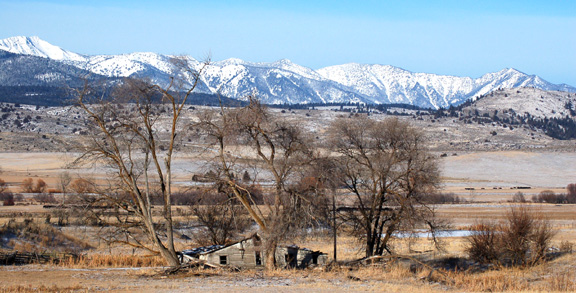








Yesterday's post on the sage grouse (AKA greater sage-grouse or greater sage grouse), Centrocercus urophasianus, noted “ 'warranted but precluded' is sort of the endangered species Newspeak equivalent of an old folks nursing home or hospice, where endangered species lie around without care in a sort of political "purgatory." As the grouse and the many other species receiving that designation are accepted to be "endangered" or "threatened" by the "warranted" portion of the phrase, it is the "precluded" portion that creates the "catch-22" which actually places a species in legal and political purgatory. Today, Western Watersheds Project and Advocates For The West filed a court complaint in Idaho challenging the the US Fish & Wildlife Service's rational and legal basis for precluding the sage grouse, whose endangerment is now legally acknowledged, from being listed as such, and from being legally safeguarded under the protections offered by the Endangered Species Act. In their complaint they describe the legal and political purgatory: "This “precluded” determination relegates the sage-grouse to the long list of ESA “candidate” species – a black hole from which few species ever emerge, and under which they receive no ESA protection – and represents yet another non-scientific, politicized, and arbitrary determination that prevents the sage-grouse from obtaining the ESA protection that it urgently needs." (See larger portion of Complaint below)
WWP press Release:
Box 1770
Hailey, ID 83333
tel: (208) 788-2290
fax: (208) 788-2298
email: wwp@westernwatersheds.org
web site: www.westernwatersheds.org
Working to protect and restore Western Watersheds and Wildlife
Western Watersheds Project Files Legal Challenge To Denial of Endangered Species Act Protections for Greater Sage-Grouse
For immediate release - March 8, 2010
Contacts:
Jon Marvel, Executive Director Western Watersheds Project: 208-788-2290 ext. 11,
Laird Lucas, Executive Director, Advocates For The West: 208-342-7024 ext. 201
In response to the announcement on Friday March 5 by Secretary of the Interior Ken Salazar that the listing of greater sage-grouse and two of its distinct population segments (Mono Basin and Eastern Washington) under the protections of the Endangered Species Act is “warranted but precluded”, Western Watersheds Project has filed litigation in federal District Court in Boise, Idaho challenging the “precluded” portion of the finding.
The litigation charges that the U.S. Fish and Wildlife Service and the Department of the Interior violated the Administrative Procedure Act and the Endangered Species Act by finding that the listing of greater sage-grouse is “precluded”.
“The Obama administration rightfully concluded that the greater sage-grouse fully qualify for the protections of the Endangered Species Act,” said Jon Marvel, executive director of Western Watersheds Project. “Unfortunately, the administration has violated the law in not listing sage-grouse at the same time.”
The greater sage-grouse is a charismatic bird that lives in sagebrush steppe in eleven western states. First described by Lewis and Clark in 1805, nineteenth century travelers and settlers reported seeing huge flocks of sage-grouse that darkened the sky as they lifted from valley floors. However, westward expansion and development over the next 200 years has eliminated almost half of sagebrush habitat. The total sage-grouse population, estimated between 140,000-500,000 birds, has declined between 69-99 percent from historic levels.
Myriad human activities in the Sagebrush Sea have decimated sage-grouse habitat, including livestock grazing, oil and gas development, agricultural conversion, application of herbicides and pesticides, unnatural fire, urban sprawl, mining, off-road vehicle use, and the placement and construction of utility corridors, roads and fences.
The Fish and Wildlife Service’s finding indicates that current conservation efforts are failing to conserve sage-grouse.
“The ever growing effects of development of the sagebrush sea will doom sage-grouse without the mandatory protection provided by listing the species under the protections of the Endangered Species Act.” said Laird Lucas, executive director of Advocates For The West, the Boise-based legal advocacy firm representing Western Watersheds Project in the sage-grouse
litigation.
__
Here is the introduction to the Complaint:
Todd C. Tucci (ISB # 6526)
ADVOCATES FOR THE WEST
P.O. Box 1612
Boise, ID 83701
(208) 342-7024
(208) 342-8286 (fax)
ttucci@advocateswest.org
Laurence (“Laird”) J. Lucas (ISB # 4733)
P.O. Box 1342
Boise, Idaho 83701
(208) 424-1466 (phone and fax)
llucas@lairdlucas.org
Attorneys for Plaintiff Western Watersheds Project
UNITED STATES DISTRICT COURT
FOR THE DISTRICT OF IDAHO
WESTERN WATERSHEDS PROJECT,
Plaintiff,
vs.
U.S. FISH AND WILDLIFE SERVICE,
Defendant.
No. 06-cv-277-BLW
FIRST SUPPLEMENTAL
COMPLAINT
INTRODUCTION
1. In December 2007, the Court ruled in this case that Defendant U.S. Fish and Wildlife Service acted unlawfully in determining that Endangered Species Act listing of the greater sage-grouse was “not warranted,” due to improper political interference in the listing process and the Service’s arbitrary treatment of the best available science showing that sage grouse populations and habitats are deeply imperiled. See Docket No. 118. The Court remanded for the Service to make a new Endangered Species Act listing determination; and approved remand stipulations in which Plaintiff Western Watersheds Project agreed that the Service could delay the listing decision to take into account the latest sage-grouse science, as reported in a Studies for Avian Biology “Monograph” being prepared by leading sage-grouse researchers. See Docket Nos. 130, 137 & 183.
2. Based on that Monograph and other best available science, the Service announced on March 5, 2010 its new finding that ESA listing of greater sage-grouse is “warranted” under the ESA, because of the many threats facing sage-grouse populations and their sagebrush habitats – particularly habitat fragmentation from energy development, livestock grazing, infrastructure, fires, weed invasions, and climate change impacts. See U.S. Fish and Wildlife Service, “Endangered and Threatened Wildlife and Plants: 12-Month Findings for Petitions to List the Greater Sage-Grouse (Centrocercus urophasianus) As Threatened or Endangered,” available at http://www.fws.gov/mountain-prairie/species/birds/sagegrouse/FR03052010.pdf (hereafter, “March 2010 Finding”).
3. Yet despite these scientific findings acknowledging that the sage-grouse qualifies for listing as an endangered or threatened species, the Service is perpetuating its unlawful refusal to protect sage-grouse under the ESA. In the March 2010 Finding, the Service determined not to proceed with a proposed listing rule for the greater sage-grouse, asserting that its own
bureaucratic backlog and lack of resources supposedly preclude it from moving forward with an ESA listing rule for the sage-grouse this year.
4. This “precluded” determination relegates the sage-grouse to the long list of ESA “candidate” species – a black hole from which few species ever emerge, and under which they receive no ESA protection – and represents yet another non-scientific, politicized, and arbitrary determination that prevents the sage-grouse from obtaining the ESA protection that it urgently
needs.
4. [sic] As alleged below, the Court must reject the Service’s “precluded” finding as being arbitrary, capricious, and contrary to law. The Service cannot justify its refusal to proceed with a sage-grouse listing based on its own bureaucratic listing backlog and other grounds cited in the March 2010 Finding – particularly when the Service has already invested the bulk of the resources needed for a sage-grouse listing in rendering the March 2010 Finding; and when the Service has already been found by this Court (and many others) to have repeatedly violated the ESA in not proceeding to list sage-grouse and other species as directed by Congress. Moreover, the Service has abjectly failed to make expeditious progress in addressing the large backlog of species that warrant ESA protection; and it is relying on improper budgetary and other excuses to avoid proceeding with the greater sage-grouse listing, contrary to the ESA’s statutory requirements and without rational justification.
5. Plaintiff Western Watersheds Project thus brings this First Supplemental Complaint to challenge the “precluded” part of the Service’s March 1010 Finding that ESA listing of greater sage-grouse is “warranted, but precluded,” as being arbitrary, capricious, and contrary to law. WWP asks the Court to quickly review and reverse that “precluded” determination, and remand with instructions for the Service to promptly publish a proposed listing rule within a set deadline, so that greater sage-grouse can finally receive the ESA protections that science – and the Service’s own “warranted” determination – show are necessary
to prevent this icon of the sagebrush sea from declining further toward extinction.
____________________
Good AP Article:
Group challenges sage grouse finding
By MEAD GRUVER Associated Press Writer
Posted: 03/08/2010 03:07:51 PM PST
Updated: 03/08/2010 05:43:58 PM PST
CHEYENNE, Wyo.—An environmental group is challenging plans by the Interior Department to classify sage grouse as merely a candidate for protection under the Endangered Species Act and not list the bird as threatened or endangered.
The department announced Friday that federal protection as an endangered or threatened species is warranted but precluded by higher priorities—species deemed in more dire need of protection right now.
Western Watersheds questioned that finding in a supplemental complaint filed Monday in U.S. District Court in Boise, Idaho.
"The sage grouse is, in our judgment, as qualified as any species on the candidate list for the protections of the act," Jon Marvel, director of Western Watersheds, said Monday. "Of course they should be acting on all of these species, and why
aren't they?"
The new complaint calls the candidate species list "a black hole from which few species ever emerge, and under which they receive no ESA protection." The decision to put the sage grouse on the list was "arbitrary, capricious and contrary to law," the
group claims.
An Interior spokeswoman declined to comment because the matter is being litigated.
Western Watersheds sued in 2006 over a previous decision not to list sage grouse. U.S. District Judge B. Lynn Winmill found that the earlier decision was politically motivated and told the department to reevaluate, leading to Friday's announcement.
A supplemental complaint is filed to bring forth facts and claims that happen after an initial complaint in a case, said Laird Lucas, a Western Watersheds attorney.
The notion that sage grouse aren't a high priority for protection is implausible after the government spent considerable time and money studying whether they deserved protection, Lucas said
"They can't now claim they don't have the money to
move forward. It does not make sense," Lucas said.
"And that, to me, says really it is a political determination at the end." . . . .
To read entire article, See:
http://www.mercurynews.com/breaking-news/ci_14635602?nclick_check=1
___________________
SEE ALSO:
F&WS Notice of 12–month petition findings
SUNDAY, MARCH 7, 2010
Hells Canyon Springing & Purgatory for Sage Grouse
and,
THURSDAY, FEBRUARY 11, 2010
Environmental issues: Sage Grouse; Grazing Fee
Showing posts with label Salazar. Show all posts
Showing posts with label Salazar. Show all posts
Monday, March 8, 2010
Sunday, March 7, 2010
Hells Canyon Springing & Purgatory for Sage Grouse
In This Issue:
- Spring Has Sprung in Hells Canyon
- Obama Administration Sentences Sage Grouse to "Purgatory"
[Edited 3/8/10]
___________________
Hells Canyon:
 A Hells Canyon Reflection
 Dutchman's Breeches at Hells Canyon
I've been thinking more seriously about spring for the last week, culminating in a five day exploratory trip to the Hells Canyon country between between Oxbow and Hells Canyon Dam. The result is, that I am just now posting some info from environmental organizations and other sources on the "better than nothing. " near purgatory status given to the actually endangered Greater Sage Grouse this last Friday, March 5th. The links and other information about the sage grouse decision can be found immediately below the next photo of Dutchman's Breeches, which is a very early and immensely attractive perennial wildflower related to the native and ornamental Bleeding Hearts found in Baker City back yards. It can be found in the side canyons of the Snake River of Oregon and Idaho, and is also found in Washington state here in the North West. Elsewhere, it is very widely distributed from the mid-west, south to Georgia, but not in our other western states.
Other early spring wildflowers that can be found blooming in Hells Canyon right now are Lomatiums, Yellow Bells, Sagebrush Bluebells, Sagebrush Buttercup, and what I think might be Arabis crucisetosa, a comparatively small and delicate "rock cress." I'll try to post some photos of those plants in a later post.
 Dutchman's Breeches at Hells Canyon
___________________
Obama/Salazar Send Sage Grouse to the Old Species Nursing Home, or is that Purgatory?
“warranted but precluded” is sort of the endangered species Newspeak equivalent of an old folks nursing home or hospice, where endangered species lie around without care in a sort of political purgatory. During this period, the powerful interests, like ranchers and energy companies, who have been the largest contributors to the species' decline, continue their destructive and sinful ways with half-hearted, often laughable, "mitigation," all the while praying alternately for the species' improbable survival on small reservations, or for their ultimate demise.
Greater Sage-grouse Warranted…but Precluded from ESA Protection
For immediate release - March 5, 2010
Contact:
Jon Marvel, Executive Director, Western Watersheds Project - 208-788-2290
Laird Lucas, Executive Director, Advocates for the West - 208-870-7621
Mark Salvo, Director, Sagebrush Sea Campaign - 503-757-4221
Katie Fite, Biodiversity Director, Western Watersheds Project - 208-429-1679
Seven years after conservationists petitioned to protect greater sage-grouse under the Endangered Species Act, Secretary of the Interior Ken Salazar announced today that the species is “warranted but precluded” from listing under the Act. The grouse will now join more than 270 imperiled species on the list of “candidate species” under the ESA. The decision marks the agency’s second attempt to assess the species for listing after the Bush Administration published an ecologically flawed, politically tainted decision not to list the grouse in 2005.
“We were right, the Bush Administration was wrong,” said Mark Salvo, Director of the Sagebrush Sea Campaign. “The sage-grouse is in trouble.”
The greater sage-grouse is a charismatic bird that lives in sagebrush steppe in eleven western states. First described by Lewis and Clark in 1805, nineteenth century travelers and settlers reported seeing huge flocks of sage-grouse that darkened the sky as they lifted from valley floors. However, westward expansion and development over the next 200 years eliminated almost half of sagebrush habitat. The total sage-grouse population, estimated between 140,000-500,000 birds, has declined between 69-99 percent from historic levels.
“The action by Secretary Salazar and the U.S. Fish and Wildlife Service comes years too late as hundreds of thousands of acres of sage-grouse habitat have been permanently altered or reduced in value for this charismatic native species since the initial petition for listing,” said Dr. Clait Braun, Director of Grouse, Inc. “Some populations are already at the brink of extirpation in each of the states where this species persists.” Dr. Braun, retired Avian Research Program Manager for the Colorado Division of Wildlife, has been involved with sage-grouse research and management since 1973.
Myriad human activities in the Sagebrush Sea have decimated sage-grouse habitat, including livestock grazing, oil and gas development, agricultural conversion, application of herbicides and pesticides, unnatural fire, urban sprawl, mining, off-road vehicle use, and the placement and construction of utility corridors, roads and fences.
The only way sage-grouse will survive is if large areas of the sagebrush sea are left undeveloped, and chronic disturbances like livestock grazing are removed from those areas,” said Katie Fite, Biodiversity Director for Western Watersheds Project. “This sad delay will make it much more difficult to effectively conserve this magnificent bird.”
The Fish and Wildlife Service’s finding indicates that current conservation efforts are failing to conserve sage-grouse. The grouse’s new status as a candidate species may require agencies such as the Bureau of Land Management to revise their land use plans on public land to improve habitat for sage-grouse and other sagebrush species.
“I look forward to making a careful review of the U.S. Fish and Wildlife Service’s reasons for this decision for sage grouse,” said Jon Marvel, Executive Director of Western Watersheds Project. “That review will determine if further litigation is needed to bring the agency into compliance with the law.”
The Sagebrush Sea Campaign, a program of WildEarth Guardians, was the lead petitioner to list the greater sage-grouse under the Endangered Species Act. Western Watersheds Project, a western conservation organization, successfully litigated a remand of the negative listing decision in 2007. Advocates for the West represented Western Watersheds Project in federal court. More than twenty conservation groups joined the petition to list sage-grouse under the ESA in 2003.
Resources
Video and images of sage-grouse, factsheets on sage-grouse and the Sagebrush Sea, and maps of sage-grouse range and land use in the West are posted at www.sagebrushsea.org.
--
March 5, 2010
New York Times
No Endangered Status for Plains Bird
By JOHN M. BRODER
WASHINGTON — The Interior Department said Friday that the greater sage grouse, a dweller of the high plains of the American West, was facing extinction but would not be designated an endangered species for now.
Yet the decision in essence reverses a 2004 determination by the Bush administration that the sage grouse did not need protection, a decision that a federal court later ruled was tainted by political tampering with the Interior Department’s scientific conclusions.
Interior Secretary Ken Salazar, a conservative Democrat from a Colorado ranching family, sought to carve a middle course between conservationists who wanted ironclad protections for the ground-hugging bird and industry interests and landowners who sought the ability to locate mines, wells, windmills and power lines in areas where the grouse roam.
Mr. Salazar said that scientists at the United States Fish and Wildlife Service had concluded that the sage grouse deserved inclusion on the endangered species list but that other species were facing more imminent threats, leading the government to assign the bird a status known as “warranted but precluded.”
As a compromise measure, he said, the bird will be placed on the list of “candidate species” for future inclusion on the list and its status will be reviewed yearly.
The middle-ground decision is typical of Mr. Salazar’s stewardship at the Interior Department, where he has tried to mediate between competing energy and environmental interests. Like many previous decisions, including compromises on oil drilling in Utah and habitat protection for the polar bear in the Arctic, Mr. Salazar’s action left both sides somewhat disgruntled.
Residential building and energy development have shrunk the sage grouse habitat over the past several decades, causing its population in 11 Western states to dwindle from an estimated 16 million 100 years ago to 200,000 to 500,000 today.
“The sage grouse’s decline reflects the extent to which open land in the West has been developed in the last century,” Mr. Salazar said in a statement. “This development has provided important benefits, but we must find common-sense ways of protecting, restoring and reconnecting the Western lands that are most important to the species’ survival while responsibly developing much-needed energy resources.”
He said that state resource agencies would be instructed to take stronger steps to preserve the sagebrush where the birds live. Federal wildlife and lands agencies will oversee those efforts.
In 2004, the Bush administration Interior Department decided against listing the sage grouse as endangered or threatened, despite reports from agency scientists that the bird and its habitat were in jeopardy. Three years later, a federal judge ruled that a senior Interior Department political appointee, Julie MacDonald, had intimidated agency scientists and overruled their findings. She later resigned from the department over several similar incidents.
The judge ordered the department to review the sage grouse decision, which led to Friday’s announcement.
A group of lawmakers from Western states had strongly urged Mr. Salazar to keep the sage grouse off the endangered species list, saying that the states had made significant progress in protecting its habitat. They said adding the bird to the list would hurt ranchers and energy producers who need access to sagebrush-covered lands that would be off limits under the listing.
“Today’s unnecessary federal designation is one more on a growing list of examples that this administration places environmental special interests before job creation,” Representative Rob Bishop, Republican of Utah, said Friday.
“Not only is today’s announcement a direct attack on the hundreds of Western communities that depend on access to federal lands for ranching, livestock, mining and energy production, it also could potentially destroy opportunities for development of our renewable resources,” he said.
Representative Jason Chaffetz, another Utah Republican, has been more pungent in his opinion. “The only good place for a sage grouse to be listed is on the menu of a French bistro,” he said recently. “It does not deserve federal protection, period.”
Brian Rutledge, Rocky Mountain regional director for the Audubon Society, said he agreed with Mr. Salazar that other species were facing greater danger. But he said he hoped the decision to make the sage grouse a candidate for endangered species protection would mean that state and federal agencies would act much more aggressively to protect the bird’s threatened habitat.
“We’ve already achieved 50 percent total destruction of the sagebrush ecosystem and a large part of what’s left we’ve seriously compromised,” he said. “We have been told clearly that the science tells us this bird is in trouble. This is an absolute straightforward clarion call for us to pull together to save it.”
As for Mr. Chaffetz’s suggestion, Mr. Rutledge said: “All I can say is he never tasted a sage grouse; they taste horrible. It’s like eating sagebrush.”
Asked how he knew that, Mr. Rutledge responded, “Anecdotally.”
- Spring Has Sprung in Hells Canyon
- Obama Administration Sentences Sage Grouse to "Purgatory"
[Edited 3/8/10]
___________________
Hells Canyon:
 A Hells Canyon Reflection
 Dutchman's Breeches at Hells Canyon
I've been thinking more seriously about spring for the last week, culminating in a five day exploratory trip to the Hells Canyon country between between Oxbow and Hells Canyon Dam. The result is, that I am just now posting some info from environmental organizations and other sources on the "better than nothing. " near purgatory status given to the actually endangered Greater Sage Grouse this last Friday, March 5th. The links and other information about the sage grouse decision can be found immediately below the next photo of Dutchman's Breeches, which is a very early and immensely attractive perennial wildflower related to the native and ornamental Bleeding Hearts found in Baker City back yards. It can be found in the side canyons of the Snake River of Oregon and Idaho, and is also found in Washington state here in the North West. Elsewhere, it is very widely distributed from the mid-west, south to Georgia, but not in our other western states.
Other early spring wildflowers that can be found blooming in Hells Canyon right now are Lomatiums, Yellow Bells, Sagebrush Bluebells, Sagebrush Buttercup, and what I think might be Arabis crucisetosa, a comparatively small and delicate "rock cress." I'll try to post some photos of those plants in a later post.
 Dutchman's Breeches at Hells Canyon
___________________
Obama/Salazar Send Sage Grouse to the Old Species Nursing Home, or is that Purgatory?
“warranted but precluded” is sort of the endangered species Newspeak equivalent of an old folks nursing home or hospice, where endangered species lie around without care in a sort of political purgatory. During this period, the powerful interests, like ranchers and energy companies, who have been the largest contributors to the species' decline, continue their destructive and sinful ways with half-hearted, often laughable, "mitigation," all the while praying alternately for the species' improbable survival on small reservations, or for their ultimate demise.
Greater Sage-grouse Warranted…but Precluded from ESA Protection
For immediate release - March 5, 2010
Contact:
Jon Marvel, Executive Director, Western Watersheds Project - 208-788-2290
Laird Lucas, Executive Director, Advocates for the West - 208-870-7621
Mark Salvo, Director, Sagebrush Sea Campaign - 503-757-4221
Katie Fite, Biodiversity Director, Western Watersheds Project - 208-429-1679
Seven years after conservationists petitioned to protect greater sage-grouse under the Endangered Species Act, Secretary of the Interior Ken Salazar announced today that the species is “warranted but precluded” from listing under the Act. The grouse will now join more than 270 imperiled species on the list of “candidate species” under the ESA. The decision marks the agency’s second attempt to assess the species for listing after the Bush Administration published an ecologically flawed, politically tainted decision not to list the grouse in 2005.
“We were right, the Bush Administration was wrong,” said Mark Salvo, Director of the Sagebrush Sea Campaign. “The sage-grouse is in trouble.”
The greater sage-grouse is a charismatic bird that lives in sagebrush steppe in eleven western states. First described by Lewis and Clark in 1805, nineteenth century travelers and settlers reported seeing huge flocks of sage-grouse that darkened the sky as they lifted from valley floors. However, westward expansion and development over the next 200 years eliminated almost half of sagebrush habitat. The total sage-grouse population, estimated between 140,000-500,000 birds, has declined between 69-99 percent from historic levels.
“The action by Secretary Salazar and the U.S. Fish and Wildlife Service comes years too late as hundreds of thousands of acres of sage-grouse habitat have been permanently altered or reduced in value for this charismatic native species since the initial petition for listing,” said Dr. Clait Braun, Director of Grouse, Inc. “Some populations are already at the brink of extirpation in each of the states where this species persists.” Dr. Braun, retired Avian Research Program Manager for the Colorado Division of Wildlife, has been involved with sage-grouse research and management since 1973.
Myriad human activities in the Sagebrush Sea have decimated sage-grouse habitat, including livestock grazing, oil and gas development, agricultural conversion, application of herbicides and pesticides, unnatural fire, urban sprawl, mining, off-road vehicle use, and the placement and construction of utility corridors, roads and fences.
The only way sage-grouse will survive is if large areas of the sagebrush sea are left undeveloped, and chronic disturbances like livestock grazing are removed from those areas,” said Katie Fite, Biodiversity Director for Western Watersheds Project. “This sad delay will make it much more difficult to effectively conserve this magnificent bird.”
The Fish and Wildlife Service’s finding indicates that current conservation efforts are failing to conserve sage-grouse. The grouse’s new status as a candidate species may require agencies such as the Bureau of Land Management to revise their land use plans on public land to improve habitat for sage-grouse and other sagebrush species.
“I look forward to making a careful review of the U.S. Fish and Wildlife Service’s reasons for this decision for sage grouse,” said Jon Marvel, Executive Director of Western Watersheds Project. “That review will determine if further litigation is needed to bring the agency into compliance with the law.”
The Sagebrush Sea Campaign, a program of WildEarth Guardians, was the lead petitioner to list the greater sage-grouse under the Endangered Species Act. Western Watersheds Project, a western conservation organization, successfully litigated a remand of the negative listing decision in 2007. Advocates for the West represented Western Watersheds Project in federal court. More than twenty conservation groups joined the petition to list sage-grouse under the ESA in 2003.
Resources
Video and images of sage-grouse, factsheets on sage-grouse and the Sagebrush Sea, and maps of sage-grouse range and land use in the West are posted at www.sagebrushsea.org.
--
March 5, 2010
New York Times
No Endangered Status for Plains Bird
By JOHN M. BRODER
WASHINGTON — The Interior Department said Friday that the greater sage grouse, a dweller of the high plains of the American West, was facing extinction but would not be designated an endangered species for now.
Yet the decision in essence reverses a 2004 determination by the Bush administration that the sage grouse did not need protection, a decision that a federal court later ruled was tainted by political tampering with the Interior Department’s scientific conclusions.
Interior Secretary Ken Salazar, a conservative Democrat from a Colorado ranching family, sought to carve a middle course between conservationists who wanted ironclad protections for the ground-hugging bird and industry interests and landowners who sought the ability to locate mines, wells, windmills and power lines in areas where the grouse roam.
Mr. Salazar said that scientists at the United States Fish and Wildlife Service had concluded that the sage grouse deserved inclusion on the endangered species list but that other species were facing more imminent threats, leading the government to assign the bird a status known as “warranted but precluded.”
As a compromise measure, he said, the bird will be placed on the list of “candidate species” for future inclusion on the list and its status will be reviewed yearly.
The middle-ground decision is typical of Mr. Salazar’s stewardship at the Interior Department, where he has tried to mediate between competing energy and environmental interests. Like many previous decisions, including compromises on oil drilling in Utah and habitat protection for the polar bear in the Arctic, Mr. Salazar’s action left both sides somewhat disgruntled.
Residential building and energy development have shrunk the sage grouse habitat over the past several decades, causing its population in 11 Western states to dwindle from an estimated 16 million 100 years ago to 200,000 to 500,000 today.
“The sage grouse’s decline reflects the extent to which open land in the West has been developed in the last century,” Mr. Salazar said in a statement. “This development has provided important benefits, but we must find common-sense ways of protecting, restoring and reconnecting the Western lands that are most important to the species’ survival while responsibly developing much-needed energy resources.”
He said that state resource agencies would be instructed to take stronger steps to preserve the sagebrush where the birds live. Federal wildlife and lands agencies will oversee those efforts.
In 2004, the Bush administration Interior Department decided against listing the sage grouse as endangered or threatened, despite reports from agency scientists that the bird and its habitat were in jeopardy. Three years later, a federal judge ruled that a senior Interior Department political appointee, Julie MacDonald, had intimidated agency scientists and overruled their findings. She later resigned from the department over several similar incidents.
The judge ordered the department to review the sage grouse decision, which led to Friday’s announcement.
A group of lawmakers from Western states had strongly urged Mr. Salazar to keep the sage grouse off the endangered species list, saying that the states had made significant progress in protecting its habitat. They said adding the bird to the list would hurt ranchers and energy producers who need access to sagebrush-covered lands that would be off limits under the listing.
“Today’s unnecessary federal designation is one more on a growing list of examples that this administration places environmental special interests before job creation,” Representative Rob Bishop, Republican of Utah, said Friday.
“Not only is today’s announcement a direct attack on the hundreds of Western communities that depend on access to federal lands for ranching, livestock, mining and energy production, it also could potentially destroy opportunities for development of our renewable resources,” he said.
Representative Jason Chaffetz, another Utah Republican, has been more pungent in his opinion. “The only good place for a sage grouse to be listed is on the menu of a French bistro,” he said recently. “It does not deserve federal protection, period.”
Brian Rutledge, Rocky Mountain regional director for the Audubon Society, said he agreed with Mr. Salazar that other species were facing greater danger. But he said he hoped the decision to make the sage grouse a candidate for endangered species protection would mean that state and federal agencies would act much more aggressively to protect the bird’s threatened habitat.
“We’ve already achieved 50 percent total destruction of the sagebrush ecosystem and a large part of what’s left we’ve seriously compromised,” he said. “We have been told clearly that the science tells us this bird is in trouble. This is an absolute straightforward clarion call for us to pull together to save it.”
As for Mr. Chaffetz’s suggestion, Mr. Rutledge said: “All I can say is he never tasted a sage grouse; they taste horrible. It’s like eating sagebrush.”
Asked how he knew that, Mr. Rutledge responded, “Anecdotally.”


Subscribe to:
Posts (Atom)