



Think Out Loud from OPB really outdid themselves on Monday & Tuesday of this week, tackling two very contentious issues: Wyden's introduction of the Oregon Eastside Forests Restoration, Old Growth Protection, and Jobs Act of 2009, and the perhaps even more controversial population elephant in the climate change living room (Population control called key to deal http://bakercountyblog.blogspot.com/2009/12/hell-on-earth.html.
The first is found at http://www.opb.org/thinkoutloud/shows/forest-agreement/, and the second, "The "P" Word and Climate Change" from this morning, at http://www.opb.org/thinkoutloud/shows/p-word-and-climate-change/. Both episodes include many useful and informative links, along with the usual voicing of opinions from those confident enough to speak up.
I recommend checking out both programs and getting the podcasts if you can. If you have an application like iTunes, you can subscribe using the link http://www.opb.org/programs/podcast.php?tol by clicking on the "Advanced" tab in your toll bar, clicking on "Subscribe to podcast," and pasting in http://www.opb.org/programs/podcast.php?tol .Or, more simply, just go to the link and download what you want.
In the first, environmental consultant, spokesperson, and thinker, Andy Kerr (who left Joseph, Oregon several years ago in a moment of preservational sanity), does a good job of explaining both the bill and his move towards collaboration with any semi-rational folks from the timber industry that he could find.
There are also interesting comments to be mined in an Oregonian article, "Wyden bill aims to end eastern Oregon timber
disputes" at: http://www.oregonlive.com/environment/index.ssf/2009/12/wyden_bill_aims_to_end_eastern.html.
The second is found at http://www.opb.org/thinkoutloud/shows/p-word-and-climate-change/. It is an expansion, or at least a different version of the ideas found in the Population control called key to deal article from my Dec. 15 blog.
Some years ago, I was active in the "Zero Population Growth" organization, but I left when they changed their name to "Population Connection" (http://www.populationconnection.org/site/PageServer), at which time they began to soft-pedal the importance of mass immigration to US population growth. Immigration (immigrants and children of immigrants) now accounts for over 75% of our under-developed nation style population growth. We had achieved essentially zero population growth in the mid-1970's, but once the effects of the 1965 immigration bill and all future amnesties got rolling, we were on the hopeless track of unsustainable poplulation growth once again. The result of ignoring mass immigration is essentially that instead of plateauing out at about 260 million people, the US started on an unmanageable, unsustainable and crash producing population trajectory that has left us with over 300 million people and no end in sight. Call me crazy, but if I wanted to live in the conditions found in Mexico City (scrounging for existence on dumps), Mumbai (Bombay, Population density (/km²) of 23,088 people), or Delhi, India (Population density (/km²) of 28,438 people: http://en.wikipedia.org/wiki/List_of_cities_proper_by_population), I could move there. Interestingly, immigration's contribution to US population growth was (mysteriously) absent for today's "Think Out Loud" commentary. But hey, you can't be too politically correct these days.
Anyway, a coherent explanation of one of the important ideas discussed today, i.e., individual reproduction's contribution to carbon emissions, water use, etc., can be found in the Oregon State press release for Murtaugh and Schlax's paper on the issue, "Reproduction and the carbon legacies of individuals" at http://oregonstate.edu/ua/ncs/archives/2009/jul/family-planning-major-environmental-emphasis.
The research paper they produced is at: http://blog.oregonlive.com/environment_impact/2009/07/carbon%20legacy.pdf
It is important stuff for understanding the effects of population growth and a reproducing individual's contribution to consumption and pollution, especially at the rates Americans consume and pollute. It is a powerful argument for having fewer children and for greatly reducing the rate of immigration into America of those who value large families.
Other links from the show and elsewhere:
Albertideation: http://albertideation.com/2009/10/20/worldpopulationvideo/
Numbers USA
http://www.numbersusa.com/content/
http://www.youtube.com/watch?v=b4O7c7MXDq8
See also:
http://www.youtube.com/user/NumbersUSA
Over the years, some special interest "liberals" and ethnically and racially oriented groups have tried to paint Roy Beck as a right wing xenophobe, but this is not true. I met him in the late nineties, and he is simply a decent and concerned person, like Garrett Hardin was (Humanist of the Year), who is concerned about population growth and its consequences. Please don't buy into the smears, and just consider the evidence and the numbers.
___________________
Showing posts with label Timber Industry. Show all posts
Showing posts with label Timber Industry. Show all posts
Tuesday, December 22, 2009


Thursday, February 22, 2007
Refugee in Oregon, Neo-Feudalism, the Timber Industry and Wonderful Winnie Weller Smith


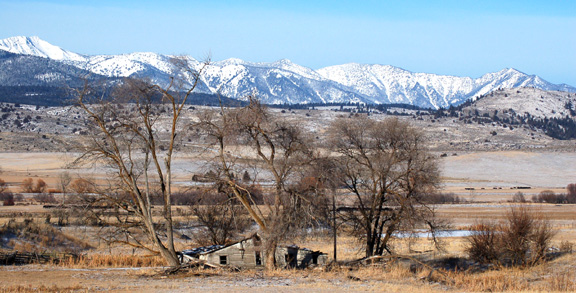
[Before diving into the untold stories and various complaints, I thought it might be best to give a little background information about what North East Oregon looks like to an outsider, this one in particular.]
Refugee in Oregon, Neo-Feudalism, the Timber Industry and Wonderful Winnie Weller Smith
There is an old saying that went around among my college friends back in the late ’60’s that went like this: “Wherever you go, there you’ll be.” It was a reminder that we bring much to our encounters with the world around us and the people in it, and that even if we head out for greener pastures, our experience there will be greatly affected by the baggage we carry around with us, both good and bad. To me the aphorism lacked balance and seemed to place too much responsibility on the individual, so I responded with “Yes, and wherever you go, there they’ll be too!” People’s reaction to you depends as much upon their baggage as it does yours, and vice-versa.
When I left California nearly 8 years ago, I first landed in Prairie City, Grant County, Oregon. To paraphrase historian Hubert Howe Bancroft’s statement of his feelings about his first visit to Utah in the 1800’s, I thought I had left America and entered a foreign country. Well not exactly, but the place did and still does have sort of a neo-feudal feel to it. Timber barons and cattle ranchers still pretty much run the place, i.e., Grant County, and they would kind of like to keep it that way despite the realities that point in a new direction. It is a place stubbornly mired in its refusal to embrace the changes brought on by the unsustainable exploitation of publicly owned forest resources for over a hundred year period. Many there refuse to face the truth that was so simply put by my late Prairie City neighbor, and dear friend, Winnie Smith. She was a wise and kind-hearted woman who grew up in the lumber camps of Idaho and Oregon during the timber heyday of the last century. One day while she was showing me pictures of logs at least as big around as an S-10 Blazer, Winnie told me the truth that was obvious to anybody on the outside looking in, but which was not so clearly seen or admitted by those who were heavily invested in an unsustainably managed and changing industry. Winnie told me that the reason the timber industry is failing is that they had already cut down most of the big old trees in the Blue Mountains and that the ponderosa pines here in droughty Eastern Oregon grow about as fast as a lichen on a rock.
I’ll leave the rest of the Grant County tales for another day, but my relationships there were generally not enhanced by the fact that I was, and still am to some degree, an environmental activist working on grazing issues in a place where there are far more cows than people.
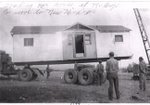
Above, or nearby, assuming I can figure out away to get them on here, are some pictures of what life was like for my friend Winnie (photo circa 1944), including those big old logs hinting at what the forest used to look like.
Chris
Subscribe to:
Posts (Atom)