

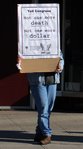
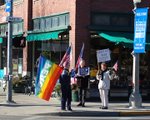
Showing posts with label Property Maintenance. Show all posts

Friday, June 28, 2013

Baker City's Contribution to Democracy, Citizens On Patrol, Land Use Planning--Transportation Plan

I comment to Baker City government when I can and I ask for information routinely. Sometime my comments are treated with respect and responded to, usually by City staff, as opposed to Councilors. Often, certainly in the past, my comments to Council go down the memory hole, somewhere near the bottom of the digital trash can. Currently, at least prior to the last week or so, they are just ignored and never see the light of day, even in the local papers.

Just recently, Baker City has improved their ability to take comments from citizens.  I for one, have great difficulty speaking in public--especially to powerful people who I believe do not understand or  respect me--thats why I write a lot.  Others also do not feel comfortable expressing their opinions to Council at a Council meeting for various reasons, perhaps similar to mine, or, perhaps related to the class they find themselves in.  Now, anybody can post their concerns to the city on their website.  Just go to the "Latest News" link on the website and scroll down through the news to a subject that interests you. The website is currently very slow on my Mac, but maybe you will have a different experience.  They had a Google virus alert a few weeks ago during the transportation plan process when people were trying to access the necessary documents, but it seems to have been taken care of. It might take some patience. When your subject of interest shows up, read the info and at the bottom you may find a comment or two and an opportunity to comment yourself.

For example, for the "Citizen On Patrol Volunteer--Community Information Meeting" that occurred on June 20, 2013, they have:

The Baker City Police Department is seeking volunteers who want to make a difference in our community.

What Is The Citizen On Patrol Program (C.O.P.)? The Citizen on Patrol Program is a volunteer program that works hand-in-hand with the Baker City Police Department for the overall safety, health and vitality of the Baker City community.

What Do Citizen On Patrol Volunteers Do? Administrative Office Assistance; Emergency Evacuations; Elderly Checks; Vacation Property Checks; Ordinance Compliance Checks; Foot Patrol; Community Events; Evidence Room Assistance; Speed Monitoring.

Is There Training Available? YES! We offer regular and ongoing training opportunities! There is a new Training Program starting in July for qualified applicants! Don't delay!

To learn more about the Citizen on Patrol Volunteer Program (C.O.P), don't miss the community information meeting on June 20, 2013 at 6:00 p.m. at the Baker City Police Department , 1768 Auburn Avenue.

Everyone is welcome to attend.

For more information, please contact Lori McNeil, C.O.P Coordinator, lmcneil@bakercity.com or 524-2014 ext. 105.
My comments there are:
refugee2000 • Mike and City Council, I think "Ordinance Compliance Checks" should not be one of the duties of Citizens on Patrol. That sort of enforcement should be left to a hopefully professional police officer on the force, or better yet, to neighbors familiar with the situation. There is too much room for abuse due to political, personal, religious, and other agendas, or due to over-zealous volunteers.
More today:
My recollection is that when the Council passed the property maintenance ordinance, they said enforcement would target only the most egregious cases. I believe that was the word they used. It appears to me that those cases have been, or are in the process of being taken care of. Egregious cases are also easily spotted by the current code enforcement officer. Having a troop of volunteers snooping around the neighborhoods looking for violations seems to ratchet code enforcement up to a whole new level that was not intended by the Council that passed the property maintenance ordinance. Poor people might get the impression that they are living in the old Soviet Union or with the East German Stasi.
Yesterday I photographed a property on Dewey that Officer Davidson had requested a property maintenance case number for [the day earlier]. It seemed to me that they were in compliance because they had obviously kept their property up and the lawn looked like it had been mowed in the last week or two. They had a garden on the parkway that had some weeds like sweet clover in it, but some people don't consider them weeds, and those kind of gardens grow higher that the 10 inch requirement in the property maintenance ordinance in any event. If the City is going to target them for a violation, then they might as well target half the city. Is that where this is going???
I might mention that someone I know who had a husband In Iraq was given a citation, but it never turned up in the Press Log and was later dropped.
One person I talked to suggested that the City drop the punitive approach, and have the volunteers help these people with the volunteer's concerns, rather than turn them in for a suspected "violation" of the ordinance.
Sncerely,
Christopher Christie
Propert recently cited for PM Violation

Thinking about "property maintenance," it was interesting to see Bill Uttenreuther, 1410 Dewey, Baker City, in the city video at the Council meeting on June 11, 2013. Mr. Uttenreuther is a retired city firefighter (Family PERS income 38,000+/yr according to the Oregonian website) with a lot of time on his hands apparently, so he went before the Council to report on properties that, in his estimation, didn't pass muster. I'm surprised that he had the time, because I was under the impression that he spent a lot of it on our heavily subsidized golf course.  You know the one, it's the City golf course that Councilor Button and Kata Bulinski's back yard backs up to. Why Kata rarely, if ever, identifies herself as Clair's significant other when she's ranting to the Council, that her significant other sits on, about burn barrels and etc., is something I'll never quite understand. But then I've never understood either why Councilor Clair Button doesn't declare a potential or actual conflict of interest when he advances ever more taxpayer money to the golf course, which in my estimation, props up his property value, as it sits on the back nine holes. It's not like we need the money for all our ongoing and looming basic infrastructure expenses--we can always stick it to the ratepayers and we gotta keep that back nine green and gorgeous!

In response to the City Council's non-response about my concerns with the new transportation plan, I wrote:
May 29, 2013
RE: Public Hearing Testimony: Draft Update to the Transportation System Plan (TSP) 05/29/13

Dear Mr. Chairman and Members of the Commission:

While I believe the Draft TPS is a very good effort, I am here tonight speaking against it, as it is currently written. I speak for myself although I am aware of the opinions of a dozen neighbors who share my sentiments. My home has been on 15th Street since the summer of 2004, and during my time here I have experienced several detrimental changes in the way ordinances affecting private property and its use are written, interpreted, or implemented. Some of these ordinances have been imposed by people who know doubt meant well, but who do not share the economic, social or other values and interests related to land and land use that are shared by myself and most of my neighbors. Overly burdensome property maintenance and burning ordinances are two that come easily to mind, as well as a bombshell or two contained in the new Development Code.

I have two problems with this otherwise decent plan:

1) I did not know about the plan or that sidewalks were planned for 15th Street until I followed up on a recent notice that did not mention the sidewalks, and my neighbors did not know that sidewalks were planned for 15th Street until I mentioned it to them. That is
because Baker City does not really comply with Goal one for statewide planning, which is good communication of planning issues through a functional citizen involvement program.
2) My neighbors and I do not want sidewalks because they are not needed and some of us simply can’t afford them. The burden for sidewalks should fall on all citizens because all properties and the pedestrians served by them benefit somewhat equally from a sidewalk system. In some cases, including mine, there is no perceived benefit to the property owner because they are getting along fine as things currently are.
In more detail, I oppose the plan for the following reasons:
It is not consistent with Statewide Planning Goal 1 CITIZEN INVOLVEMENT, i.e., OAR 660-015-0000(1) which is “To develop a citizen involvement program that insures the opportunity for citizens to be involved in all phases of the planning process.” The goal, as well as ORS 197.160 (b) includes a requirement for “an officially recognized committee for citizen involvement (CCI) broadly representative of geographic areas and interests related to land use and land-use decisions.” Goal 1 also requires, that the CCI "involve a cross-section of affected citizens in all phases of the planning process." There are many other requirements to ensure public involvement and understanding as well, including the establishment of “Mechanisms . . . which provide for effective communication between citizens and elected and appointed officials,” with effective being the key word. The Goal also requires the establishment of an actual citizen involvement program. I believe that Baker City has clearly not complied with many of the requirements of Goal 1.
Baker City chose to assign the responsibility for the committee for citizen involvement to the Planning Commission, and to also use a Technical Advisory Committee and group of so-called “Stakeholders” to fulfill the citizen involvement requirements.
Both Goal 1 and the Oregon Revised Statute require that committees flowing from a "program for citizen involvement,” including the CCI, be "broadly representative of geographic areas and of interests relating to land uses and land use decisions." None of the committees, including the Planning Commission itself, comply with that requirement.

The Planning Commission, which is also the CCI, essentially comes from two geographic areas out of at least five or six in the city. One group of three Commissioners all live up on the hill in the high rent district of the South West area which looks down on the city. Two of those members are actually neighbors. They can not be said to share the economic, social and land use interests of a majority of the people in the areas near 15th Street or much of the rest of the city, and in fact, the low areas on the West side are not represented on the Planning Commission at all.

Three of the other four Commissioners live within a few blocks of each other in South Central Baker City, and the other lives about a mile to the North East in a very nice home worth many times that of his neighbors.
The Planning Commission, which is assigned the responsibility of the committee for citizen involvement, cannot be said to be “representative of geographic areas and interests related to land use and land-use decisions” in the City of Baker City.
The same can be said to the “Stakeolder” group and the Technical Advisory Committee if they are if fact included as an attempt to provide committee involvement that is “broadly representative of geographic areas and interests related to land use and land-use decisions” for the Citizens of Baker City.
I was told by the Planning Department that the PUBLIC INVOLVEMENT AND PROCEDURES FOR PLANNING section of the Comprehensive plan is supposed to be Baker City’s citizen involvement program. The fact is that there really isn’t any serious and effective citizen involvement program. That is why almost no one I spoke with on 15th Street knew that the plan called for sidewalks on their street.
The public involvement portion of the Baker City Comprehensive plan simply states:
1. The City will make all reasonable efforts to publicize planning issues and meetings where these issues will be discussed and decided upon.

Page 4 of the Baker City Comprehensive plan also states:
9 b) The City will attempt to gain media coverage of the issues and public notice of the proposed change will be advertised.
While the citizen involvement Goal requires involvement to include "a cross-section of affected citizens in all phases of the planning process" and asks that “Newsletters, mailings, posters, mail-back questionnaires, and other available media . . . be used in the citizen involvement program” to help establish “effective” communication, we get “reasonable efforts to publicize . . . issues and meetings” and “The City will attempt to gain media coverage. . . .”
I believe the efforts to communicate the specifics of the plan that are relevant to each affected homeowner have failed. The only written communication from the Planning Department to individual property owners, during what apparently has been a months long process, went out a few weeks ago, and it did not specify how the owner was going to be affected or how they might be financially threatened by the plan. Everyone I’ve spoken with did not realize they were facing potential financial risk. The Herald delivers to around 1900 homes and businesses. This would be about 41% coverage if all of the deliveries were to homes but less if one included the approximately 1,197 businesses. Of course, a percentage of these deliveries are going to renters, and etc, so actual coverage of property owners is difficult to gauge. In any event it is not likely over 50%. Many of these subscribers do not always read the paper or a particular article, as was the case for a neighbor in the next block. The radio ads are similar as many don’t listen to the station that the city uses. About the only nearly sure-fire way to get someone’s attention is a notice with a specific attention notice on the outside and specific information showing the nature of the potential threat to the homeowner. The suggested questionnaire with a map showing where particular projects were being planned would have shown a true desire to communicate the potential affects of the draft plan.
Of the twelve people in my neighborhood I spoke with in the last few days, only two had the slightest notion that a new TSP revision was in the works, and none, I repeat, none, knew that sidewalks were planned for 15th Street. In addition, none of them thought sidewalks were necessary. Several thought it was a foolish use of money because there are few pedestrians on 15th Street, and that the needs, if any, are on 16th and 14th Streets. Those I spoke with think our limited funds should go to the many other expensive higher priority infrastructure projects facing Baker City.
The existence of Head Start Baker school and the old Churchill School building in the 1900 block of 16th, and Blue Mountain Community College at the corner of 14th and Baker Streets were also discussed by neighbors and we wondered why the streets adjacent to these destinations were not slated for sidewalk development or ADA compliance.
It is puzzling that the plan chose 15th Street instead of 14th and 16th with their schools and institutional buildings, given that Table 7, on p. 40 of Volume 2, which lists “Potential Improvement to Bicycle and Pedestrian Conditions” states that the plan should “Prioritize sidewalk improvements along a network of routes that provide access to schools….” Hmmm, sounds like 16th or 14th might need [sidewalks] for schools if the path on 17th isn’t judged adequate.
It doesn’t appear that the planners have any objective data in the form of actual pedestrian counts for 15th Street. I can testify as one who spends a lot of time in front of a computer looking out the front window that it is usually between 3 and 10, with 6 being the most frequently observed number. More people walk up 15th to Court, then over to 14th, and up to Broadway. ODOT may have traffic counts, but they too are low, especially compared to 17th or 16th near the Head Start program.
The plan also states in Volume 2, that “On roadways with low traffic volumes (i.e., less than 3,000 vehicles per day), roadway shoulders can be adequate for pedestrian travel. These roadways . . . should have shoulders wide enough so that both pedestrians and bicyclists can use them, usually six feet or greater. ( p. 24, Baker City Transportation System Plan Volume II – Appendices)
The draft states “…many roadways in the outer portions of Baker City lack sidewalks. Many of these streets are wide and have light traffic, making them comfortable for walking and bicycling.” ( p. 28, Baker City Transportation System Plan Volume II – Appendices)
The Baker City Comprehensive Plan also says on p. 26:
Transportation Goal Finding 10
10. Sidewalks are now found in nearly all areas of town with streets developed to primary standard. In other areas, existence of sidewalks is spotty, but less critical due to the nature of the development and, in general, the volume of foot traffic.
The above three statements from the two different planning documents are good descriptions of 15th Street. The shoulders are adequate for the few pedestrians to get off the road if they choose and the traffic is light. There is no need for unaffordable sidewalks on 15th Street, and the paths planned along Auburn and up 17th would serve as adequate neighborhood connectors. Removing some of these unnecessary sidewalk plans would put fewer people at financial risk and make it more likely that funds can be found to complete the projects that are actually needed. The prevailing attitude in my neighborhood is that if it ain’t broke, don’t spend large sums of money or saddle people with unnecessary debt to “fix it.”
I hope the Commission will both reconsider the plan and comply with the intent of Statewide Planning Goal1, for true communication and citizen involvement.
Thanks for listening,
Christopher Christie
OK, so they cut me off and all those comments were pretty much ignored by the Planning Commission--that's Baker. There was certainly no rational response, and my comments seemed to be completely ignored by the Council too, as they too didn't respond. (I guess the message is, "Hey, that's Baker, get used to it poor boy. Too bad you don't have the $400.00 it takes to start an appeal.")

The Planning Department has continued to send relevant information, after the local  transportation plan process is over, and which I had asked for some time ago. At least they are belatedly trying! Turns out that Mr. Tim Collins, a current member of the Planning Commission and PERS retiree (annual family benefit $85,106) who lives up on the hill above the golf course, was involved as a City Attorney back in 1981, at which time he and the Council had the duties of the Committee for Citizen Involvement turned over to the Planning Commission. The Planning Department and I are currently trying to find evidence of whether Mr. Collins ever received a letter from the state with recommendations, and which also approved the change.

I.E. The Statewide Planning Goal 1 requires that: 

a letter shall be submitted to the Land Conservation and Development Commission for the state Citizen Involvement Advisory Committee's review and recommendation stating the rationale for selecting this option, as well as indicating the mechanism to be used for an evaluation of the citizen involvement program.
There is, as of now, no evidence produced that indicates a review by the state that would justify the Planning Commission serving as the Committee for Citizen Involvement, and in any event, the current Planning Commission is not "broadly representative of geographic areas and interests related to land use and land-use decisions” and does not "involve a cross-section of affected citizens in all phases of the planning process," so could not in any rational mind be construed to comply with the requirements of Statewide Planning Goal 1 for the Committee for Citizen Involvement.

In response to a note from the City on the matter, I responded:


Thank you . . . .,

I do realize that most residents are not yet aware of the opportunity to comment on the City website, just as they were not aware of the specific changes being recommended by the transportation plan. I think what you and the city administration have done to facilitate this communication is great progress for Baker City democracy if and when people become aware of it. The more Baker City enables people to become involved through the communication advances provided by the internet and etc., the better off we will be in understanding what Baker City citizens would like to see happening in their city and in their neighborhoods. One problem, of course, is that many of our older or lower income citizens may not possess a computer, or may not be computer literate.

I gave my comments to the Planning Commission at their meeting on May 29th, and I was told that the comments were included in the packets for the Council at the June 11th meeting. I also sent my comments to the Council prior to the June 11, 2013 meeting using the email addresses available on the city website at http://www.bakercity.com/city-.... None of them have responded to date.

I have received additional information today from the Planning Department, but they have yet to find a response on the the final recommendation from the CIAC concerning their assigning the Committee for Citizens Involvement to the Planning Commission, which is, as I read it, required by law. As the Planning Commission membership changes from year to year, one might hope that the City would seek the CIAC's approval to make sure that the Commission is in compliance with Statewide Planning Goal 1, which is that the CCI "involve a cross-section of affected citizens in all phases of the planning process." Additionally, both Goal 1 and the Oregon Revised Statute require that committees flowing from a "program for citizen involvement,” including the CCI, be "broadly representative of geographic areas and of interests relating to land uses and land use decisions." None of the committees, including the Planning Commission itself, comply with that requirement. As I note in my comments from May 29 above, the current Planning Commission is not "broadly representative" of the citizens of Baker City, and most certainly is not representative of those of us who live west of the tracks and south of the railroad overpass on Dewey/Hwy 7.

I would recommend that the City arrange for a Committee for Citizens Involvement that "involve[s] a cross-section of affected citizens in all phases of the planning process." and that is "broadly representative of geographic areas and of interests relating to land uses and land use decisions." Some neighborhoods do not share the land use values of those who choose to live downtown or in the newer neighborhoods, and we still cherish our rural, not so spic and span, rural atmosphere. Sometimes the City has to personally ask people from the various neighborhoods to be involved, or otherwise they might not take announcements of calls for committee membership seriously--that is as actually include them. There are those who have opinions but who are reticent to give them for various reasons. That is why questionnaires sent to citizens, as recommended by the State's discussion on Planning Goal 1, should be used early in the process. I would also recommend that the City inform citizens not just about a process that is occurring, but that the City inform citizen property owners by mail of the specific changes being suggested for their neighborhood as soon as those changes are floated by the connected folks involved on the committees creating the plan.

I appreciate you for your response and would thank you for fair consideration of my comments,

Christopher Christie
1985 15th Street,
Baker City
OK, enough of the opportunities for comment--you really should use the City's comment facility if you have concerns.  They do require an email address, which may be a problem for some that are afraid of retribution, like City employees or. . . .
_______________
_______________


Saturday, August 27, 2011

Property Maintenance Ordinances: The Slippery Slope to Eviction

In This Edition:

- Why is the Government Driving Folks off Their Land? Classism Gone Wild!

__

Why is the Government Driving Folks off Their Land?
http://youtu.be/yw3RiMdS7sE


L.A. County's War on Desert Rats

-
LA Weekly Articles:

"The crackdown, and the denial by some that a crackdown is under way, have fueled speculation as to Antonovich's, Cooley's and the NAT teams' motives. Residents suggest "they need to justify their jobs — and fill their budget." Others fear a land grab for future development plans. Bell calls that an "absurd" idea that he won't "validate" with a response."

"L.A. Weekly found in a six-week investigation that county inspectors and armed DA investigators also are pursuing victimless misdemeanors and code violations, with sometimes tragic results."

"Los Angeles County has left some residents, who appeared to be doing no harm, homeless."

"Until the county enforcers came calling, Gallo led a stable life. He wasn't in any danger of becoming homeless."

"Interestingly, county officials appear to understand what they are forcing Gallo into: A recent NAT visit was from "a lady at the gate," he says angrily, who handed him a flier for Stand Down, a program for homeless vets."

"Before NAT came around, Sterner had two valuable, sturdy cargo containers — and no neighbor gave a damn. "
"Fahey points out that those who purportedly "hate" his buildings remain anonymous. "They said it was A. Nonymous," he jokes."

"Robert McNamara is an attorney at the Institute for Justice, which litigates nationwide on behalf of individuals whose rights are violated by the government. Property rights is a key area in which "the courts are completely deferent to government, and have stopped acting as a check on government," he says."

"Tim Cavanaugh, senior editor of Reason, a libertarian magazine, says Los Angeles County has "started going after the lifestyle that has existed forever in the Antelope Valley." And such campaigns, Cavanaugh says, can escalate."

"city people are moving to the desert and they expect a higher level of cleanliness and conformity."

"They're not talking about setting up whorehouses," Rajkovacz says. "They live in the high desert, a lot in Antelope Valley. There's a reason they live in rural, downtrodden areas — because that's all they can afford."

"Cavanaugh suggests what is under way in the high desert is an intolerance toward working-class and poor people who are 'different.' 'Thank God they don't have resources to go around enforcing everything,' he says. 'It may not be your cup of tea, but that's the way people live.' "

L.A. County's Private Property War
By Mars Melnicoff
published: June 23, 2011


Defending Desert Rats
By L.A. Weekly readers
published: June 30, 2011

__

See Also:

SUNDAY, MAY 17, 2009
Property Maintenance Jihad Targets Disabled Life-long Baker City Resident


FRIDAY, JUNE 5, 2009
Democracy In Baker City, Plus Calder Update (YouTube)


War on the Poor Escalates--City Ordinance Would Add Restrictions to Burn Barrels (There is a New Burn Fee Too!)

(The City relented on the burning permit fee later, and relaxed some of the restrictions, but no campfires for the relatives when they visit, and no burning after normal working hours.)

Wednesday, April 13, 2011

Obama Pitches His Budget Plan To "Hope and Change" Democrats With Bad Memories

In This Issue:

- More Explanation of My Comments About Classism Towards The Poor In Baker City When Time & Priorities Permit

- Obama's New "Hope & Change" Gambit To Suck In Progressives For His Reelection, Plus People's Budget

- Other Alternative Federal Budget News including Kucinich YouTube Video, and Montana Wolf Delisting Rider

- Single Payer Health Care Event in Baker City

- A Hard Rain's A-Gonna Fall (YouTube Videos)


[Edited 4/14/11 to add info on wolf delisting rider. For all articles except DN! Jeffrey Sachs and The Nation article, please click on the title link to read the full article.]
_____

More Explanation of My Comments About Classism Towards The Poor In Baker City When Time & Priorities Permit

I received one personal comment from a friend who was offended by my statements regarding the treatment of the poor and old in Baker City, and I responded in my usually frank way, which brought more offense. My basic response to the offeded is if the shoe doesn't fit, don't wear it. There was at least one other somewhat indignant comment that I heard about as well. If nothing else I have said is true, it is true enough to me that the property maintenance jihad is destroying the few bonds that held this "community," rich and poor alike, together.

I do believe I have a responsibility to further lay out my position on the Baker City property maintenance ordinance, in response to these concerns, even though I went over much if it in several posts on the blog a few years ago. I doubt if I will change the minds that are already made up, but I promise to make the effort. The blog is nothing more than my attempt to express what clearly are my own opinions and those of like-mided folks across the globe. I want to make clear to all, especially considering the shape the world and the US are in, that at my age, I simply don't (or can't emotionally afford to) give a shit if readers like my opinions or not. (I just haven't lived my life that way--why should I or anyone start to do that now?) The "conventional wisdom" of mainstream politicians, in Baker City and elsewhere, in the mainstream media, and the like, has failed us miserably, so I see no reason why I and others should not take the opportunity, provided by the internet, to offer something to the contrary.

One problem I face with regard to responding to critics on the classism issue, is that the blog is not, or should not, become an all consuming purpose in my life--I need in fact to take time I have left to enjoy and photograph the natural world (plus all the time and processing that entails) and take care of some of the tasks in life associated with other loves, like preparing my garden, helping friends, and hatching out chickens (hey, it is spring), not to mention less enjoyable tasks like getting rid of yard waste and etc. to please the critical onlookers. Plus, being a news neurotic takes a lot of time, and there is other news to cover! I don't post but a small fraction of the articles that are important.

Additionally, I'll have to pour over old emails, videos, and other information I have accumulated on the property maintenance subject, as well as search for any new information that I may be able to incorporate on that subject. It is not something that requires just an hour of my time, but in fact days, so I plead for patience from those looking for instant results.
__

Obama's New "Hope & Change" Gambit To Suck In Progressives For his Reelection

Obama, the once "hope & change," but currently war mongering corporate president, now hoping to amass a billion dollar campaign war chest from the Wall Street and other corporations he has supported and helped, is trying to override and erase his record of broken promises with today's budget speech aimed at sucking in his former, but completely forsaken, progressive supporters. Fat chance I say, or at least hope. He, like every politician before him, knows that memories fade and hope springs eternal.

See: Obama / The Billion Dollar Candidate With No Halo Or Base, By Allen L Roland

President Obama will become the first Billion dollar candidate running on a Platform of Corporate Welfare You Can Believe In ~ but the hard reality is he has no halo, no base and a raft of broken promises which no amount of money can cover up.

Having run over and all but dismissed his progressive base, which elected him in 2008, an increasingly arrogant President Obama has consummated his marriage with his new base ~ Wall Street and the global financial elite ~ and has announced his re-election with e-mails and text messages to his supposedly loyal supporters. Obviously, this would allow him to start campaigning and tap into potentially a billion dollar war chest from big money corporate donations he has often criticized in the past . . . . .

_

Wanting to get some sort of progressive response to Obama's budget speech today, I did a Google search on the subject. After 6 search pages on corporate Google, I gave up due to nothing but mainstream results and looked to some more reliable progressive news and opinion sources I know of.

[4/14/11--found the following this morning:]

Democracy Now! "People’s Budget"

AMY GOODMAN: Meanwhile, the Congressional Progressive Caucus has unveiled an alternative plan called the "People’s Budget." With more than 80 members, the Congressional Progressive Caucus is the largest caucus within the U.S. House of Representatives. We’re now joined by the chair, the co-chair, of that caucus, Democratic Representative Raúl Grijalva of Arizona.

Welcome to Democracy Now! We hear a great deal, Congressmember Grijalva, about the Budget Chair Paul Ryan’s budget proposals. All of the networks show comparisons of the Deficit Commission, what the compromise, so-called compromise, is between the Democrats and the Republicans, and then Paul Ryan’s. But we do not hear about the People’s Budget, and you’re the largest caucus in the entire House of Representatives. How is that? And what is your assessment of the deal that Obama has reached with the Republicans?

REP. RAÚL GRIJALVA: Well, the assessment on the lack of attention, Amy, quite frankly, is that we think we have a very, very good product that can stand scrutiny, that deals with the realities of the economies that we’re in right now and into the future, and the fact that we don’t get the promotional attention is disturbing. We want, with our budget, to provide a contrast and a choice between what Ryan’s draconian budget is, basically destroying societal support for each other, and the President’s, which kind of takes a half step toward dealing with some of the issues that we feel need to be preserved and protected: Social Security, Medicare, investments in education, job creation. Our budget is solid. We have third-party validation from Professor Sachs to many other economists, Professor Irons, as well. So we feel very strongly about our budget, and we want it to be on the table.


And:

Roundtable: Assessing Obama’s Budget Plan

This from William Rivers Pitt of Truthout in an e-mail pitch for donations:

Rachel Maddow described President Obama's speech on Wednesday as a "defining moment" for his administration, and she was absolutely correct. It was an excellent speech in the main, filled with the kind of lofty rhetoric we have become accustomed to since Mr. Obama first burst onto the political scene in 2004. In it, he proposed taxing the rich, cutting the defense budget and decreasing the cost of health care. He defended Medicare, Medicaid and Social Security. For many in the progressive community, it was a reminder of the man who fired the imaginations of so many during his presidential campaign.

Therein lies the problem: it was all just words. Again. There have been many such "defining moments" during this administration, most of which involved retreat, surrender and failure after festooning the walls with words. We heard great talk about including the public option in the health care bill - until Mr. Obama retreated, leaving many to wonder if he ever meant to include it at all. We heard great talk about closing Guantanamo, until he retreated. We heard great talk about repealing the Bush tax cuts for rich people, until that fell by the wayside as well. The very fact that we are still talking about those damnable tax breaks is evidence enough of how far those words go, and that is not very far at all, so far.

And then there were the other words in Wednesday's speech: the ones that tipped a wink to the Bowles-Simpson proposal to eviscerate the social contract which has sustained this nation for generations. There were the words, "Any serious plan to tackle our deficit will require us to put everything on the table." If that is true, Mr. President, then a plan to provide Medicare for all must also be on the table … but no, that's not "reasonable" or "responsible." The debate over the future of this country has been skewed so far to the right that centrism appears radical, even as the worst elements in our nation win the day time and again.

Words are no longer enough, even pretty ones. Action is required. . . .

_

And another from The Nation editors:

Obama's 'Shared Sacrifice' Hits the Poor and Middle-Class Hardest

The Editors | April 13, 2011
President Obama’s speech unveiling his deficit reduction plan contained few big surprises—by its very premise, it was destined to preserve the faulty assumptions behind the whole deficit discussion—but some of his words were welcome. The president called Social Security and Medicare fundamental American commitments and, in a rebuke to Congressman Paul Ryan, left these entitlement programs largely untouched. He also refused to renew Bush’s tax cuts for the wealthy. It’s a pledge Obama has made—and broken—in the past, but let’s take at face value his sincerity on the matter. (All the better to hold him to it.)

From there the president outlined his plan to reduce the deficit by $4 trillion in the next twelve years, based on the principle of “shared sacrifice.” Here’s what that looks like: for every $1 raised by closing tax loopholes for wealthy Americans, Obama proposes $2 in spending cuts. Two-thirds of those cuts would come from education, health and other social programs while one-third would come from the military budget. The president’s vision of “shared sacrifice,” in other words, hits the poor and the middle class hardest. Meanwhile, wealthy Americans and the military are asked to sacrifice less, even though it was unfunded tax cuts and wars that got us a deficit in the first place.

The problem with starting with such skewed priorities is that Obama will be negotiating with the Republican Party, whose reverse–Robin Hood agenda proposes sacrifices almost entirely from the poor and middle class to pay for tax breaks for corporations and the rich. Indeed, just such a give-and-take is how we ended up with the 2011 budget compromise that averted a shutdown at the expense of
 $38 billion in spending cuts, the majority of which will come from the departments of education, labor and health. It’s a rotten deal, which the president curiously chose to hail as “the largest annual spending cut in history.” Any more victories like this and Obama will become a new American synonym for “Pyrrhic.” The cuts in the 2011 budget—“79 percent of what we wanted,” in Paul Ryan’s words—will be exacted immediately, despite an economy still struggling to recover from the worst downturn since the Great Depression, one in which 25 million people are still bereft of full-time work.

Lost in this discussion is what the country needs: a clear strategy to rebuild the economy and revive the middle class. That requires making the investments vital to our future and figuring out how to pay for them. It requires taxing what we have too much of (financial speculation and extreme concentrations of wealth) and investing in what we have too little of (education like pre-K and affordable college, twenty-first-century infrastructure, renewable energy). And it means addressing the real source of our long-term debt crisis: not Social Security or Medicare, not “entitlements” but a broken healthcare system, dominated by powerful drug, insurance and hospital lobbies, that costs about twice as much per capita as the health system of any other industrialized country and producing worse results.

The sad fact is, President Obama knows much of this. He spoke compellingly of the injustice of an economy in which the top 1 percent enjoys quarter-million-dollar windfalls while everyone else struggles. He gets that rising healthcare costs are a burden, and that deficit-cutting is no excuse for neglecting our country’s future. But his “balanced approach” conceded too much too early to the deficit hawks and austerity pushers. He needed to reset the debate, but instead he split the difference.

_

A more cynical/real politic view from Glenn Greenwald:

. . . . Obama's most loyal supporters often mock the notion that a President's greatest power is his "bully pulpit," but there's no question that this is true. Reagan was able to transform how Americans perceived numerous political issues because he relentlessly argued for his ideological and especially economic world-view: a rising tide lifts all boats, government is not the solution but is the problem, etc. -- a whole slew of platitudes and slogans that convinced Americans that conservative economic policy was optimal despite how much it undermined their own economic interests. Reagan was "transformational" because he changed conventional wisdom and those premises continue to pervade our political discourse.

When has Obama ever done any of that? When does he offer stirring, impassioned defenses of the Democrats' vision on anything, or attempt to transform (rather than dutifully follow) how Americans think about anything? It's not that he lacks the ability to do that. Americans responded to him as an inspirational figure and his skills of oratory are as effective as any politician in our lifetime. It's that he evinces no interest in it. He doesn't try because those aren't his goals. It's not that he or the office of the Presidency are powerless to engender other outcomes; it's that he doesn't use the power he has to achieve them because, quite obviously, achieving them is not his priority or even desire.

Whether in economic policy, national security, civil liberties, or the permanent consortium of corporate power that runs Washington, Obama, above all else, is content to be (one could even say eager to be) guardian of the status quo. And the forces of the status quo want tax cuts for the rich, serious cuts in government spending that don't benefit them (social programs and progressive regulatory schemes), and entitlement "reform" -- so that's what Obama will do. He won't advocate, and will actually oppose, steps as extreme as the ones Paul Ryan is proposing: that's how he will retain his "centrist" political identity and keep the fear levels high among his voting base. He'll pay lip service to some Democratic economic dogma and defend some financially inconsequential culture war positions: that's how he will signal to the base that he's still on their side. But the direction will be the same as the GOP desires and, most importantly, how the most powerful economic factions demand: not because he can't figure out how to change that dynamic, but because that's what benefits him and thus what he wants.

Ironically, Obama is turning out to be "transformational" in his own way -- by taking what was once the defining GOP approach to numerous policy areas and converting them into Democratic ones, and thus ensconcing them in the invulnerable protective shield of "bipartisan consensus." As Digby put it: "Reagan was a hard-core ideologue who didn't just tweak some processes but radically changed the prevailing conventional wisdom. Unfortunately, Obama is actually extending the Reagan consensus, even as he pursues his own agenda of creating a Grand Bargain that will bring peace among the dueling parties (a dubious goal in itself.)" That has been one of the most consequential outcomes of the first two years of his presidency in terms of Terrorism and civil liberties, and is now being consecrated in the realm of economic policy as well.

UPDATE: Obama gave a speech today on the budget that many liberals seemed to like -- some more than others. It was a fine speech as far as it goes -- advocating, among other things, defense cuts and a repeal of the Bush tax cuts and vowing to protect the poor from the pain of deep entitlement reductions -- but I've long ago ceased caring about what Obama says in individual, isolated speeches: especially an Obama now formally in re-election mode. As I said above, he can be expected to oppose Paul Ryan's plan and "pay lip service to some Democratic economic dogma." If this becomes a sustained bully pulpit campaign to rhetorically sell these principles to the citizenry accompanied by real action to defend them, that will be one thing: I'll be pleasantly surprised and will be happy to say so. But what matters is actions and outcomes.

__

From The Center for Economic and Policy Research:

Statement on the President's Deficit Reduction Plan
April 13, 2011

For Immediate Release: April 13, 2011
Contact: Alan Barber, 202-293-5380 x115

Washington, D.C.- Dean Baker, Co-Director of the Center for Economic and Policy Research (CEPR) released the following statement on the President's deficit-reduction plan:

“President Obama’s statement was about as encouraging as could have been hoped for in the context of an agenda committed to deficit reduction. He rightly stressed that the wealthy, who have been the big winners in the economy over the last three decades, can afford to pay more in taxes. He also correctly pointed out that Social Security is an essential program for the nation’s retirees and workers, and that it does not contribute to the deficit. He also pointed out that the way to fix Medicare and Medicaid is to fix the private health care system, not to privatize Medicare as the Republicans in Congress have proposed.

“On the negative side, it is unfortunate that President Obama accepted a formula that cuts three times as much from projected spending (including interest) as he proposes to increase taxes. It is also striking that he proposes to cut twice as much from domestic discretionary spending (the portion of the budget that includes most investment spending) as he does from defense spending, especially since defense spending is projected to be about 20 percent larger than domestic discretionary spending over the 10-year budget horizon.

“More importantly, a deficit reduction agenda is a serious problem in the context of an economy that badly needs additional demand. While the economy is much healthier today than it was two years ago, the pace of job growth is not acceptable. . . . .

_

The False Debate on the Debt

Posted on Apr 12, 2011

By Robert Scheer

In the ever-so-smug company of the rich and powerful, it is a given that there is never to be any expression of remorse or other acknowledgment of the pain they have inflicted on the lesser mortals they so cavalierly plunder. It’s convenient for them that the media and the politicians, which they happen to own, rarely connect the dots between the scams that made the rich so rich and the alarming rise in the federal debt that is crushing this nation.

The result of this purchased public myopia is that we are left with an absurd debate over how deeply to cut teachers’ pensions and seniors’ medical benefits while preserving tax breaks for the superrich and their large corporations. At a time when 10 million American families will have lost their homes by year’s end, when $5.6 trillion in home equity has been wiped out, when most Americans face steep unemployment rates and stagnant wages, a Democratic president is likely to compromise with Republican ideologues who insist that further cuts in taxes for the rich is the way to bring back jobs.

Let’s deal right off with that canard. There is currently no shortage of corporate profits or excessive executive compensation to explain away the failure of the private sector to create jobs. On the contrary, as The New York Times reports, “In the fourth quarter, profits at American businesses were up an astounding 29.2 percent, the fastest growth in more than 60 years. Collectively, American corporations logged profits at an annual rate of $1.678 trillion.” And to add insult to injury, the top executives, who seem unable or unwilling to create jobs or adequately reward their workers, have increased their own compensation by a whopping 12 percent over the previous year, setting the median pay at $9.6 million per year for those in control of the leading 200 companies. The Times adds that “C.E.O. pay is also on the rise again at companies like Capital One and Goldman Sachs, which survived the economic storm with the help of all of those taxpayer-financed bailouts. . . . .”


See also this article referred to in the article above:
TARP Was No Win for the Taxpayers
By Paul Atkins, Mark McWatters and Kenneth Troske

_____

Older Views Concerning the Budget "Debate."

Two Radically conservative Senate Democrats in our 6th smallest state, Montana, with fewer people than the city of Dallas, Texas, have placed a stealth rider on the budget deal. You may remember that Sen. Max Baucus is the man who helped derail a minimally progressive "public option" health care plan for Americans. This situation, where Senators in a very small state, have the same, sometimes more, power than a Senator from California, with almost 38 times as many people, reveals one of the odd undemocratic quirks in our system of governance. I posted an alert about this on my facebook page a few days ago, but you can make a very easy and simple call to defend wolves now by going to Oregon Wild. In any state, you can go to Center For Biological Diversity--BUDGET DEAL SACRIFICES WOLVES, KNIFES ENDANGERED SPECIES ACT to send an e-mail. [Chris]
_

Wolf delisting appears likely as measure joins federal budget bill

The Missoulian
April 13, 2011
A measure taking gray wolves off federal Endangered Species Act protection made it into the must-pass U.S. Senate budget bill late Monday night.

Montana Sens. Jon Tester and Max Baucus, both Democrats, placed a rider in the 2011 Appropriations Bill reauthorizing a 2009 U.S. Fish and Wildlife Service rule delisting the gray wolf in the northern Rocky Mountains.

_

Congress, in a first, removes an animal from the Endangered Species List
New York Times
April 12, 2011

Congress for the first time is directly intervening in the Endangered Species List and removing an animal from it, establishing a precedent for political influence over the list that has outraged environmental groups.

A rider to the Congressional budget measure agreed to last weekend dictates that wolves in Montana and Idaho be taken off the endangered species list and managed instead by state wildlife agencies, which is in direct opposition to a federal judge’s recent decision forbidding the Interior Department to take such an action.

__

Democracy Now! April 11, 2011

"Don’t Punish the Poor" Economist Jeffrey Sachs Slams Obama-GOP Budget Deal

President Barack Obama and congressional leaders reached a last-minute budget deal on Friday, narrowly averting a government shutdown. The deal would cut roughly $38 billion from a federal budget expected to exceed $3.7 trillion this year. We speak to Jeffrey Sachs, director of the Earth Institute at Columbia University. "Many of us who supported President Obama just feel that he’s abandoned the field," Sachs says. "He’s left it to the right wing, which wants nothing more than taxes cut for the rich, whereas the American public is saying very clearly, in every opinion survey, one after another, if you want to close the deficit, go after taxes for the rich, raise them, cut military spending, cut the excess profits in the insurance industry and healthcare, do things that would really make a difference—don’t punish the poor."

Guest:
Jeffrey Sachs, director of The Earth Institute at Columbia. He is also president and co-founder of Millennium Promise Alliance, a nonprofit organization aimed at ending extreme global poverty. He is the author of numerous books and articles on development and economic policy.

AMY GOODMAN: President Barack Obama and congressional leaders reached a last-minute budget deal Friday, narrowly averting a government shutdown. The deal would cut roughly $38 billion from a federal budget expected to exceed $3.7 trillion this year. Many details have yet to be worked out.

Much of the deal has not yet been made public. Known cuts include $13 billion from the Departments of Labor, Education and Health and Human Services. The GOP won a stand-alone vote over barring Planned Parenthood from accessing federal funds. A vote on defunding public broadcasting was dropped, as was a ban on using Environmental Protection Agency funds to regulate greenhouse gas emissions. President Obama characterized some of the cuts as, quote, "painful."

PRESIDENT BARACK OBAMA: This agreement between Democrats and Republicans, on behalf of all Americans, is on a budget that invests in our future while making the largest annual spending cut in our history. Like any worthwhile compromise, both sides had to make tough decisions and give ground on issues that were important to them. And I certainly did that. Some of the cuts we agreed to will be painful.

AMY GOODMAN: White House Senior Adviser David Plouffe announced yesterday President Obama plans to release a long-term plan on reducing the nation’s deficit Wednesday. Speaking on Meet the Press, he said President Obama will insist the nation cannot afford to continue tax breaks for the wealthiest Americans.

SENIOR ADVISER DAVID PLOUFFE: Now, under the Republican congressional plan, people over $250,000 get over a trillion dollars in tax relief. So this is the important thing: you’re making a choice. You’re asking seniors, the middle class to pay more. You wouldn’t be having to do that if you weren’t giving the very, very wealthiest in this country just enormous tax relief.

AMY GOODMAN: Plouffe made it clear that the House Republicans’ alternative, crafted by House Budget Committee Chair Paul Ryan, Republican of Wisconsin, was unacceptable. He said, "Ryan’s plan] might pass the House, but it’s not going to become law."

Obama is also expected to propose cuts to entitlement programs, including Medicare and Medicaid, and changes to Social Security, a discussion he has largely left to Democrats and Republicans in Congress.

Well, to discuss the budget deal, we’re joined right now by leading economist Jeffrey Sachs of Columbia University. He is director of the Earth Institute at Columbia and also president and co-founder of Millennium Promise Alliance, a nonprofit group aimed at ending extreme global poverty. He’s the author of numerous books and articles on development and economic policy.
Welcome to Democracy Now! Your understanding of what this agreement is?

JEFFREY SACHS: Well, this is a miserable step in the wrong direction. It started last December, when Obama and the Republicans agreed to cut a trillion dollars of taxes by extending the Bush tax cuts. And now, even though the details aren’t even worked out, apparently, they’re slashing into programs for the poor. So this is all going in the wrong direction, and many of us who supported President Obama just feel that he’s abandoned the field. He’s left it to the right wing, which wants nothing more than taxes cut for the rich, whereas the American public is saying very clearly, in every opinion survey, one after another, if you want to close the deficit, go after taxes for the rich, raise them, cut military spending, cut the excess profits in the insurance industry and healthcare, do things that would really make a difference—don’t punish the poor. And yet, that’s what Obama is giving up right now. It’s absurd. And when Plouffe says, "Well, it’s unacceptable that the taxes on the rich have come down," the President not only agreed to that last December, but when they announced the compromise this weekend, he referred to that historic agreement last December. So the whole thing is a bit of a mass confusion, and I find it absurd.

AMY GOODMAN: Talk about the four proposals.

JEFFREY SACHS: I say that there really are four proposals on the table right now. One is the Ryan plan; that is the extreme right: just do anything, slash anything, hit the poor, in order to get the tax rates down on the rich. It’s a fraud. But they have momentum because Obama is not resisting.

Then there was Obama’s muddle, because he put forward a budget plan last month, after all, not only for fiscal year 2012, but a decade-long framework. He agreed to keep taxes so low on the rich that, in effect, his proposals, if you look at the fine print, would squeeze the so-called civilian discretionary budget, where education, where infrastructure, energy, climate would all be squeezed to an unmanageable small level.

Then there’s a new proposal that the Congressional Progressive Caucus put forward last week. Terrific. It’s called the People’s Budget. It actually responds to what the people want, and that is, raise taxes on the rich, raise taxes on the corporations that are getting away with absolute unbelievable—unbelievably abusive loopholes, cut military spending, preserve spending for the poor, for education, for investment and so forth.

Then there’s a fourth position. That’s the American public. You notice the American public isn’t asked by Congress or the President these days, but the American public speaks clearly in opinion survey after opinion survey. It says the rich have had a free ride, the corporations have been running our country, the spending on the military is completely unjustified, and we want a public option on healthcare. All large majorities, not one of them happening. Why? Because the lobbyists are in control, both of the White House and Congress.

AMY GOODMAN: Now, you’re not just talking about in control of the White House and Congress, but what about the press? When you talk about these opinion polls that show a very progressive America, this is not reflected across the networks when you watch TV.

JEFFREY SACHS: Well, first of all, Fox News is pure propaganda. We know that. But it’s just relentless propaganda, and people respond to it. To my mind, the Tea Party is nothing but a Fox News Channel propagandistic creation. This is Roger Ailes at work. So that’s one part of it. But it gets a lot of—lot of press.

Same thing with the Wall Street Journal editorial page. That’s our leading business press, but it’s so relentlessly phony and right wing on the editorial page that you never hear anything about the middle. It’s only about tax cuts. It’s all this drum beat to cut taxes, cut taxes, cut taxes.

Then the mainstream, you know, basically, the New York Times, as far as I’m concerned, it just tries to protect its inside line to the White House. So, whatever the White House says, that’s what it reports. But it doesn’t report the fact that there’s a whole public opinion out there that needs to be covered. And I find that very, very sad.

AMY GOODMAN: But even outside of Fox, these discussions, for example, raising the issue of the military, that people recognize this as a huge drain on the budget, this is not raised, rarely in discussion.

JEFFREY SACHS: It’s true. When I am on talk shows and people talk about what to do, it’s all wringing your hands: "We have to cut entitlements, we have to cut entitlements." But the public is saying, "Can we get out of Afghanistan?" What an incredibly wrongheaded policy, wasting more than $100 billion a year, achieving nothing. But you’re right, this doesn’t get discussed.

AMY GOODMAN: And then, what about healthcare? What about these costs, and what can be done about it?

JEFFREY SACHS: Basically in healthcare, the U.S. has the most expensive system for what’s delivered of all the high-income countries. Why? Because we have this huge private sector health insurance industry. It’s hugely overmanned. Salaries are enormous. They spend a tremendous amount advertising, which doesn’t happen in other healthcare systems. Our specialists are paid way out of line with what happens in other countries. And that’s because we have a system that allows these huge costs, and then the government just pays a kind of cost-plus pricing, whereas a public option would get that under control and a system, called capitation, where basically insurance—or, health providers and public sector providers are responsible for the person and the family as a whole, not operation or procedure, one after another, that they get reimbursed for, is the much more efficient, low-cost way to do things.

All of it is to say, when the public option was taken off the table last year, despite a strong support of the public—and why did Obama take it off the table? Because the lobbyists told him to take it off the table. When that was taken off the table, we lost the chance to get healthcare costs under control. This is the problem. It’s lobbyists, morning 'til night. Whether it's lobbyists for healthcare, lobbyists for the financial sector, lobbyists for the war industry, and lobbyists for the tax cuts, they’re running Washington, both the White House and the Congress. And what the public wants—actually, the broad majority of the public—doesn’t get heard.

AMY GOODMAN: Talk more about the People’s Budget.

JEFFREY SACHS: The People’s Budget is a proposal of the leadership of 80 members of Congress, which is called the Progressive Caucus. I was so happy—

AMY GOODMAN: The largest caucus in Congress.

JEFFREY SACHS: I was so happy to see it when I saw it for the first time last week as it was being unveiled. I said, "Thank God. Something coming from Washington that makes sense," because they, too, have been crowded out. The White House has played a game, basically. If the far right is holding the agenda, the White House says, "We’ll be one step towards the center of the far right." But that means giving concession after concession after concession. What Obama is trying to do is to look reasonable, to look a little bit more reasonable than the extreme right. But to do so, he’s just compromising, compromising on core principles.
Then, finally comes the Congressional Progressive Caucus and says, "Stop it. Let’s do what the people really want." This is the wonderful thing about America. Sometimes you feel so frustrated: "What’s going on in this country?" as if everybody’s a Tea Partier. It’s not true. The broad majority of the public has very reasonable, very mainstream and compassionate views. They say, "Don’t slash for the poor. No, let’s start making the rich pay their due." That’s what the public says, the large majority. Who’s listening? Or who’s hearing them? The media keeps them out, by and large. And the White House and the Congress are dominated by the lobbies and by the concern about raising campaign funds. After all, President Obama is trying to raise a billion dollars for his 2012 election. Where is he going to get that? On Wall Street. Are they telling him, "Raise the taxes"? Unfortunately not.

AMY GOODMAN: What about House Speaker Boehner. What role is he playing in this?
JEFFREY SACHS: Well, the Republican Party is dominated by a absolutely obsessive single idea: slash anything, cut anything, as long as the taxes for our rich patrons come down. That’s the role he’s playing.

AMY GOODMAN: You talk about the different proposals as a—the taxes as a percentage of the GDP.

JEFFREY SACHS: Yes.

AMY GOODMAN: Explain.

JEFFREY SACHS: Basically, right now, we’re collecting this year only 15 or 16 percent of our gross national income, or gross domestic product, as taxes. That’s not enough to pay for even the most basics of government, for Social Security, for Medicare or Medicaid, military, interest on the debt. And then you have all the rest government is needed for to help educate our children, to help keep our children safe, to have the infrastructure for productive economy, to address climate change and so forth. There’s no money for that right now.

The only way seriously to have government do what government needs to do for the American people is to raise revenues right now. Now, in a normal economic recovery, maybe our current tax system would go back up to 17 or 18 percent. Ryan’s proposal and Obama’s proposal is to stop somewhere 19 to 20 percent. But if you look at what we really need to have a normal country, we would have to be 23, 24 percent of GNP—that’s just basic arithmetic—to cover our core costs and to be able to face the needs of the American people for education, for roads that don’t collapse, for a climate that doesn’t get wrecked, for a modern energy system, for science and technology, for our competitiveness. So, this means tax—taxes on the rich and on the companies have to go up, if we’re going to have a normal country. But the Republicans are dead set against it. And until now, Obama has just compromised, compromised, compromised.

AMY GOODMAN: I know you have to go teach a class. How do you think President Obama has most failed the American people?

JEFFREY SACHS: He hasn’t led. His job in our constitutional system is to help show a way forward and help to explain, help to say why we need to go this way, not to stand in the back and then announce how historic an agreement is to slash taxes on the rich or how historic an agreement is to cut $38.5 billion that’s going to slash programs for the poor. That’s not his job. His job is to lead. That’s why we who supported him—I was one of them—expected something very, very different. Now, Wednesday, maybe he’s going to try again. We hear from Plouffe, OK, this time it’s for real. But if he comes out and does again what he’s been doing, I just think he’s lost the core, the heart, of the political movement that basically supported him to bring him to office.

AMY GOODMAN: Jeffrey Sachs, I want to thank you very much for being with us, leading economist, director of the Earth Institute at Columbia University, also president and co-founder of Millennium Promise Alliance.


The original content of this program is licensed under a Creative Commons Attribution-Noncommercial-No Derivative Works 3.0 United States License. Please attribute legal copies of this work to “democracynow.org”.
__

The Real News Network

Kucinich: Obama Admin Transferring Wealth to the Few

__

STATEMENT OF ROBERT GREENSTEIN ON CHAIRMAN RYAN’S BUDGET PLAN

Center for Budget and Policy Priorities

Chairman Ryan’s sweeping budget plan has been labeled “courageous,” but it’s a cowardly budget in a crucial respect. It proposes a dramatic reverse-Robin-Hood approach that gets the lion’s share of its budget cuts from programs for low-income Americans — the politically and economically weakest group in America and the politically safest group for Ryan to target— even as it bestows extremely large tax cuts on the wealthiest Americans. Taken together, its proposals would produce the largest redistribution of income from the bottom to the top in modern U.S. history, while increasing poverty and inequality more than any measure in recent times and possibly in the nation’s history.

That’s because the Ryan plan would generate at least two-thirds — about $2.9 trillion — of its $4.3 trillion in budget cuts over 10 years from programs for people of modest means, while making permanent all of President Bush’s tax cuts for high-income Americans as well as a new estate-tax giveaway in the December 2010 tax package.

Ryan has said that he borrowed some ideas from President Obama’s fiscal commission, which was chaired by Erskine Bowles and Alan Simpson. But in a sharp departure, it stands a core principle of the Bowles-Simpson plan on its head. The co- chairs called for policymakers to set, as a basic principle, that the deficit should be reduced in a way that does not increase poverty and inequality; they called for protecting low-income and vulnerable Americans. The Ryan plan, in contrast, aims by far its most severe blows at those people — even as it drops all of the Bowles-Simpson revenue- raising measures that would secure their largest revenue increases from people at higher income levels.

On the tax side, the Ryan plan would make permanent all of the Bush tax cuts for high-income Americans, as well as the striking estate-tax giveaway included in the December 2010 tax package that benefits the estates of only the wealthiest one-quarter of 1 percent of Americans who die, at a cost of tens of billions of dollars. . . . .

_____

Single Payer Health Care Event in Baker City

Please mark your calendars for Wednesday, April 27, 2011, 6:30-8:00. The Mad As Hell Doctors will be in Baker City to speak at an event at the Baker County Library. If you are like me you were disappointed that single payer (Medicare for All) was taken off the table before the health care reform negotiations even started. But states can opt out if they come up with a plan that will cover as many people as the AHA for less money. A single payer bill has been introduced in the Oregon legislature and the doctors are touring the state to promote grassroots support for the bill. Vermont is close to passing single payer and Oregon needs to do the same.

It will be a fun evening of singing, hearing the doctors' testimonies and ideas.

If you have any questions at all, please call Marilyn at (541-523-4421).
_____

Two versions of an old Bob Dylan Song--A Hard Rain's A-Gonna Fall.
[It's not good news week!]

Bob Dylan - A Hard Rain's A-Gonna Fall


__

Newer Version
A Hard Rain's A-Gonna Fall

Bob Dylan's live-performance of his legendary "A Hard Rain's A-Gonna Fall" at "The Great Music Experience", Nara (Japan) in May 1994. Dylan plays before a massive orchestral scenery, which is the Tokyo New Philharmonic orchestra -- the first time ever he played with a classic orchestra.